
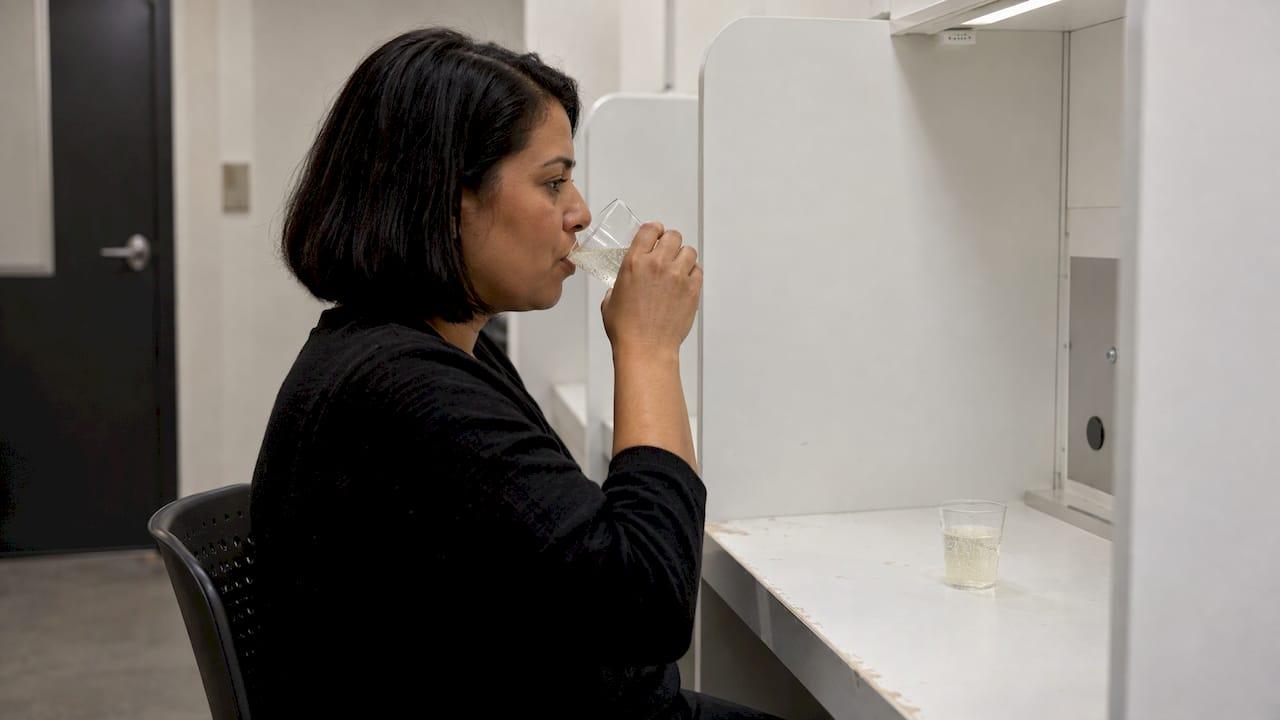
There are three families of flavor test, and each answers a different question. Discrimination tests ask whether people can tell two products apart. Descriptive tests ask how the products differ. Consumer (affective) tests ask whether people like them. Most wasted flavor budgets come from running the right test for the wrong question. Before you book a panel, decide what decision the result will drive. Then match the method to it. Platforms like CPG Agent help you narrow the field first, so the panel only tastes what has earned a place.
TL;DR
- Flavor is taste plus aroma plus mouthfeel, so a flavor test has to control all three, not just sweetness or salt.
- Use a triangle test to check whether a reformulation is noticeable, a descriptive panel to map how products differ, and a consumer hedonic or just-about-right (JAR) test to learn what shoppers like.
- Blind codes, randomized order, palate cleansers and short sessions matter more than a fancy lab.
- A non-significant difference result does not prove two products are equivalent, and JAR data needs to be tied to overall liking.
- Claims testing is a separate job: ASTM E1958 is the U.S. guide for sensory claim substantiation.
Table of Contents
- What a flavor test actually measures
- The three families of flavor testing methods
- Match the method to the decision
- How to run a flavor test that holds up
- Reading the results without fooling yourself
- Claims testing: a different job from flavor testing
- Deciding what to put in front of a panel
- Put the tools to work on your launch
- FAQ
- Sources
What a flavor test actually measures
Taste and flavor are not the same thing. The five basic tastes (sweet, sour, salty, bitter, umami) are detected on the tongue. Most of what you call flavor comes from aroma compounds traveling from the back of the mouth to the nose, a route called retronasal olfaction. The brain merges the two into one perception.
The standard definition adds a third input. ASTM describes flavor as the combined effect of taste, aromatics and chemical feeling factors such as burn or cooling, sensed through receptors in the mouth. Texture and carbonation also shift the result: de-carbonated drinks taste stronger and sweeter.
This has a practical consequence. Test a flavor in the finished product, in its real format and at its real usage level, because a flavor tasted in water behaves differently inside a beverage, bar or sauce.

The three families of flavor testing methods
Sensory scientists split tests into two broad groups: analytical tests that are product-focused and affective tests that are consumer-focused. Analytical tests split further into discrimination and descriptive methods. Picking the right one is what makes the result actionable.
| Family | Question it answers | Common methods | Typical use |
|---|---|---|---|
| Discrimination | Can people tell these apart? | Triangle, duo-trio, paired comparison, tetrad, same-different | Reformulation, new supplier, cost reduction |
| Descriptive | How do they differ, and by how much? | Conventional profiling, CATA (check-all-that-apply), time-intensity | Prototype development, quality control, shelf-life |
| Affective | Do consumers like it, and what would they change? | Paired preference, ranking, hedonic scale, JAR | New product development, concept-to-launch |
The methods in each row are drawn from the discrimination, descriptive and affective menus used across the flavor industry. A longer list, including temporal dominance of sensations, sorting, home use tests and central location tests, appears in sensory research method catalogs. You rarely need all of them.
Discrimination tests: did the product change?
The triangle test is the workhorse. Each assessor gets three samples, two identical and one different, in random order with three-digit codes. They pick the odd one. Pure guessing gets it right 33.3% of the time, so the question is whether your panel beats chance by enough to matter.
Worked example: 30 panelists would pick the odd sample about 10 times by luck alone. If 20 of them find it, the difference is probably real. Where the line falls depends on panel size and the significance level you set, and a binomial table gives the exact number of correct answers required. Handbooks treat a significance level of 0.05 to 0.01 as strong evidence of a difference.

One rule keeps the test honest: a forced choice. Panelists must always pick a sample, even if they perceive no difference. "No difference" is not a valid answer in the same handbook.
Descriptive tests: how does it differ?
Descriptive methods build a profile of a product's attributes and their intensity. Some also record the order in which attributes appear or how intensity changes over time. They suit prototype comparisons and shelf-life checks. Panels are small, but the people are trained: descriptive panels typically run on 3 to 12 qualified assessors, because members work as calibrated measuring instruments.
CATA is the lighter option. Consumers tick which attributes apply to a product from a list. It gives product teams descriptive language in shoppers' own terms without a trained panel.
Affective tests: will shoppers like it?
Hedonic scales measure liking, acceptance and preference. JAR scales put a "just right" midpoint in the center of the scale, with "too little" and "too much" at the ends, and they are common with untrained consumers during development. A related approach, the Ideal Profile Method, asks people to rate both the actual product and their ideal on each attribute.
Preference is not one number. A chocolate chip cookie study cited by an ingredient supplier's R&D manager found four distinct preference segments. Which result counts as success depends on which consumer you are targeting.
Match the method to the decision
- Reformulating an existing flavor (cheaper sweetener, new supplier, less sugar): run a triangle test or another discrimination test first. Then, if the change is noticed, run a consumer test to see if it matters.
- Choosing among new prototypes: use a descriptive profile to see how they differ, then a hedonic or ranking test with target consumers.
- Fine-tuning a winner: use JAR scales to find which attributes need to move.
- Shelf-life or quality control: use descriptive methods to track change against a reference.
A useful sequence is difference, then description, then liking. The difference-testing, descriptive-analysis and affective stages are often framed as a way to de-risk innovation without slowing development.
How to run a flavor test that holds up
The main goal is to minimize external bias so that only the variable you are testing differs between samples. A U.S. food-industry sensory protocol lays out the basics in one practical document:
- Control the room. Quiet, bright, well ventilated, with steady temperature and humidity.
- Prepare samples identically. Same portion size, same temperature, same serving vessel.
- Blind everything. No brand, variety or processing information. Use random three-digit codes.
- Randomize and balance order. Every sample appears in every position equally often.
- Limit fatigue. Sessions of no more than two hours, with breaks and palate cleansers such as still or sparkling water and unsalted crackers.
- Use a neutral panel leader who does not disclose objectives or expected outcomes.
- Replicate. Ideally on separate days, with different codes.
Flavor houses add more rules. Panelists should avoid coffee, smoking, scented products and strong toothpaste or mouthwash before tasting, taste lighter flavors before stronger ones, and agree on a shared descriptor vocabulary.
How many panelists?
The protocol above recommends at least 8 to 12 panelists for a sensory study. Discrimination tests need more. Triangle tests and paired comparisons typically call for at least 30 panelists, which small producers often cannot staff. The same article points to a small group product evaluation as a more accessible route: eight to 12 panelists drawn from a screened pool of 15 to 20, with lighter training. Consumer tests need larger samples than any of these, since you are estimating how a market responds, not how a trained instrument reads.
Reading the results without fooling yourself
A non-significant result is not proof of equivalence
If your triangle test finds no significant difference, that does not mean the products are the same. A significant difference can always be found if the sample is large enough, and the reverse is also true: a small test can miss a real one. When you need to show that an ingredient change, new supplier or sugar reduction is equivalent, you have to study the size of the difference, for example with a same-different test.
JAR data needs a second look
A common rule of thumb says to leave an attribute alone when more than 65% of consumers rate it just-about-right. Below that, if the "not enough" and "too much" totals differ by about 10%, adjust toward the lower total. If they are balanced, change nothing.
Two cautions apply:
- Standard penalty analysis, which compares liking scores of people who found an attribute "just right" with those who did not, can produce false positives from statistical multiplicity and sends developers after defects that are not there.
- JAR scores do not say how much to change something. The attribute with the most complaints is not necessarily the top priority. A smaller complaint about carbonation, for example, can hit overall liking hard for a subset of consumers. Always link JAR ratings to overall liking.
Claims testing: a different job from flavor testing
Teams often fold claims into the flavor test. They should stay separate. A flavor test tells you how a product tastes. Claims testing asks two things: do consumers understand, believe and respond to a claim, and can you substantiate it?
For sensory claims such as "tastes better" or "smoother", ASTM E1958 is the U.S. guide. It covers attribute, performance and hedonic claims, comparative and non-comparative. It also covers recruiting representative consumers, preparing products, building rating forms, running the test and handling the statistics.
In practice this means:
- Recruit consumers who represent real buyers of the category, not colleagues.
- Serve products blind, with randomized sequences.
- Ask the key question first, since data from first-asked questions carries more weight under the guide.
- Put overall acceptance ahead of specific attribute questions.
Label claims have their own rules. FDA's final rule on the "healthy" claim was published on December 27, 2024, took effect on February 25, 2025 and has a compliance date of February 25, 2028. It sets food-group criteria and limits added sugars, saturated fat and sodium. If your claim touches nutrition or health, have a regulatory attorney review it before launch.
Deciding what to put in front of a panel
Flavor panels are the right place to prove sensory performance. They are not the cheapest place to find out which flavor, name or positioning a shopper wants in the first place. Brands working lean usually settle the upstream questions first: who the buyer is, which flavor concept resonates, and how the pitch lands.
Two guides from our blog cover those steps. Concept testing in FMCG walks through validating an idea before formulation. AI-powered consumer research shows how to get data-backed signals fast. If your flavor line targets different shopper groups, behavioral segmentation personas help you decide which segment's preference should define success. Once a flavor is chosen, packaging A/B testing and naming validation are the next checks before launch.
Put the tools to work on your launch
CPG Agent is built for CPG and FMCG brands that want to deploy strategy fast. The platform includes PersonaForge for persona research and Launch Validator for product launch validation. It also covers growth roadmaps, media planning and creative generation. Our plans are Free, Monthly at $79 per month, and Annual at $699 per year, with higher tiers adding direct expert support. If you want senior help turning flavor results into a launch plan, we also offer a Fractional CMO at $650 to $1,500 per day, plus growth hacking and AI strategy engagements. Start from our Strategic Advisory page.
Our perspective
Most flavor decisions fail before anyone tastes anything. A team picks a flavor because the founder loves it, runs a panel to confirm, and finds out at the shelf that the target shopper wanted something else. A good sensory test tells you whether a product is different, or liked. It cannot tell you whether you chose the right buyer.
That is why we start upstream. We built our tools around speed and evidence: personas, launch validation and growth roadmaps that a lean team can use without a long discovery phase or layers of account management. Run your difficult, precise sensory work with the right protocol. Use our platform to decide what deserves that work, and our senior advisors when you need a plan that connects results to pipeline and margin.
The best flavor programs combine both: rigorous methods for the product, fast data-backed decisions for the market.
Matthew
FAQ
What is the difference between discrimination and affective flavor testing?
Discrimination tests, such as the triangle test, tell you whether people can perceive a difference between two products. Affective tests tell you whether consumers like a product or prefer it. A change can be noticeable and still be liked, or invisible and still matter for cost, so many teams run both.
How many people do I need for a triangle test?
Triangle tests and paired comparisons typically need at least 30 panelists. Teams that cannot staff that many sometimes use a small group product evaluation of eight to 12 screened panelists. A larger panel gives you more power to detect small differences.
What is blind coding and why does it matter?
Blind coding labels each sample with a random three-digit number so panelists do not know the brand, variety or recipe. It stops expectations from shaping the answer. Combined with randomized serving order, it is the most basic protection against bias.
Is claims testing the same as flavor testing?
No. Flavor testing measures how a product tastes or whether it is liked. Claims testing checks that consumers understand and respond to a claim, and that you can support it. For sensory claims in the U.S., ASTM E1958 is the guide. Have counsel review any nutrition or health claim before it goes on pack.
Sources
- What Is the Difference Between Taste and Flavor? (America's Test Kitchen)
- Flavor Flavour (Sensory Science Society)
- Sensory and Consumer Science fact sheet (IFST)
- Sensory Analysis and Consumer Preference: Best Practices (Annual Reviews)
- An Overview of Sensory Characterization Techniques (PMC)
- Sensory Analysis Handbook 2018 (Erasmus+)
- Unlocking Flavor Secrets: sensory analysis infographic
- Sensory and consumer product research brochure
- Tools at bakers' disposal for hitting the sensory mark (Commercial Baking)
- Improving Product Success Through Rigorous Sensory Evaluation
- Almond Sensory Protocol
- Sensory Evaluation of Flavors (Weber Flavors)
- Market Readiness manual (Oregon State)
- Investigating Sensory Equivalence of Reformulated Products
- A Regression Approach to Penalty Analysis (American Statistical Association)
- A look at just-about-right scales in consumer research (Quirk's)
- ASTM E1958 Standard Guide for Sensory Claim Substantiation
- FDA final rule on the "healthy" claim (Federal Register)