

Occasion-based marketing in CPG is the practice of aligning your brand's messaging, promotions, and product positioning to the specific moments that actually trigger a consumer to buy. Not who they are demographically, but what they're doing, celebrating, or navigating right now. A parent stocking up before a school year starts, a couple planning a wedding, someone grabbing snacks for a Sunday game day — these are the purchase triggers that occasion-based marketing is built around. The approach treats consumer behavior as fluid and situational rather than fixed, which is a more accurate reflection of how people actually shop.
Key characteristics that define occasion-based marketing in CPG:
- Situational relevance: Messaging matches the consumer's current context, not a static profile.
- Purchase trigger alignment: Campaigns activate around moments of heightened buying intent, from daily routines to annual holidays.
- Multi-occasion scope: Covers everything from recurring weekly behaviors (weeknight dinners, morning routines) to one-time life events (first baby, new job, graduation).
- Channel integration: Connects digital discovery with physical retail availability, since half of shopping still happens in-store.
- Data-driven timing: Uses first-party and behavioral data to identify when and where consumers are most receptive.
The shift away from pure demographic targeting matters because two people with identical profiles shop very differently depending on what's happening in their lives that week.
Why occasion-based marketing delivers real results for CPG brands
The business case is concrete. Occasion-based strategies deliver 23% higher conversion rates and 31% better customer lifetime value compared to demographic targeting, according to Consumer Goods Forum research. These are significant gains that reflect what happens when you reach a consumer at the exact moment they're already in buying mode.

Emotional relevance is the mechanism behind those numbers. A consumer shopping for a birthday celebration is not in the same mental state as the same person doing a routine grocery run. Occasion-based marketing meets them where their head actually is, which reduces friction and increases the likelihood of both trial and repeat purchase.
There's also a competitive angle worth noting. Brands that capture pre-event excitement through authentic, multi-channel engagement consistently outperform those relying on event-time advertising alone. The window of opportunity starts earlier than most brand managers plan for. Brands that wait until the occasion arrives are already behind the ones that started building relevance weeks before.
What occasion-based marketing looks like in practice
The clearest way to understand how CPG brands apply this is through concrete examples across different occasion types.
Recurring daily and weekly occasions:
- A beverage brand targets the "weeknight wind-down" occasion with evening digital ads and convenience store placement, not just grocery.
- A breakfast food brand runs personalized email sequences tied to back-to-school season, when morning routines shift for millions of households simultaneously.
Seasonal and cultural occasions:
- A snack brand builds a Super Bowl campaign that starts four weeks before the game, not the week of, capturing early party-planning purchases.
- A condiment brand ties summer grilling occasions to proximity-based mobile offers near hardware and grocery stores in May through August.
Life milestone occasions:
- Wedding occasions trigger purchases across multiple CPG categories simultaneously — from personal care to food and beverage — spanning an extended planning window that starts at engagement and runs well past the wedding date.
- A home goods brand targets new parents with diaper and cleaning product bundles, timed to hospital discharge data and baby registry completions.
Cross-channel execution in practice:
- Nike's "Rip the Script" film generated massive social engagement, becoming one of its most-shared social posts, by building occasion-themed content designed for organic sharing rather than passive broadcast.
- Visa committed a substantial amount to small-business development in event host cities, demonstrating that community investment during occasions builds brand loyalty beyond the transaction.
AI and first-party data now make it possible to identify usage occasions at scale. Rather than guessing when a consumer is in "celebration mode," brands can predict consumption moments by analyzing purchase history, browsing behavior, and location signals, then trigger dynamic content delivery in real time.

How to implement occasion-based marketing strategies effectively
Getting this right requires a structured approach. The five-step framework below reflects how leading CPG brands actually build occasion-based programs, not just plan them.
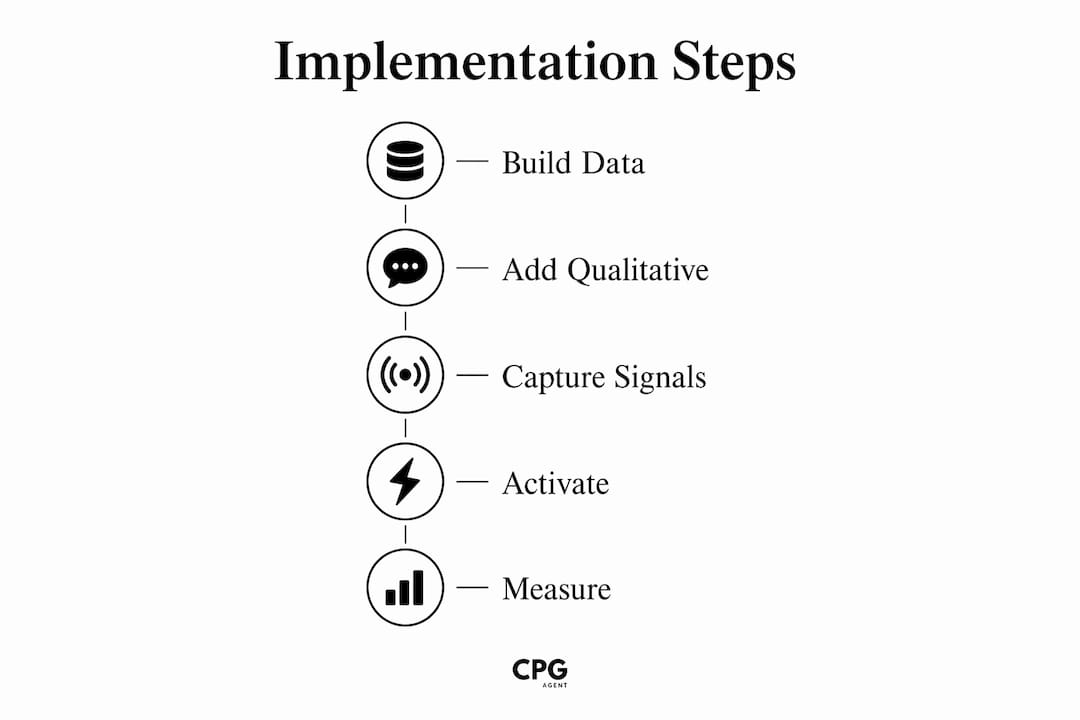
Step-by-step implementation
| Step | Action | What it produces |
|---|---|---|
| 1. Build your data foundation | Combine first-party purchase data with third-party behavioral signals | Granular segmentation beyond basic demographics |
| 2. Add qualitative depth | Develop occasion-specific personas through consumer research | Messaging that reflects real emotional and functional needs |
| 3. Capture real-time signals | Layer in digital behaviors, location data, and browsing patterns | Dynamic targeting tied to actual consumer context |
| 4. Activate for the occasion | Deploy proximity offers, personalized messages, and triggered content | Relevant outreach at the moment of highest intent |
| 5. Measure and refine | Track KPIs per occasion segment, run test-and-learn cycles | Compounding improvement in ROI across campaigns |
Step 1: Build your data foundation. Start by combining first- and third-party data to build segmentation models that go beyond age and income. Purchase frequency, basket composition, and channel preference all signal which occasions a consumer is shopping for.
Step 2: Add qualitative depth. Data tells you what consumers buy; qualitative research tells you why. Overlay persona work onto your data segments to understand the emotional context of each occasion. A "game day" shopper and a "family dinner" shopper may buy the same product for entirely different reasons.
Step 3: Capture real-time signals. Static segmentation misses the point of occasion-based marketing. Real-time behavioral data, including browsing events, cart adds, and location proximity, lets you identify which occasion a consumer is currently in, not which one they were in last quarter.
Step 4: Activate for the occasion. Triggered messaging works best when it's specific. A text that says "Your regular top-up basket is ready as you pass our store" outperforms a generic promotional email every time. Proximity offers, personalized product recommendations, and occasion-specific creative all drive higher engagement than broad campaigns.
Step 5: Measure and refine. Track conversion rate by occasion segment, customer lifetime value per occasion cohort, and in-store sales lift tied to media spend. Retail media investments must connect directly to where your product is actually stocked — campaigns that drive intent but hit distribution gaps waste every dollar spent.
Pro Tip: Build your occasion marketing calendar at least 90 days out. Effective campaigns require comprehensive calendar planning that covers cultural festivals, personal milestones, and behavior-driven triggers well beyond the obvious commercial holidays.
KPIs worth tracking
- Conversion rate by occasion segment vs. baseline
- Customer lifetime value per occasion cohort
- In-store sales lift correlated with digital media spend
- Engagement rate on occasion-specific creative vs. evergreen content
- Retailer sell-through rate during targeted occasion windows
Personalized CPG messaging by usage occasion improves both engagement and retention by addressing the consumer's immediate context rather than their average behavior. HubSpot data supports this, showing measurable gains in customer retention through tailored messaging approaches.
Key Takeaways
Occasion-based marketing in CPG consistently outperforms demographic targeting because it reaches consumers at moments of genuine purchase intent, not just within a profile that statistically correlates with buying.
| Point | Details |
|---|---|
| Conversion and lifetime value gains | Occasion-based strategies deliver 23% higher conversion rates and 31% better customer lifetime value vs. demographic targeting. |
| Occasions span beyond holidays | Effective programs cover daily routines, cultural festivals, life milestones, and behavior-driven triggers, not just commercial holidays. |
| Real-time data is the engine | Combining first-party purchase data with live behavioral and location signals enables dynamic targeting tied to actual consumer context. |
| Retailer alignment is non-negotiable | Media spend must connect to in-store product availability; campaigns that hit distribution gaps waste budget regardless of creative quality. |
| Start before the occasion arrives | Brands that build pre-event engagement through multi-channel activation consistently outperform those that wait for the occasion to begin. |
FAQ
What is occasion-based marketing in CPG?
Occasion-based marketing in CPG is the practice of aligning brand messaging, promotions, and product positioning to the specific moments that trigger consumer purchase intent, such as holidays, daily routines, or life milestones, rather than targeting based on demographics alone.
What is CPG in marketing?
CPG stands for consumer packaged goods, referring to products consumers buy regularly and replace frequently, including food, beverages, personal care, and household items. CPG marketing focuses on driving trial, repeat purchase, and shelf presence across retail and digital channels.
What are the 4 Ps of CPG marketing?
The 4 Ps in CPG are product, price, place, and promotion. Occasion-based marketing primarily influences promotion and place by ensuring the right message reaches the right consumer at the right moment, with product available where they're most likely to buy.
How do you measure the success of occasion-based campaigns?
Track conversion rate by occasion segment, in-store sales lift tied to media spend, customer lifetime value per occasion cohort, and engagement rate on occasion-specific creative compared to evergreen content. Closed-loop measurement connecting digital impressions to retail sell-through gives the clearest picture of ROI.
How does AI improve occasion-based marketing for CPG brands?
AI analyzes first-party shopper data to predict consumption moments and trigger dynamic content delivery in real time, shifting brands away from cookie-based tracking toward privacy-compliant personalization. The Cpgagent platform applies this approach specifically for CPG and FMCG brands looking to act on occasion signals at scale.