

TL;DR:
- A brand brief is a strategic document that clearly defines your brand’s purpose, target audience, and visual identity without needing agency support. It should include core components like business overview, objectives, audience, competition, personality, visuals, and messaging, typically optimized for brevity and outcome focus. Using AI tools and frameworks can speed up the process, but success depends on specificity, clear decision-makers, and integrating insights from existing data within tight CPG timelines.
A brand brief is the single document that defines what your brand stands for, who it serves, and how it communicates — and you do not need a creative agency to write one. For CPG entrepreneurs and marketing teams, developing this document independently, using a structured process, saves significant budget while keeping strategic control in-house. A detailed brand brief reduces revision rounds by 43%, and skipping it entirely can increase total project costs by 30 to 45%. The frameworks, AI tools, and templates available today make the independent branding process more accessible than ever.
What does a brand brief actually need to include?
The standard industry term for this document is a brand brief, sometimes called a creative brief when it is directing specific design or copy work. The distinction matters: a brand brief sets strategic direction, while a creative brief translates that strategy into specific deliverables. When you create a brand brief without a creative agency, you are doing the strategic work first.
Every effective brand brief covers seven core components. Each one serves a specific function in guiding your team and any freelancers you bring in.
- Business overview. One to two sentences describing what your company makes, who buys it, and why it exists. This is not your mission statement. It is a factual anchor that keeps every creative decision grounded.
- Objectives. State outcomes, not outputs. Defining outcomes over outputs prevents project drift and ties creative work to measurable business goals. "Our website converts better" is an outcome. "A new logo" is an output.
- Target audience. Go beyond demographics. Describe your buyer's daily routine, the shelf moment when they choose your product, and the emotional trigger that closes the sale. Vague personas produce vague creative.
- Competitive landscape. Name your top three competitors and identify one gap each of them leaves open. This is where your positioning lives.
- Brand personality. Choose three to five human traits that describe how your brand would speak if it were a person. "Confident, direct, and a little irreverent" is more useful than "friendly and professional."
- Visual direction. Specify color palettes, typography style, and imagery tone with a brief rationale for each choice. Reference real-world examples your team can point to.
- Messaging framework. Include your tagline, your brand voice description, and two or three key messages that should appear consistently across packaging, social, and retail materials.
Pro Tip: Keep your brief to one page if possible. Effective brand briefs can be as short as 11 lines when every line is specific and outcome-driven. Brevity forces the clarity that agencies charge thousands of dollars to extract from you.
What tools and frameworks help you build a brand brief independently?

The right tools turn a blank document into a structured draft in hours, not weeks. This is where the DIY brand strategy process has genuinely changed in the past two years.
| Tool or Framework | Best Used For | Time Required |
|---|---|---|
| Spellbrand AI | Drafting brand elements and visual direction | Under 1 hour |
| SocialRails 7-step method | Full brand strategy from research to execution | Under 2 hours |
| Grammarly | Writing clarity, tone consistency, and copy editing | Ongoing |
| Proof of Work Studio template | Structuring the brief document itself | 30 minutes |
| Freezil creative brief template | Translating brand brief into creative tasks | 30 minutes |
AI-assisted tools like Spellbrand can generate competent brand brief drafts in under an hour. Treat these outputs as starting points. They give you structure and language to react to, which is far faster than starting from a blank page. Your competitive insight and category knowledge are what make the draft real.
The SocialRails 7-step framework covers research, brand foundations, positioning, personality, visuals, and execution in a single sitting. For CPG founders who are already close to their category, this framework surfaces what you already know and organizes it into a format your team can act on.
Grammarly is worth using throughout the drafting process, not just at the end. Inconsistent tone in a brand brief signals inconsistent thinking, and buyers and retailers notice that inconsistency on the shelf before you do.
Pro Tip: Pull your internal data before you open any template. Your best-selling SKU's customer reviews, your top retailer's buyer feedback, and your last six months of social comments contain more useful audience insight than most agency discovery sessions produce.
How to structure your brand brief workflow for CPG timelines
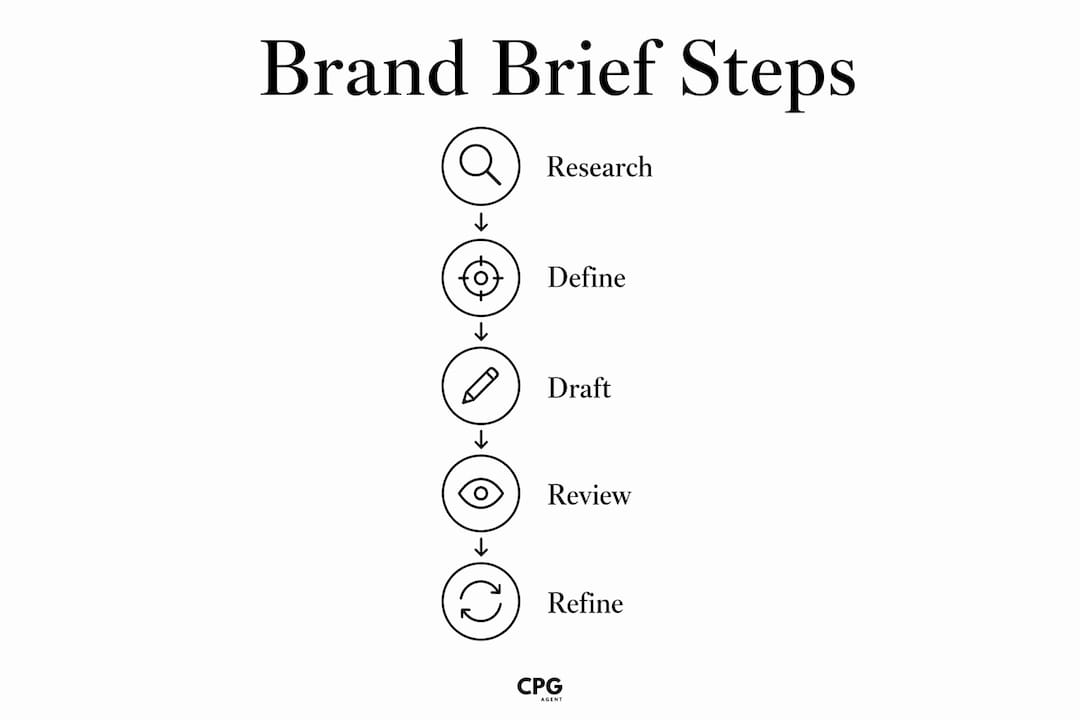
Speed matters in CPG. A brand brief that takes three months to finalize is not a strategic asset. It is a bottleneck. Here is a practical workflow built around the realities of CPG product development cycles.
- Week 1: Audit what you already have. Gather existing packaging, copy, social assets, and any previous brand guidelines. Identify what is working and what is inconsistent. This audit becomes the foundation of your brief.
- Week 2: Complete your competitive analysis. Walk the shelf, literally or virtually. Screenshot competitor packaging. Note their color choices, claims hierarchy, and price positioning. Your brief needs to explain why your brand looks and sounds different.
- Week 3: Draft the brief. Use a template from Proof of Work Studio or Freezil as your structure. Fill in each section using your audit findings and competitive notes. Write in plain language, not marketing speak.
- Week 4: Internal review with one decision-maker. Appointing a single final approver significantly reduces conflicting feedback and scope creep. This is the step most CPG teams skip, and it costs them weeks of revision cycles.
- Weeks 5 through 12: Build your brand system. A structured brand system for CPG brands typically requires 60 to 90 days to build from audit to retail-ready. Once your system is documented, new SKUs can launch in 30 days instead of 60.
A few pitfalls to watch for during this process:
- Letting the brief expand to cover every possible scenario. A brief is a filter, not a manual.
- Skipping the competitive analysis because you think you already know the category. You probably do not know it as well as you think.
- Treating the brief as a one-time document. Revisit it every time you enter a new retail channel or launch a new product line.
For a deeper look at lean brand strategy frameworks that fit CPG timelines, the principles apply directly to how you sequence this work.
What mistakes do CPG founders make when writing a DIY brand brief?
The most expensive mistake is confusing outputs with outcomes. A new logo is an output. Winning a buyer meeting at Whole Foods Market is an outcome. Your brief should state the outcome clearly so every creative decision can be evaluated against it.
"A brand brief should articulate the business problem the brand work solves, including measurable success criteria, not just creative deliverables." — Freezil
Other common errors that cost CPG brands real money:
- Vague audience definitions. "Women aged 25 to 45 who care about health" describes half the grocery store. Describe the specific moment your buyer reaches for your product and what she is thinking when she does.
- Skipping the competitive gap analysis. If you cannot name the white space your brand occupies, your packaging will look like everyone else's, and you will compete on price.
- Writing a brief that is too long. A 20-page brand brief is not thorough. It is a sign that no one has made the hard decisions yet.
- No named decision-maker. Without one person who has final approval authority, every revision round becomes a negotiation.
- Inconsistent execution after the brief is written. Inconsistent DIY branding can cause 20 to 30% margin erosion by forcing brands into value-tier pricing. Inconsistent typography, color, and layout signal a commodity, not a premium product.
The independent branding process works best when the brief is treated as a living filter, not a one-time deliverable. Every time your team debates a creative decision, the brief should resolve it in under five minutes.
Key takeaways
A brand brief built on outcomes, specific personas, and documented visual rules is the single most effective tool a CPG founder can create without agency support.
| Point | Details |
|---|---|
| Outcomes over outputs | State measurable business goals, not just deliverables like logos or packaging redesigns. |
| Seven core components | Every effective brief covers business overview, objectives, audience, competition, personality, visuals, and messaging. |
| Use AI as a starting point | Tools like Spellbrand draft structure fast; your category knowledge makes it competitive. |
| 60 to 90 day system build | Plan for this timeline from audit to retail-ready, then expect 30-day SKU launches after. |
| One decision-maker | Naming a single approver eliminates revision loops and keeps the project moving. |
Why I think most CPG founders overcomplicate this
I have reviewed dozens of brand briefs from CPG founders at every stage, from pre-launch to eight-figure brands. The pattern is consistent: the founders who struggle most are the ones who treat the brief like a creative portfolio piece rather than a strategic decision filter.
The best brief I ever saw was four pages. It named the buyer, described the shelf moment, identified three competitors by name, and stated one measurable outcome. Every freelancer and internal team member who touched that brand knew exactly what they were building and why. The brand launched in a regional grocery chain within six months of that brief being written.
The worst briefs are the ones that try to be everything. They include brand history, founder stories, aspirational mood boards, and fifteen different audience segments. Nobody can make a decision from a document like that. It does not protect the brand. It paralyzes it.
My honest advice: write your brief in one sitting, using a template as your structure. Then cut it by 30%. What remains is your actual brand strategy. If you find yourself adding content back in, ask whether that content resolves a real creative decision or just makes you feel more prepared. Those are very different things.
The DIY brand strategy process works when you commit to specificity over comprehensiveness. Agencies charge for the process of extracting that specificity from you. You already have it. You just need a structure to put it in.
— Matthew
Build your brand brief faster with Cpgagent
Cpgagent is built for CPG and FMCG brands that need to move fast without the overhead of a traditional agency. The platform's AI-driven tools help you draft brand positioning, validate product concepts, and align your team around a single strategic direction before you spend a dollar on design.
If you are ready to turn your brand brief into a full go-to-market system, the Cpgagent platform gives you the frameworks, workflows, and fractional expert support to get from brief to retail-ready in weeks, not quarters. For CPG founders who want to scale without losing strategic control, this is where the process gets faster.
FAQ
What is a brand brief and how does it differ from a creative brief?
A brand brief defines your overall brand strategy, including audience, positioning, personality, and visual direction. A creative brief translates that strategy into specific deliverables for a design or copy project.
How long should a DIY brand brief be?
The most effective brand briefs are one to two pages. Research from Proof of Work Studio shows briefs as short as 11 lines can be fully functional when every line is specific and outcome-focused.
Can AI tools replace a branding agency for writing a brand brief?
AI tools like Spellbrand can generate a draft brand brief in under an hour, but they work best as starting points. Your competitive knowledge and category insight are what make the brief strategically sound.
How do I know when my brand brief is ready to use?
Your brief is ready when every team member who reads it can make a consistent creative decision without asking you for clarification. If it still generates questions, it needs more specificity.
What happens if I skip the brand brief and go straight to design?
Skipping the brief typically leads to inconsistent branding across packaging, social, and retail materials. Inconsistent DIY branding can cause 20 to 30% margin erosion by pushing brands into value-tier pricing competition.