

TL;DR:
- A brand monetization strategy transforms brand equity and audience relationships into sustainable revenue streams.
- Most brands fail by treating monetization as an afterthought instead of a core operational focus.
A brand monetization strategy is a deliberate plan to convert brand equity, audience relationships, and intellectual property into sustainable revenue streams. Most entrepreneurs treat monetization as an afterthought. The brands that win treat it as a core operating system. Companies with consistent brand presentation see 23% higher revenue and reduce customer acquisition costs by 20–40%. That gap between reactive and planned monetization is where most brands either compound their growth or quietly stall.
What is a brand monetization strategy, and why does it matter?
A brand monetization strategy is the structured framework that connects what your brand stands for with how it generates income. The industry term for this discipline is "brand revenue architecture," and it covers every mechanism by which brand value converts to cash flow. Without it, revenue becomes accidental rather than engineered.
Brand equity is not just a marketing concept. It is a financial asset. Brands in the top quartile of awareness can charge 13% price premiums, and category leaders win 31% of competitive deals compared to 18% for challengers. Those numbers show that brand strength directly affects your ability to price, close, and retain customers.
The distinction between brand revenue and general business revenue matters here. Brand revenue comes specifically from the trust, recognition, and loyalty your brand has built. It includes licensing fees, community memberships, and premium pricing that a generic product could never command. Entrepreneurs and brand managers who understand this distinction build businesses that are harder to displace.
What are the primary revenue streams in a brand monetization strategy?
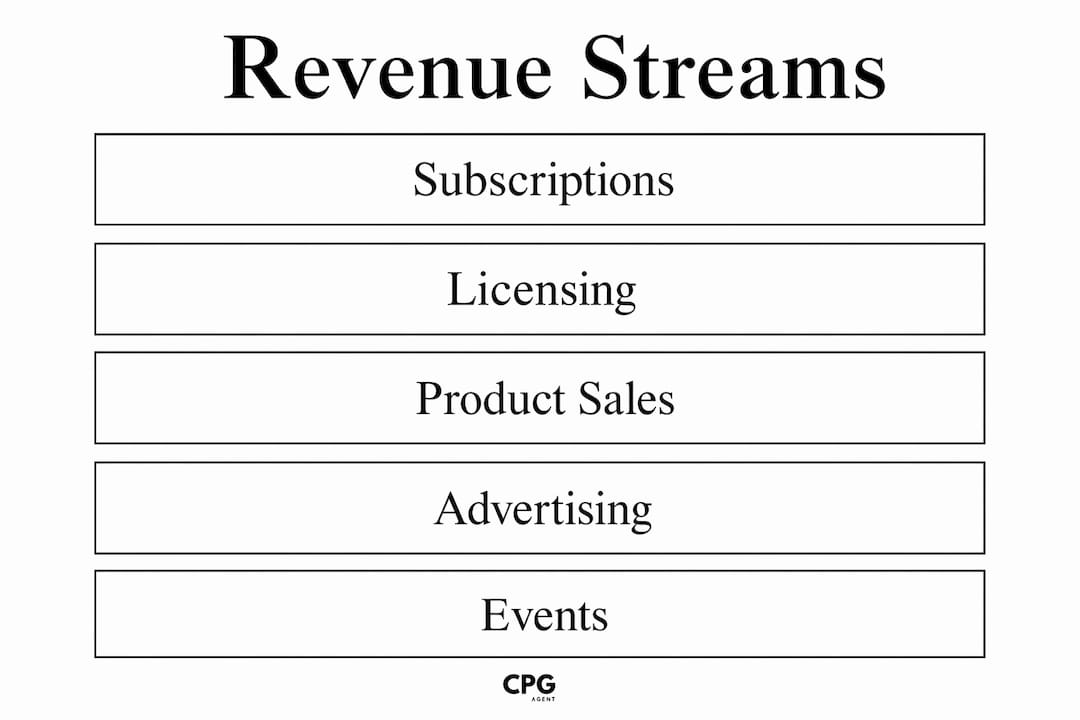
High-performing brands in 2026 structure their income across four core pillars. Each pillar serves a different function in the overall revenue architecture.
- Platform-native monetization. This includes ad revenue, affiliate programs, and creator funds tied to third-party platforms. It is the easiest to start but the most fragile to rely on.
- Direct sponsorships and brand deals. These are negotiated agreements with partners who pay for access to your audience. Performance bonuses in direct deals can add 20–40% above the base fee. That upside only exists when you own the relationship.
- Intellectual property licensing. Licensing grants use rights to your brand's IP in exchange for royalty payments. Minimum guarantees in licensing contracts protect licensors from market performance fluctuations, ensuring baseline income regardless of how the licensee performs.
- Community monetization. This is the most underused pillar. Moving your audience onto a platform you own, where you control billing, data, and membership, creates recurring revenue that no algorithm can cut off. Owned community platforms generate income through tiered memberships, premium content, and live events, improving both retention and revenue per member.
Some creators earn over $2 million annually from subscriptions with fewer than 50,000 paid subscribers. That figure shows that audience depth matters more than audience size when your monetization model is built on owned infrastructure.
Pro Tip: Start with one owned revenue stream before adding platform-native income. The owned stream gives you a floor. Platform income gives you upside. Never build the floor on someone else's land.
How does aligning brand purpose enhance your monetization strategy?
Brand purpose is not a mission statement for your website. It is an active pricing lever. When your brand's values are embedded in every product decision, customer interaction, and revenue model, customers stop comparing you on price and start buying on identity.

Purpose-driven brands reduce customer churn by 15–40%, which lowers customer acquisition costs by about 20%. Lower churn means you spend less replacing customers you should have kept. That math compounds quickly into margin improvement.
The retention benefit goes deeper than cost savings. Customers who buy relationally, meaning they see your brand as an expression of their own identity, become advocates. Advocates reduce your paid acquisition burden and increase average order value through referrals and upsells.
"The most common mistake brands make is disconnecting revenue mechanics from brand purpose, which compromises pricing power and loyalty. Aligning brand promise and operational reality is a crucial pricing lever; gaps lead to lost premium pricing as consumers detect inauthenticity and value disconnects."
Purpose-driven brands also sustain revenue twice as well during downturns compared to brands without a clear purpose. That resilience comes from the relational nature of the purchase. When a customer sees your brand as part of their identity, they cut other spending before they cut yours.
The risk runs in both directions. A brand that promises sustainability but ships in excessive plastic, or claims community values but monetizes through intrusive data collection, loses its pricing premium fast. Consumers detect the gap between promise and practice, and they do not forgive it quietly.
What are common pitfalls in executing brand monetization strategies?
Execution is where most brand monetization plans fail. The mistakes are predictable, and they cluster around three patterns.
-
The dependency ratio trap. When over 50% of revenue comes from a single platform's native monetization, one algorithm change or policy shift can cut income overnight. This is not a theoretical risk. It has ended otherwise strong brands. The fix is diversification before you need it, not after.
-
Ignoring audience ownership. Building an audience on rented platforms without migrating them to owned channels (email lists, SMS, membership platforms) means you are building on infrastructure you do not control. Owned audience infrastructure is the single most durable asset in any brand monetization plan.
-
Weak IP contracts. Quality control provisions in trademark licensing agreements are legally required to protect brand integrity. Contracts must define scope, territory, duration, royalties, and enforcement mechanisms. Brands that skip this step risk dilution that takes years to repair.
-
Early exclusivity deals. Locking into exclusivity before you understand your audience's full value destroys optionality. Exclusivity can be worth it at the right price and the right stage. Signing it early, out of urgency, almost always costs more than it returns.
-
Talent dependence. If your brand's revenue depends on one person's presence, you have a talent risk, not a brand. The goal is to build systems and IP that generate revenue independent of any individual.
The sequential layer approach works best for building resilience. Start with attention (free content that builds awareness), then build owned audience infrastructure, then add brand and licensing revenue, and finally develop equity and IP assets. Each layer funds the next.
Pro Tip: Before signing any licensing deal, have an IP attorney review quality control clauses specifically. Generic contract templates rarely include the enforcement mechanisms that protect your brand in practice.
How can entrepreneurs and brand managers implement an effective brand monetization strategy?
Implementation starts with an honest audit of what you already have. Most brands underestimate their existing assets.
- Audit your brand assets. List your IP (trademarks, content libraries, proprietary methods), your audience (size, engagement, owned vs. rented), and your existing revenue sources. This baseline tells you which pillar to build first.
- Prioritize by business stage. Early-stage brands should focus on owned audience building and one direct revenue stream. Established brands can layer in licensing and community monetization. Trying to run all four pillars simultaneously without the infrastructure to support them creates operational drag.
- Build owned channels first. Email lists, SMS subscribers, and membership platforms are the foundation. Subscription models for CPG brands show how recurring revenue from owned audiences creates predictable cash flow that platform income never can.
- Integrate monetization with brand messaging. Every revenue stream should reinforce what your brand stands for. A premium brand that runs discount flash sales trains customers to wait for the sale. Consistency between pricing behavior and brand positioning protects margin.
- Measure the right metrics. Revenue per member, churn rate, customer lifetime value, and the ratio of owned to rented audience are the numbers that tell you whether your monetization architecture is working.
The table below maps business stage to the most effective monetization focus.
| Business stage | Primary monetization focus | Key metric to track |
|---|---|---|
| Early stage (0–2 years) | Owned audience building, direct sales | Email list growth, conversion rate |
| Growth stage (2–5 years) | Subscriptions, direct sponsorships | Churn rate, revenue per subscriber |
| Established (5+ years) | IP licensing, community monetization | Royalty income, lifetime value |
| Multi-brand portfolio | Equity and IP asset development | Brand contribution margin |
Performance marketing channels can accelerate audience growth at each stage, but they work best when they feed an owned infrastructure rather than a rented one. The goal is always to move traffic from paid channels into assets you control.
Key Takeaways
A brand monetization strategy succeeds when it connects brand purpose to diversified, owned revenue streams rather than relying on any single platform or income source.
| Point | Details |
|---|---|
| Define your revenue architecture | Map brand assets to specific income streams before choosing a monetization model. |
| Own your audience infrastructure | Email, SMS, and membership platforms protect revenue from algorithm and policy changes. |
| Align purpose with pricing | Purpose-driven brands reduce churn by 15–40% and sustain revenue better during downturns. |
| Protect IP with strong contracts | Licensing agreements must define scope, royalties, and quality control to prevent brand dilution. |
| Build revenue layers sequentially | Start with attention and owned audiences before adding licensing and equity-based income. |
Why most brand monetization plans miss the point
I have watched brands with genuinely strong equity leave significant revenue on the table because they treated monetization as a separate department from brand strategy. The marketing team builds the brand. The finance team builds the revenue model. Neither talks to the other until something breaks.
The brands that compound their value over time treat monetization as an expression of brand identity. Every revenue stream they add either reinforces what they stand for or it does not get added. That discipline sounds simple. It is actually rare.
The shift I see defining 2026 is the move from transactional to relational revenue. Brands that built their income on one-time purchases are rebuilding around memberships, subscriptions, and licensed IP because those models reward loyalty rather than just acquisition. The math is better. The relationship is stickier. The brand gets stronger with each renewal rather than having to re-earn the sale every time.
The entrepreneurs who will build the most durable brands in the next five years are the ones who treat their audience as an asset to be stewarded, not a metric to be maximized. That mindset shift changes every decision downstream, from pricing to product development to which partnerships you accept.
— Matthew
How Cpgagent supports your brand monetization strategy
Cpgagent is built for CPG and FMCG brands that need to move from strategy to execution without the overhead of a traditional agency. The Cpgagent platform gives brand managers and entrepreneurs the AI-driven tools to audit brand assets, model revenue scenarios, and build the owned audience infrastructure that makes monetization durable.
Tools like PersonaForge and Launch Validator give you data-backed clarity on which revenue streams fit your brand stage and audience profile. Fractional CMO support means you get senior-level monetization thinking without a full-time hire. If you are ready to build a revenue architecture that actually reflects what your brand is worth, Cpgagent is where that work starts.
FAQ
What is a brand monetization strategy in simple terms?
A brand monetization strategy is a plan to turn your brand's equity, audience, and intellectual property into recurring revenue. It connects what your brand stands for with how it generates income across multiple streams.
How do I start to monetize a brand with limited resources?
Start by building one owned audience channel, such as an email list or membership platform, and one direct revenue stream. Growing a CPG brand on a limited budget is achievable when you prioritize owned infrastructure over paid platform dependence.
What is brand revenue, and how is it different from general business revenue?
Brand revenue comes specifically from the trust and recognition your brand has built, including licensing fees, premium pricing, and community memberships. General business revenue includes all income regardless of brand contribution.
How does brand purpose affect monetization?
Brand purpose reduces price sensitivity and increases retention. Purpose-driven brands sustain revenue twice as well during downturns and reduce customer acquisition costs by about 20% through lower churn rates.
What is the biggest risk in brand monetization strategy execution?
The dependency ratio trap is the most common risk. Earning over 50% of revenue from a single platform's native monetization creates existential exposure to algorithm changes and policy shifts that are entirely outside your control.