

TL;DR:
- Growing a CPG brand on a limited budget requires prioritizing margin discipline, organic consistency, and data-driven testing.
- Focusing on targeted gross margins, small production runs, and disciplined fixed costs builds a sustainable financial foundation for growth.
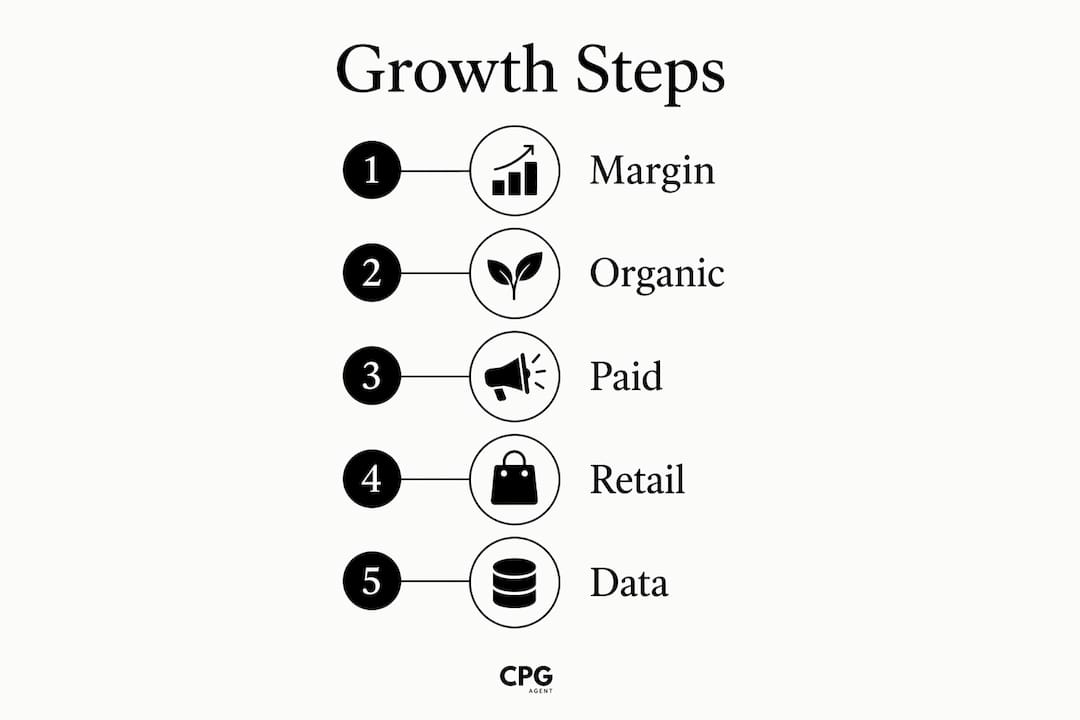
Growing a CPG brand with a limited budget is not a compromise. It is a discipline. The brands that survive early-stage capital constraints do so by protecting unit economics first, then layering in organic marketing, paid media, and retail activation in a deliberate sequence. This guide covers the exact frameworks used by emerging consumer packaged goods founders in 2026, from contribution margin targets and flexible co-packer arrangements to the "rule of sevens" organic posting strategy and Liquid Death's 30-cent decision rule for paid media. Budget-conscious brand development is not about spending less. It is about spending right.
How to grow a CPG brand with a limited budget through margin discipline
The financial foundation of any budget-friendly CPG brand is gross margin. Targeting 40 to 60% gross margins from day one is the single most important decision a founder makes. That margin range gives you enough room to absorb marketing spend, absorb returns, and still generate working capital for the next production run.

Fixed costs are the silent killers of early-stage brands. Avoid long-term warehouse contracts, annual software commitments, and agency retainers until your revenue is predictable. Every fixed cost you take on before you have consistent sell-through is a bet against your own runway. The goal in the first 12 months is to keep your cost structure as variable as possible.
Production runs should be small and manageable. Flexible MOQs with co-packers reduce inventory risk and protect working capital. A smaller run at a slightly higher cost-per-unit is almost always the right call when you are still validating demand. Carrying six months of unsold inventory is far more expensive than paying a premium for a 500-unit batch.
Burn rate management requires worst-case forecasting, not average-case. Build your financial model around the scenario where your top retailer delays payment by 60 days and your second-best marketing channel underperforms by 40%. Overspending without contribution-margin discipline is the most common reason bootstrapped brands fail, not underinvesting.
Pro Tip: Rank every SKU by gross margin and weekly velocity. Cut or pause any SKU that sits in the bottom quartile on both metrics. The capital you free up is worth more than the revenue you lose.
What are cost-effective organic marketing strategies for CPG brands?
Organic content is the highest-ROI channel available to a brand with no media budget, but only when executed with consistency. The "rule of sevens" describes how consistent multi-channel exposure builds the accumulated touchpoints that convert a curious browser into a buyer. Seven impressions across different contexts, on TikTok, Instagram, in-store, and via word of mouth, is roughly what it takes to move someone from awareness to purchase.
Good Girl Snacks is the clearest proof of this model working at zero paid media cost. The brand built its early customer base through daily TikTok and Instagram content that felt native to each platform. No polished ad creative. No influencer fees. Just consistent, authentic posting that accumulated reach organically. The lesson is not that you need to go viral. It is that you need to show up every single day.
Authenticity resonates with Gen Z audiences who reject overt advertising, making organic social a legitimate acquisition channel for early-stage brands. Content that looks like an ad performs worse than content that looks like a person sharing something they genuinely use. This is a structural advantage for small brands over large ones with rigid brand guidelines.
Building a customer community also serves a second purpose: product development feedback. Comments, DMs, and poll responses on Instagram Stories give you real-time data on flavor preferences, packaging reactions, and pricing sensitivity. That feedback loop is worth more than a formal focus group.
Here is a practical organic content framework for a CPG brand on a shoestring budget:
- Post daily on the platform where your core buyer already spends time, whether that is TikTok, Instagram Reels, or Pinterest.
- Rotate content formats weekly: product in use, behind-the-scenes production, customer reactions, and ingredient education.
- Respond to every comment in the first hour after posting to signal to the algorithm that your content drives engagement.
- Run a monthly poll or question sticker asking one specific product question. Use the answers to inform your next SKU or flavor iteration.
- Repurpose top-performing organic posts as paid creative before investing in new ad production.
Pro Tip: Use post-purchase surveys asking "How did you hear about us?" to identify which organic channels are actually driving conversions. Social comments tell you what people think. Purchase data tells you what they do.
How to run lean paid media campaigns that maximize ROI on small budgets
Paid media on a small budget works when you treat it as a data collection tool first and a scaling tool second. Early paid media spending in the first three months should focus on collecting at least six months of reliable customer data, not on hitting revenue targets. The brands that scale paid efficiently are the ones that spent their first dollars learning, not growing.
Creative rotation is the most underused tactic in small-budget paid media. Test at least four to six creative variants simultaneously, and detect ad winners within 48 hours by monitoring cost-per-click and add-to-cart rates. Kill anything that is not performing by day three. The cost of running a losing ad for two extra weeks is real money that compounds across a campaign.
Liquid Death's 30-cent decision rule is worth understanding in detail. The rule states that any tactic generating a customer acquisition cost above a defined threshold gets cut immediately, regardless of how promising it looked in theory. For most early-stage CPG brands, that threshold sits somewhere between $25 and $45 CAC depending on your average order value and repeat purchase rate. The point is to have a number and enforce it without emotion.
Paid search terms that convert also tell you what organic content to create next. If "low-sugar protein bar for runners" is converting in Google Ads, that exact phrase should become a blog post, a product page headline, and a TikTok caption. This paid-to-organic flywheel reduces your blended CAC over 18 to 24 months as organic content starts capturing the traffic you were previously paying for.
- Start with Meta and TikTok Ads before Google. Visual CPG products convert better on social feeds than on search intent pages early on.
- Use user-generated content from real customers as your first ad creative. It outperforms studio-shot product photography in most CPG categories.
- Cap daily spend at $50 per ad set during testing. Scale only the sets that hit your CAC threshold within 72 hours.
- Build a retargeting audience from website visitors and add-to-cart abandoners before spending on cold traffic.
Pro Tip: Partner with micro-creators in your category for $100 to $300 per video. Their content doubles as UGC-style ad creative and organic reach. You get two channels for the price of one.
What retail demo tactics work best for CPG brands on a tight budget?
In-store sampling is the highest-conversion tactic available to a CPG brand that has retail placement. In-store sampling conversion lifts can reach up to 300% in same-day sales for new or unknown brands when demos are executed with rigorous operational standards. That number is not a ceiling. It is a baseline for a well-run demo program.
The operational details matter more than most founders expect. Retail demos require strict controls including hourly sample caps, pre-portioned servings, hygiene compliance, and demo station placement directly beside the stocked shelf. Moving the demo station even 10 feet away from the product location cuts conversion rates significantly because you break the direct path from trial to purchase.
Here is a step-by-step framework for a high-converting demo day:
- Pre-portion all samples before the event starts. Consistency in serving size protects your cost-per-sample budget and speeds up the interaction.
- Position the demo station within arm's reach of the stocked shelf. The customer should be able to grab the product while still holding the sample.
- Brief brand ambassadors with a three-sentence sales script: what the product is, why it is different, and what the customer should do next.
- Set an hourly sample cap based on your total budget divided by the number of demo hours. Track samples distributed versus units sold every hour.
- Record conversion rate, incremental unit sales, and customer questions at the end of each shift. Use that data to refine the script and station setup for the next demo.
| Metric | What it measures |
|---|---|
| Samples distributed per hour | Demo efficiency and ambassador pace |
| Conversion rate (samples to sales) | Script and product appeal effectiveness |
| Incremental unit sales vs. baseline | True sales lift attributable to the demo |
| Customer questions logged | Product education gaps and objection patterns |
Pro Tip: Run a simple daily reporting sheet comparing conversion rates across different store locations and time slots. Patterns emerge within three to four demo days that tell you exactly where to concentrate future budget.
How to use data to keep your growth budget working harder
Data integration is where budget-conscious brands separate themselves from brands that just spend less. Retention through email and SMS is the margin engine for underfunded DTC models, while paid social serves acquisition discovery. That distinction matters because it tells you where to invest first: build your retention infrastructure before you scale paid acquisition.
Tag every acquisition channel and creative variant from day one. Cohort tracking lets you compare the 30-day and 90-day repeat purchase rates of customers acquired through TikTok organic versus Meta paid versus in-store demo. The channel with the highest LTV:CAC ratio gets more budget. The channel with the lowest gets paused or restructured.
The metrics that matter most for a lean CPG brand are CAC, payback window, contribution margin per order, and LTV:CAC ratio. If your payback window exceeds 90 days on a perishable product, your paid acquisition model is structurally broken regardless of how good your creative is. Fix the economics before scaling the spend.
Feedback loops from retail sampling and social engagement surveys close the circle between marketing and product. A post-demo survey asking three questions, what did you like, what would you change, and would you buy this again, generates more useful product data than most formal research studies. Simple buyer feedback loops reduce test failures and improve creative targeting over time.
- Build a single dashboard tracking ad spend, CAC, contribution margin, and repeat purchase rate weekly.
- Set a rule: do not increase paid acquisition spend until your 60-day repeat purchase rate exceeds 20%.
- Use Klaviyo or a comparable email platform to segment customers by acquisition source and purchase frequency before running any retention campaign.
Pro Tip: Avoid scaling paid acquisition before you have established repeat purchase rates. Scaling prematurely accelerates a leaky bucket problem where you spend more to replace churned customers instead of compounding on loyal ones.
Key takeaways
Growing a CPG brand affordably requires margin discipline first, then organic consistency, then paid media testing, and finally data-driven optimization at every stage.
| Point | Details |
|---|---|
| Protect gross margins early | Target 40 to 60% gross margins from day one to keep marketing spend survivable. |
| Organic content compounds over time | Daily posting using the rule of sevens builds purchase intent without ad spend. |
| Paid media is a learning tool first | Use the 48-hour winner detection and 30-cent CAC rule to cut losses fast. |
| Demo execution drives conversion | Station placement, trained ambassadors, and hourly tracking can lift same-day sales up to 300%. |
| Retention before paid scale | Build email and SMS repeat purchase rates before increasing cold acquisition spend. |
What I have learned about growing lean CPG brands
The brands I have seen succeed on tight budgets share one trait: they treat margin as a strategic asset, not just a financial metric. Every pricing decision, every co-packer negotiation, and every SKU addition gets evaluated through the lens of what it does to contribution margin. That discipline is harder to maintain than it sounds when you are under pressure to grow revenue.
The organic community piece surprises most founders. They expect it to feel like a grind with no payoff. What actually happens is that consistent posting builds a feedback loop that makes every other decision easier. You learn what your customer cares about, what language they use, and what objections they have, all before you spend a dollar on paid media. That intelligence is worth more than most paid research budgets.
On paid media, the mistake I see most often is treating it as a growth lever before it has earned that role. Paid media is a discovery tool in the first six months. You are buying data, not customers. The brands that internalize that framing spend smarter, kill losers faster, and scale winners with more confidence. For brands looking to build a lean CPG strategy without agency overhead, that mindset shift is the starting point.
Retail demos are underrated precisely because they are operationally demanding. Most brands run them poorly and conclude they do not work. A well-run demo with a trained ambassador, a tight script, and a station placed next to the shelf is one of the most cost-effective conversion tools in the CPG toolkit. The data you collect from a single demo day can reshape your entire marketing approach.
— Matthew
How Cpgagent helps you scale smarter on a lean budget
Cpgagent is built for exactly the kind of growth described in this article. The platform gives emerging CPG and FMCG brands access to AI-driven strategy tools that track margin, cohort data, and marketing spend in one place, without the overhead of a traditional agency.
Tools like PersonaForge and Launch Validator help you validate product concepts and identify your highest-value customer segments before committing budget. The fractional CMO service gives you senior marketing leadership at a fraction of the cost of a full-time hire. Whether you are running your first retail demo or building a paid-to-organic flywheel, the Cpgagent platform gives you the data infrastructure and expert support to make every dollar count. Explore how Cpgagent can accelerate your growth without burning your runway.
FAQ
What gross margin should a bootstrapped CPG brand target?
A bootstrapped CPG brand should target 40 to 60% gross margins from day one. This range provides enough buffer to fund marketing, absorb operational costs, and maintain working capital without outside investment.
How does the rule of sevens apply to CPG organic marketing?
The rule of sevens describes how consistent multi-channel exposure across platforms like TikTok, Instagram, and in-store builds the accumulated touchpoints needed to convert awareness into purchase. Daily posting across at least two channels is the minimum execution standard.
When should a CPG brand start scaling paid media?
Paid media should scale only after you have established a 60-day repeat purchase rate above 20% and a CAC that falls within your contribution margin threshold. Scaling before those benchmarks are met accelerates customer churn rather than compounding growth.
How do you measure retail demo ROI on a small budget?
Track four metrics at every demo: samples distributed per hour, conversion rate from sample to sale, incremental unit sales versus the baseline day, and customer questions logged. Compare these numbers across store locations to identify where future demo budget should go.
What is the biggest budget mistake early CPG brands make?
The biggest mistake is spending without contribution margin discipline rather than simply underinvesting. Overspending on paid acquisition before establishing repeat purchase rates creates a leaky bucket that accelerates cash burn without building sustainable growth.