

TL;DR:
- Social listening analyzes consumer conversations to identify emerging trends and shifts in preferences early. Brands that separate brand monitoring from competitive intelligence and use visual AI detect more organic mentions and relevant insights. Regular, narrative-focused posting and swift responses build trust and support long-term growth.
Social listening for CPG trends is the continuous monitoring and analysis of consumer conversations across social platforms and digital channels to detect shifts in preferences, sentiment, and emerging product patterns before they hit mainstream retail. The industry term for this practice is consumer intelligence, and the two terms are now used interchangeably by marketing teams at brands like Unilever, Kraft Heinz, and Nestlé. Tools like YouScan, Brandwatch, and Talkwalker have made this practice accessible beyond enterprise budgets. Nearly half of global consumers now behave as value seekers, yet only a third of CPG brands communicate their worth effectively. That gap is exactly where social listening creates a competitive edge.
How social listening uncovers emerging CPG trends
Consumer sentiment analysis in CPG works by tracking what people say, share, and react to across platforms like TikTok, Instagram, Reddit, and YouTube. The signal is in the volume and direction of conversation, not just the content.
An analysis of over 60 million posts from april 1, 2025 to march 31, 2026 revealed a clear generational split in snack culture. Younger consumers engage positively with influencer content and viral snack challenges, while older consumers post critically about ingredients and health claims. That split tells a product manager two things at once: which audience to target with entertainment content and which to address with transparent labeling.
Ingredient and format trends surface faster on social media than in any retail scan data. Monitoring ingredients like adaptogens and creatine, alongside format trends like single-serve pouches, gives CPG brands a head start on competitors still waiting for quarterly category reports. Viral challenges on TikTok can move a niche ingredient from obscure to mainstream in under 30 days.
Cross-platform tracking is the part most teams skip. A trend that starts on Reddit often migrates to TikTok before it reaches Instagram. Brands that monitor only one platform miss the early signal entirely.
- Track brand mentions, ingredient keywords, and competitor names simultaneously
- Monitor hashtag clusters, not just branded hashtags
- Flag influencer posts with high engagement before they go viral
- Set alerts for emerging format terms like "functional snack" or "adaptogen drink"
Pro Tip: Set up keyword clusters by category segment, not just brand name. A snack brand tracking "gut health" and "prebiotic fiber" will spot a trend two to four weeks before it shows up in Nielsen data.
What tools deliver the best social listening insights for CPG?
The four platforms CPG teams use most are YouScan, Brandwatch, Talkwalker, and Hootsuite. Each has a different strength, and the right choice depends on your primary use case.
| Platform | Core Strength | Best For |
|---|---|---|
| YouScan | AI-powered image recognition | Visual mentions, grocery hauls, shelfies |
| Brandwatch | Deep historical data and query flexibility | Competitive intelligence and trend research |
| Talkwalker | Real-time alerts and TV monitoring | Crisis detection and earned media tracking |
| Hootsuite | Publishing plus listening in one dashboard | Smaller teams managing content and monitoring |
The most underused capability across all four platforms is visual AI. AI-powered image recognition detects up to 80% more brand mentions by identifying logos and products in untagged images like grocery hauls and shelfies. Most CPG teams only track text mentions. That means they are missing the majority of organic consumer content featuring their products.
Brand monitoring and competitive intelligence are not the same task. Separate data models for each use case generate clearer action triggers. A brand monitoring dashboard tracks your own sentiment, share of voice, and crisis signals. A competitive intelligence dashboard tracks category trends, competitor launches, and white space in consumer conversation. Mixing the two in one view masks the insights that matter most.
Predictive food and beverage market trackers like Tastewise and Spoonshot integrate with social listening platforms to add purchase intent data on top of conversation volume. That combination tells you not just what consumers are talking about, but what they are likely to buy next.
Pro Tip: Build separate dashboards for brand health and category intelligence. Run them on different reporting cadences: brand health weekly, category intelligence monthly. This prevents short-term noise from drowning out long-term trend signals.
The distinction between brand monitoring and competitive intelligence is the single most common gap in CPG social listening programs. Teams that collapse both into one report end up with data that is too broad to act on.
How to apply social listening data to product innovation and marketing
Social listening data becomes useful only when it connects directly to a decision. The brands that get the most value from consumer intelligence treat it as a standing input to product development, content strategy, and influencer selection, not a quarterly report.
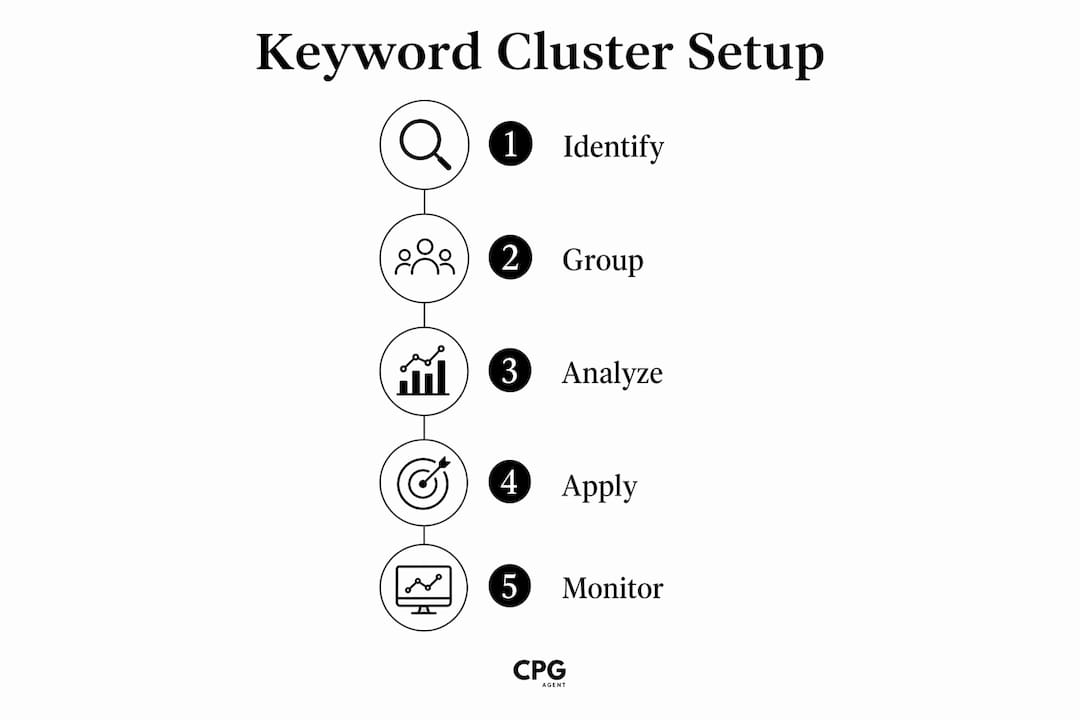
Here is a practical sequence for turning social data into action:
- Identify the trend signal. Pull the top emerging keywords and ingredient mentions from your listening dashboard each week. Flag anything with a growth rate above your category baseline.
- Validate with cross-platform data. Confirm the trend appears on at least two platforms before acting. A spike on Reddit alone may not translate to purchase behavior.
- Map to your product portfolio. Identify which existing SKUs align with the trend and which gaps represent a new product opportunity.
- Brief your content team. Use the language consumers are already using. If they say "gut-friendly" rather than "probiotic," your content should reflect that.
- Select influencers by conversation fit. Find creators who are already talking about the trend organically, not just those with the largest following.
- Monitor the response. Track sentiment shifts after launch. A negative spike in the first two weeks is an early warning, not a final verdict.
Posting less frequently but focusing on narrative intent and cultural moments correlates seven times more strongly with follower growth than posting volume. That finding changes how you should brief your content team. Fewer posts built around genuine cultural relevance outperform a high-volume content calendar every time.
Criticism handled transparently and swiftly can convert negative sentiment into brand trust. When a CPG brand responds to an ingredient concern within 24 hours with clear, factual information, it demonstrates credibility. Silence or defensive responses do the opposite.
Pro Tip: Assign one person on your team to own the weekly social listening review. When listening is everyone's job, it becomes no one's job. A dedicated owner creates accountability and faster response times.
Social listening also feeds content marketing for FMCG brands directly. The language consumers use in organic posts is the most accurate brief a content team can receive.
Measuring the impact of social listening on CPG performance
Measuring social listening effectiveness requires a mix of engagement metrics, share of voice data, and sentiment tracking. Vanity metrics like follower count tell you very little about whether your listening program is working.
CPG brands should target engagement rates of 3.0–3.5% on TikTok and 2.5–3.0% on Instagram. These benchmarks come from 2026 CPG industry data. Brands consistently below these thresholds are producing content that does not resonate, regardless of how often they post.
| Metric | What It Measures | Why It Matters |
|---|---|---|
| Engagement rate | Content resonance per post | Signals whether messaging connects with your audience |
| Share of voice | Your brand vs. competitors in conversation | Shows competitive positioning in the category |
| Earned media value | Dollar equivalent of organic mentions | Quantifies the return on social listening investment |
| Sentiment shift | Change in positive vs. negative mentions over time | Early warning system for brand or product issues |
| Follower growth rate | Audience expansion velocity | Reflects long-term content and cultural relevance |
Earned media value combined with share of voice gives the clearest picture of brand strength in a category. Earned media value translates organic mentions into a dollar figure, making it easier to justify the investment in listening tools to finance teams.
Consistency matters more than frequency. The 2026 CPG benchmarks recommend posting about five times per week on TikTok and four times on Instagram. But those numbers are a ceiling, not a floor. A brand posting three times per week with high narrative relevance will outperform one posting daily with generic content.
YouTube retention rate and average view duration are the most underused metrics in CPG social listening. Long-form content that holds attention signals deep consumer interest in a topic, which is a stronger trend signal than a spike in short-form views.
Key takeaways
Social listening for CPG trends delivers its highest value when brands separate brand monitoring from competitive intelligence, activate visual AI to capture untagged mentions, and connect consumer conversation directly to product and content decisions.
| Point | Details |
|---|---|
| Visual AI closes the gap | Image recognition captures up to 80% more brand mentions missed by text-only monitoring. |
| Separate your dashboards | Brand monitoring and competitive intelligence need distinct data models to generate clear action triggers. |
| Quality beats volume | Narrative-focused posts correlate seven times more strongly with follower growth than posting frequency. |
| Benchmark your engagement | Target 3.0–3.5% on TikTok and 2.5–3.0% on Instagram to confirm your content is resonating. |
| Respond to criticism fast | Transparent, swift responses to negative sentiment build brand trust rather than eroding it. |
What most CPG teams get wrong about social listening
The biggest mistake I see CPG marketing teams make is treating social listening as a brand protection tool rather than a growth intelligence system. They set up alerts for their own brand name, monitor for crises, and call it done. That approach captures maybe 20% of the available signal.
The brands that pull ahead are the ones using social listening to map the cultural territory their category occupies. They are not just asking "what are people saying about us?" They are asking "what conversations are happening that we should be part of?" That shift in framing changes everything about how you configure your dashboards, what keywords you track, and how you brief your product and content teams.
Visual listening is the capability I push hardest on with CPG teams, because the resistance to it is almost always budget-related rather than strategic. When you realize that text-only monitoring misses the majority of organic product mentions, the ROI calculation changes fast. A consumer posting a grocery haul video featuring your product without tagging you is a signal. Most brands never see it.
The other pattern I caution against is confusing a busy content calendar with a social listening program. Posting volume is a vanity metric. I have seen brands post daily for six months and watch their engagement rate decline the entire time, because they were broadcasting rather than listening. The Sprinklr data on narrative intent confirms what I have observed firsthand: cultural presence drives growth, not frequency.
Social listening is not a campaign. It is an ongoing practice that compounds in value the longer you run it. The brands that treat it as a standing operational function, not a project, are the ones that consistently spot trends early and respond to consumer sentiment before it becomes a crisis.
— Matthew
Advanced social listening tools built for CPG brands
CPG teams that want to move from basic monitoring to full consumer intelligence need a platform built for the complexity of the category.
Cpgagent brings together AI-driven trend detection, consumer sentiment analysis, and competitive benchmarking in one place, built specifically for CPG and FMCG brands. The platform connects social listening data directly to product development workflows and content strategy, so your team spends less time pulling reports and more time acting on what the data shows. Whether you are tracking ingredient trends, monitoring brand reputation, or benchmarking against category competitors, Cpgagent gives you the infrastructure to do it without agency overhead or long setup timelines.
FAQ
What is social listening for CPG trends?
Social listening for CPG trends is the practice of monitoring consumer conversations across social platforms to detect shifts in preferences, sentiment, and emerging product trends. It is also called consumer intelligence and is used by CPG brands to inform product development and marketing strategy.
How does visual AI improve social listening for CPG brands?
AI-powered image recognition detects up to 80% more brand mentions by identifying logos and products in untagged images like grocery hauls and shelfies. Text-only monitoring misses the majority of organic consumer content featuring CPG products.
What engagement rate should CPG brands target on TikTok and Instagram?
CPG brands should target engagement rates of 3.0–3.5% on TikTok and 2.5–3.0% on Instagram, based on 2026 industry benchmarks. Brands consistently below these thresholds are producing content that does not connect with their audience.
What is the difference between brand monitoring and competitive intelligence in social listening?
Brand monitoring tracks your own sentiment, share of voice, and crisis signals. Competitive intelligence tracks category trends, competitor activity, and white space in consumer conversation. Separate data models for each use case generate clearer, more targeted insights.
How often should CPG brands post on social media for best results?
Posting frequency matters less than narrative quality. Focusing on cultural moments and narrative intent correlates seven times more strongly with follower growth than posting volume, according to Sprinklr research. The 2026 CPG benchmarks suggest around five posts per week on TikTok and four on Instagram as a practical ceiling.