

TL;DR:
- Productized consulting transforms expertise into fixed-scope, fixed-price services that enable predictable revenue and faster delivery.
- It relies on clear scope, standardized deliverables, transparent pricing, repeatable processes, and measurable outcomes to succeed at scale.
Productized consulting tools convert specialized expertise into fixed-scope, fixed-price offerings that standardize delivery and remove the guesswork from client engagements. The industry term is "productized consulting," and it sits at the intersection of consulting methodology and product thinking. Business leaders and consultants who adopt these tools gain predictable revenue, faster delivery cycles, and clients who know exactly what they are buying before they sign. This guide breaks down the core components, pricing models, AI integration, and operational practices that make productized consulting work at scale.
What are productized consulting tools, and why do they matter?
Productized consulting packages expertise into fixed-scope, fixed-price offerings with standardized delivery. That definition matters because it separates productized consulting from traditional retainers, where scope drifts and pricing is opaque. The core promise is clarity: clients see a defined outcome, a set price, and a repeatable process before any work begins.

The strategic case is equally strong. Productized consulting enables predictable revenue and scaling by shifting from time-based pricing to selling clearly defined, valuable outcomes. That shift lets consultants serve more clients without proportionally increasing hours. For CPG and FMCG brands, this model is especially useful because speed to market is a competitive advantage, and bespoke consulting engagements are too slow.
Gateway offers accelerate adoption. A fixed-scope diagnostic, for example, gives clients a low-risk entry point and builds trust before deeper engagements begin. Cpgagent applies this logic directly through its AI-driven platform, where tools like PersonaForge and Launch Validator deliver defined outputs at defined price points.
What are the key components of productized consulting tools?
Five elements define a well-built productized consulting tool. Miss any one of them, and the product reverts to a bespoke engagement in disguise.
- Fixed scope with explicit boundaries. Every offer must state what is included and what is not. Vagueness in scope, deliverables, exclusions, and decision rights undermines productization by introducing scope creep and renegotiation. Write the exclusions list as carefully as the inclusions list.
- Standardized deliverables with acceptance criteria. Clients and consultants need an agreed definition of "done." A practical offer documents 1–3 outcomes, KPI packs, and Sprint 1 exit criteria so both sides know when the engagement closes.
- Published, fixed pricing. Price transparency is a signal of confidence. Consultants who publish prices attract self-qualifying buyers and spend less time on discovery calls.
- Repeatable delivery processes. Templates, intake forms, and workflow automations replace ad hoc coordination. The consulting SOW template framework recommends weekly governance cadences and change control processes built into the product from day one.
- KPIs and exit criteria. Every productized offer needs a measurable end state. Without it, clients extend engagements indefinitely, and margin erodes.
Pro Tip: Write your exclusions list before your inclusions list. Consultants who define what they will not do first find it far easier to hold scope boundaries under client pressure.
How do pricing and revenue models work for productized consulting tools?
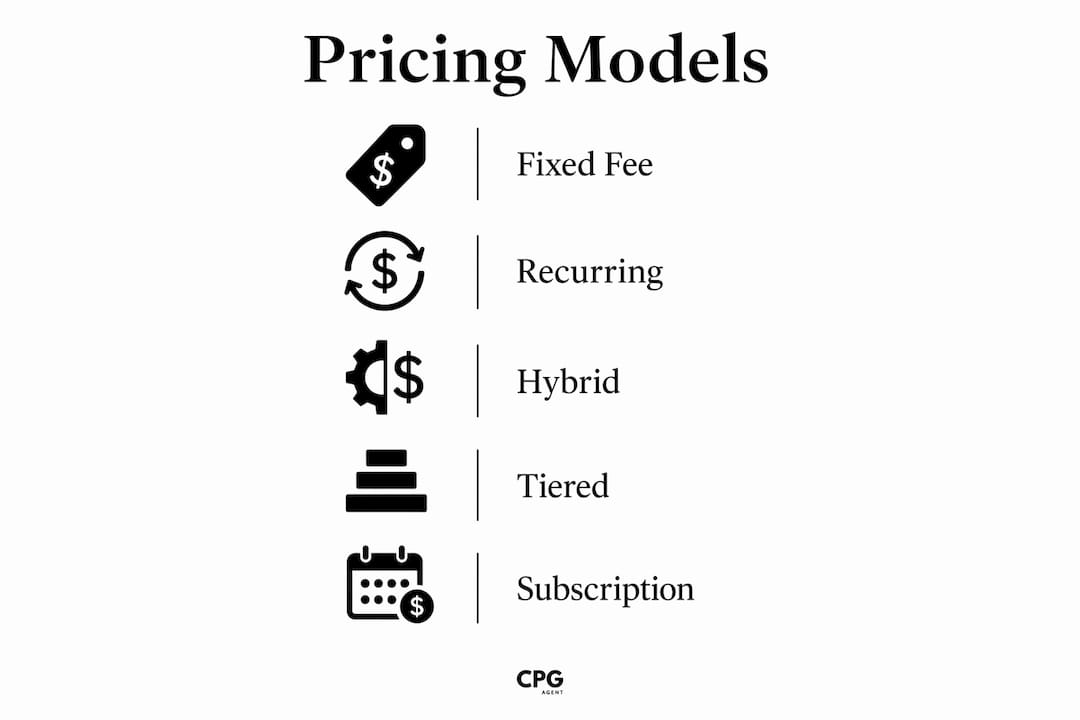
Pricing is where most consultants undercharge, because they anchor to hourly rates instead of outcome value. Outcome-based pricing enables premium positioning without commoditization. The price reflects the result, not the hours spent delivering it.
The market has settled into two dominant structures, with a third hybrid model gaining ground.
| Model | Typical range | Best for |
|---|---|---|
| Fixed-fee project | $3,000–$15,000 per engagement | Defined deliverables with clear endpoints |
| Recurring subscription | $2,000–$8,000 per month | Ongoing advisory and reporting cadences |
| Hybrid (fixed + subscription) | Varies by tier | Clients needing both a launch deliverable and ongoing support |
Hybrid model adoption sits at 73% among consultants who have fully productized their services. That figure reflects a market reality: clients want a defined starting point and ongoing access, not one or the other. The hybrid approach captures both revenue streams without requiring bespoke scoping for each client.
Tiered pricing adds another layer of flexibility. A three-tier structure, such as Starter, Growth, and Enterprise, lets consultants serve different budget levels while keeping the core delivery process identical. The variation is in support depth and turnaround time, not in the fundamental methodology.
Pro Tip: Price your first productized offer at the point where you would feel slightly uncomfortable saying the number out loud. Consultants consistently underprice early offers, and the market rarely pushes back as hard as expected.
For CPG brands exploring subscription-based advisory structures, the subscription model mechanics used in consumer goods provide a useful parallel for structuring recurring consulting engagements.
What role do AI and automation play in productized consulting tools?
AI and automation are the primary reason complex consulting is now productizable at scale. Without them, standardizing high-expertise work requires either a large team or a narrow scope. With them, one consultant can deliver at the quality level of a full team.
The efficiency gains are concrete. AI-augmented SEO audits drop from 40–60 hours to 3–5 hours with 85–90% quality parity. Financial health reports that once required a full analyst day now complete in 2–3 hours. These are not marginal improvements. They fundamentally change the economics of a consulting practice.
The workflow looks like this in practice:
- Intake automation. Tools like Typeform or Jotform collect structured client data before any human involvement. The data feeds directly into analysis templates.
- AI-assisted research and analysis. Large language models and specialized AI tools process market data, competitor landscapes, and client inputs at speeds no human analyst can match.
- Automated report generation. Platforms like n8n and Make.com orchestrate multi-step workflows that pull data, run analyses, and populate report templates automatically.
- Human review and advisory layer. The consultant reviews outputs, adds interpretation, and delivers the final product. This is where expertise earns its premium.
- Automated delivery and feedback loops. Client portals, automated follow-up sequences, and structured feedback forms close the loop without manual coordination.
The key principle is that automation handles the repeatable portions, and the consultant preserves time for the high-judgment work that clients actually pay for. Cpgagent's platform applies this model directly, using AI tools to accelerate research and analysis phases while keeping senior advisory at the center of every engagement.
Pro Tip: Map your current consulting process in a flowchart before you automate anything. Consultants who automate without mapping first embed their inefficiencies into the automation, and those inefficiencies compound at scale.
What operational best practices ensure success with productized consulting tools?
Productization is an operationalization project, not a packaging exercise. Defining revision policies and distinguishing between a "new request" and a "revision" directly drives product margin. Consultants who skip this step find that clients treat every new idea as a revision, and the fixed-fee model collapses.
The operational practices that separate successful productized consultants from those who revert to bespoke work are specific.
- Standardize the intake funnel. Many consultants fail to productize their sales-to-delivery pipeline, causing ongoing bespoke scoping even after the product is packaged. A standardized intake form, a prefilled proposal template, and a fixed onboarding sequence eliminate this problem.
- Define revision limits in writing. Every productized offer should specify the number of revision rounds included and the process for requesting changes outside that scope. This is a contractual boundary, not a negotiating position.
- Use tiered support to manage personalization. Tiered client support makes productized consulting feel personalized by varying hands-on involvement while keeping the core product fixed. Clients in higher tiers get more access, not a different product.
- Build change control into the product. A formal change request process, even a simple one, signals professionalism and protects scope. Clients who understand the process respect it.
- Measure delivery time per engagement. Track hours spent per client against the fixed fee. If delivery time creeps up, the intake process or scope definition has a gap.
For CPG brands and consultants building lean strategy practices, the lean CPG strategy approach offers a direct model for applying these operational principles without agency overhead.
Pro Tip: Create a "scope decision log" for every engagement. When a client requests something outside scope, document the decision in writing, even if you choose to include it. That log becomes your evidence base for future pricing conversations.
Key takeaways
Productized consulting tools work because they replace open-ended engagements with fixed scope, fixed pricing, and repeatable delivery systems that protect both consultant margin and client clarity.
| Point | Details |
|---|---|
| Fixed scope is non-negotiable | Define inclusions and exclusions before any client conversation begins. |
| Outcome-based pricing outperforms hourly rates | Price the result, not the time, to capture full value and avoid commoditization. |
| AI cuts delivery time dramatically | AI-augmented workflows reduce complex audits from 40–60 hours to 3–5 hours. |
| Intake standardization protects margin | A fixed intake funnel prevents bespoke scoping from eroding the productized model. |
| Tiered support adds perceived value | Varying access levels, not core delivery, lets consultants serve multiple client segments. |
What I have learned from watching consultants productize their practices
The consultants who succeed with productized models share one trait: they treat the product definition as a living document, not a one-time decision. The first version of a productized offer is always wrong in some detail. Scope boundaries are too loose, revision limits are too generous, or the intake form misses a critical data point. The ones who iterate quickly, tighten the definition, and relaunch within 60 days build practices that compound. The ones who treat the first version as final spend the next year doing bespoke work inside a productized wrapper.
The AI integration question is where I see the most hesitation. Consultants worry that automating research and reporting will make their work feel generic. The opposite is true. When AI handles the data collection and initial analysis, the consultant has more time for the interpretation layer, and that is where real differentiation lives. A financial health report generated in 2–3 hours is only as good as the advisor who reads it and tells the client what to do next.
The gateway offer strategy is underused. A fixed-scope diagnostic at $3,000–$5,000 is the single fastest way to build a client pipeline for higher-value engagements. It lowers the approval barrier, delivers a concrete result, and positions the consultant as the obvious choice for the next phase. Start there, not with a $15,000 flagship product that requires a long sales cycle.
— Matthew
How Cpgagent supports productized consulting delivery
Cpgagent is built for brands and consultants who need to move fast without rebuilding their entire workflow from scratch.
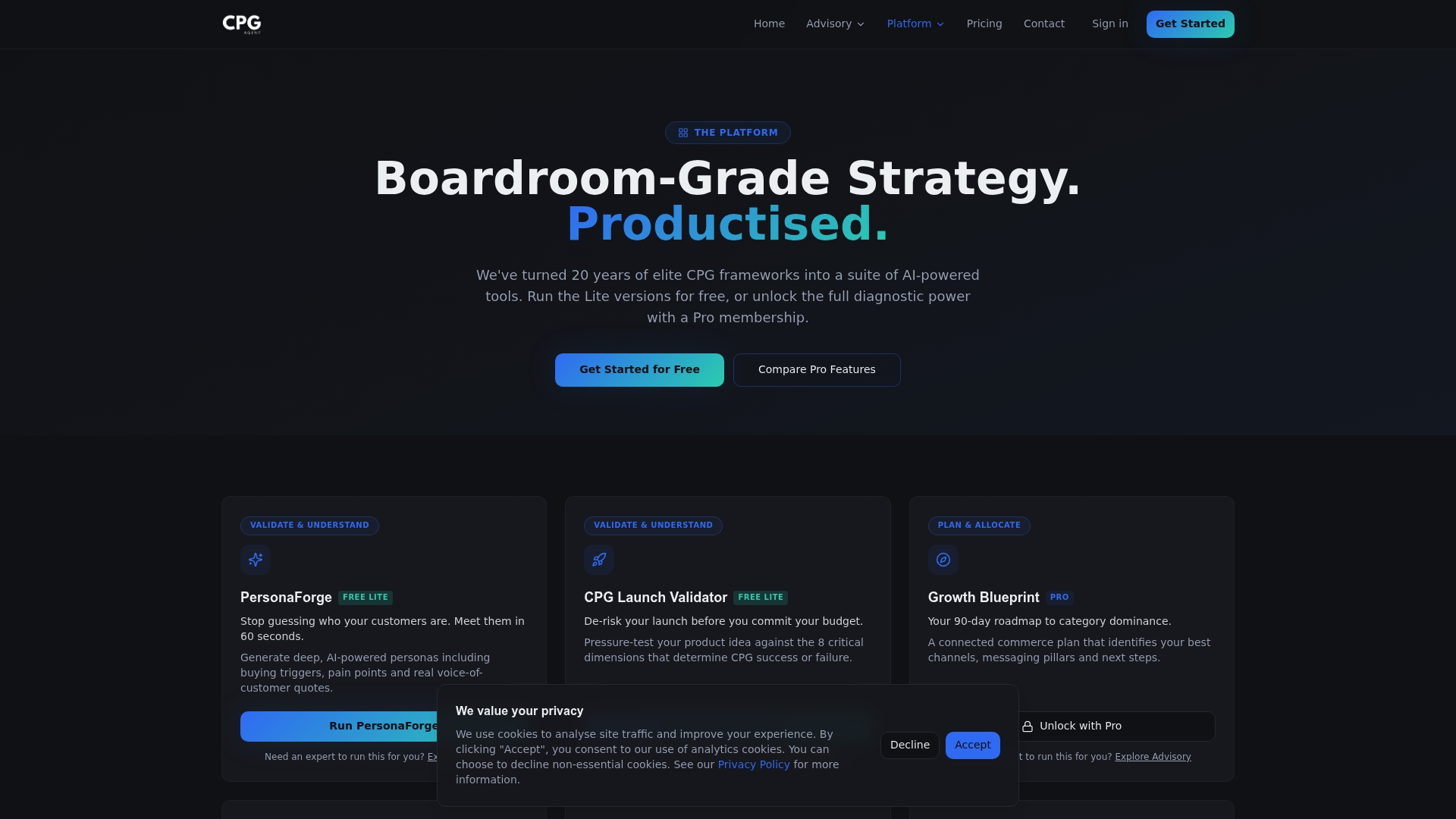
The Cpgagent platform combines AI-driven strategy tools, automated workflows, and fractional leadership advisory into a single system. Tools like PersonaForge and Launch Validator deliver defined outputs at defined price points, which is the exact structure that makes consulting productizable. For CPG and FMCG brands that want to apply productized consulting principles to brand growth, market validation, and portfolio strategy, Cpgagent removes the discovery phase and replaces it with data-backed outputs from day one. The platform integrates into existing tech stacks, so consultants and brand leaders can deploy without rebuilding what already works.
FAQ
What is productized consulting?
Productized consulting packages expertise into fixed-scope, fixed-price offerings with standardized delivery processes. It replaces open-ended retainers with clearly defined outcomes and repeatable workflows.
How does productized consulting pricing work?
The two primary models are fixed-fee projects, typically ranging from $3,000–$15,000, and recurring subscriptions at $2,000–$8,000 per month. Hybrid model adoption sits at 73% among fully productized consultants.
What is the biggest operational risk in productized consulting?
Scope creep is the primary risk. Vague scope definitions and missing exclusion lists allow clients to expand deliverables beyond the fixed fee, which destroys margin.
How does AI reduce consulting delivery time?
AI tools automate research, analysis, and report generation. SEO audits that previously required 40–60 hours now complete in 3–5 hours with 85–90% quality parity, according to documented workflow benchmarks.
Where should a consultant start with productization?
Start with a gateway offer: a fixed-scope diagnostic at a low price point. It builds client trust, delivers a concrete result, and creates a natural path to higher-value engagements without requiring a long sales cycle.