

TL;DR:
- A CPG brand refresh updates elements like visuals or messaging without changing the core identity to restore relevance. It involves strategies such as visual facelifts, messaging refinement, packaging redesign, and digital updates, chosen based on specific brand gaps. Successful refreshes rely on thorough audits, strong governance, and ongoing measurement to sustain growth and prevent fragmentation.
A CPG brand refresh is a targeted update to one or more brand elements that restores relevance and competitive appeal without replacing the core identity. The types of CPG brand refresh strategies available to brand managers range from visual facelifts and messaging realignments to full packaging overhauls and digital asset rebuilds. Unlike a rebrand, which modifies the brand's name, story, and fundamental positioning, a brand refresh preserves equity while signaling modernization to consumers. Brands that invest in the right refresh type at the right time unlock measurable growth without the cost and risk of starting over.
1. What are the main types of CPG brand refresh strategies?
A CPG brand refresh strategy is any deliberate update to brand assets or messaging that improves market performance while keeping the core identity intact. The industry recognizes several distinct types, each with different scope, cost, and risk profiles.
- Visual identity facelift: Updates logo, color palette, and typography without changing brand essence. This is the most common entry point for brands that feel dated but retain strong consumer loyalty.
- Messaging and voice refinement: Sharpens the brand's value proposition, tone, and copy across all channels. This type addresses brands whose products have evolved but whose communication has not kept pace.
- Packaging renovation: Redesigns physical packaging for shelf impact, sustainability signals, or regulatory compliance. Product renovation protects brand equity and retains loyal buyers, though distribution and shelf visibility drive volume more than design alone.
- Digital asset refresh: Updates website, social templates, email design, and digital advertising to create a coherent brand presence across screens.
- Brand architecture alignment: Reorganizes sub-brands, product lines, or portfolio tiers to reduce consumer confusion and improve cross-sell potential.
- Positioning realignment: Shifts how the brand occupies a consumer's mental space, often in response to private label pressure or category disruption.
- Tone and narrative refresh: Rebuilds the brand story to reflect a new cultural moment or consumer tension the brand now resolves.
Pro Tip: Start with a single refresh type before expanding scope. Brands that try to update visuals, messaging, and architecture simultaneously often dilute execution quality across all three.
2. How strategic brand audits shape effective refresh strategies

A brand audit is the non-negotiable first step before any refresh execution. Strategy before design is the finding from analysis of 250+ FMCG projects. Brands that skip this step make aesthetic choices that look modern but fail to drive repeat purchase.
A thorough audit covers four areas. First, perception analysis compares how the brand intends to be seen versus how buyers actually classify it. Second, consumer insight work, including community listening and segmentation, reveals which brand elements resonate and which create friction. Third, competitive landscape mapping identifies open positioning zones where the brand can differentiate without chasing trends. Fourth, internal asset review surfaces inconsistencies in how the brand is applied across packaging, digital, and sales materials.
Brands that listen actively to consumer conversations develop more relevant positioning and produce more effective refresh campaigns. That listening step is what separates a refresh that moves sales from one that simply looks better on shelf.
The audit output should answer three questions before any design brief is written: What does the brand stand for today? What do consumers believe it stands for? Where is the gap? Without clear answers, any refresh risks solving the wrong problem.
3. Benefits and risks of each refresh type
Different refresh strategies carry very different risk and return profiles. Brand managers need to match the refresh type to the brand's actual problem, not to what looks most impressive in a board presentation.
Visual facelifts
Visual facelifts carry the lowest risk of the major refresh types. High-impact visual refreshes focus on logo refinement, palette modernization, typography, templates, and web presence. They signal premium positioning without disrupting the brand recognition consumers already hold. The risk is underestimating execution: a poorly rolled out visual update creates inconsistency across retail, digital, and trade materials that erodes trust faster than the old look ever did.
Messaging and positioning shifts
Messaging shifts carry moderate risk because they touch the brand's promise directly. A sharper value proposition can unlock new consumer segments. A misjudged one can alienate the core buyer. Clear brand positioning differentiates CPG offerings in a market where private label equivalence is a real threat. Brands that anchor messaging updates in consumer research rather than internal opinion consistently outperform those that do not.
Packaging renovations
Packaging renovations sit at medium to high risk because they affect the physical product on shelf. Changes to structure, materials, or print require retailer approval, supply chain coordination, and often a transition period where old and new packaging coexist. The upside is direct: better shelf standout and improved sustainability credentials both influence purchase decisions at the moment of truth.
Full portfolio or architecture refreshes
Architecture refreshes carry the highest complexity and cost of any refresh type short of a full rebrand. They require cross-functional alignment across marketing, sales, operations, and finance. Brands investing in key competitive capabilities achieve 3–5% incremental sales growth. That growth comes from focused capability investment, not from cosmetic change alone.
Pro Tip: Build a risk matrix before selecting your refresh type. Map each option against timeline, budget, retailer impact, and consumer disruption. The lowest-risk option is rarely the one with the biggest visual impact.
4. When to choose a specific refresh strategy
The right refresh type depends on the specific gap between where the brand is and where it needs to be. Brand managers should use these signals to guide their decision.
- Choose a visual facelift when the brand's core positioning is sound but the design language feels dated relative to category competitors. Consumer recognition is high, but purchase intent is declining.
- Choose a messaging refresh when buyers misclassify the brand's value tier or ask questions that the current packaging and copy fail to answer. A disconnect between brand story and buyer perception signals the need for strategic reevaluation before any visual work begins.
- Choose a packaging renovation when shelf data shows poor standout, when sustainability is a category expectation, or when regulatory changes require label updates.
- Choose a digital asset refresh when the brand's online presence is fragmented across channels, or when social content no longer reflects the brand's current visual and tonal standards.
- Choose a positioning realignment when private label has closed the perceived value gap, or when a new consumer segment has emerged that the current positioning does not address.
- Avoid trend-chasing refreshes. Strategic clarity anchors branding updates and prevents costly mistakes that come from reacting to competitor moves without a clear brand rationale.
A useful diagnostic is to ask your retail buyers what tier they place your brand in and why. If their answer surprises you, a messaging or positioning refresh is almost certainly overdue. For a deeper look at how CPG brands win shelf space through differentiation, the CPG brand differentiation examples resource from Cpgagent covers real-world applications across categories.
5. Execution and governance after the refresh
A refresh that launches well but degrades over six months is a failed refresh. Brand adoption training and living brand guidelines are critical to sustain refresh success beyond the initial design update. Many brands invest heavily in the creative phase and then underinvest in the rollout infrastructure that keeps the new brand consistent.
Governance after a refresh requires three things. First, a living brand guide that covers every application from shelf talkers to Instagram stories. Second, digital templates that make it easy for internal teams and agency partners to produce on-brand work without a designer in the loop. Third, a named brand steward who reviews new applications and flags drift before it becomes a pattern.
The brands that sustain refresh gains are the ones that treat the launch as the beginning of a governance program, not the end of a design project. Internal adoption training, particularly for sales teams who present the brand to retail buyers, is the most overlooked step in the entire process. A sales rep presenting outdated materials to a buyer six months after a refresh undermines every dollar spent on the creative work.
For brand managers navigating the difference between a refresh and a full strategic pivot, the strategic pivot guide from Cpgagent provides a clear framework for making that call.
Key takeaways
The most effective CPG brand refresh strategy is one built on a clear audit, matched to a specific brand gap, and sustained through governance and training after launch.
| Point | Details |
|---|---|
| Strategy before design | Run a brand audit before any visual or messaging work begins to avoid solving the wrong problem. |
| Match refresh type to the gap | Visual facelifts, messaging shifts, and packaging renovations each solve different problems. |
| Governance sustains gains | Living brand guidelines and adoption training keep the refresh consistent after launch. |
| Avoid trend-chasing | Anchor every refresh decision in consumer insight and brand positioning, not competitor moves. |
| Measure incrementally | Track sales, shelf standout, and buyer perception before and after to validate the refresh investment. |
Why most CPG refreshes fail before they start
The brands I see struggle most with refreshes are not the ones that pick the wrong color palette. They are the ones that skip the audit entirely and go straight to a design brief. The brief becomes a wish list of things the team finds exciting rather than a response to a diagnosed brand problem. The result is a refresh that looks modern but does not move the needle on purchase intent or retailer confidence.
The other pattern I see consistently is treating the refresh as a one-time event. A brand launches new packaging in march, sends a press release, and then moves on. Six months later, the sales team is still using old pitch decks, the website has not been updated, and the brand looks fragmented across every touchpoint. The refresh investment evaporates because no one owned the rollout.
The brands that get this right treat a refresh as a program with a start date, a governance structure, and a measurement plan. They define what success looks like before the design work begins. They assign a brand steward who has the authority to enforce standards. And they build templates that make it easy for everyone in the organization to produce on-brand work without a creative review every time.
Private label pressure is real in 2026, and it is not going away. The brands that will hold shelf space are the ones that can articulate a consumer tension that a retailer's own label cannot resolve at scale. That articulation starts with strategy, not with a new logo. If you are considering a refresh, start with the audit. The design will follow naturally from what you find.
— Matthew
How Cpgagent supports your brand refresh execution
Brand managers who need to move from audit to execution without a six-month agency engagement have a faster path available.
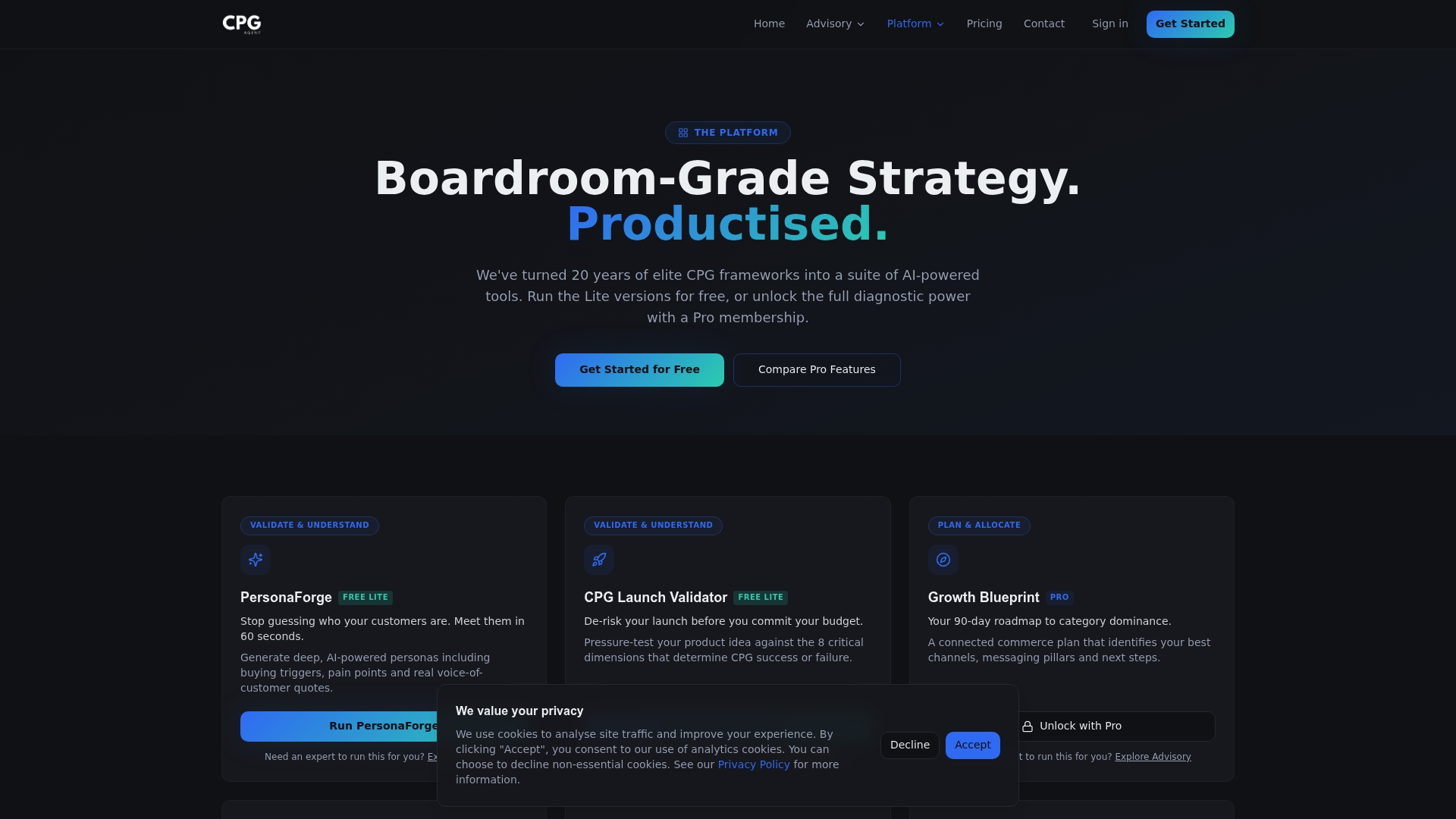
Cpgagent's AI-driven platform gives CPG and FMCG brand teams the tools to run consumer insight analysis, test positioning hypotheses, and manage brand asset rollouts without traditional agency overhead. Tools like PersonaForge help teams build consumer segments grounded in real data, while the platform's workflow automation keeps refresh execution on track across packaging, digital, and trade channels. For brand managers who need senior marketing leadership without a full-time hire, Cpgagent's fractional CMO service provides the strategic oversight that keeps a refresh on course from audit through governance.
FAQ
What is the difference between a brand refresh and a rebrand?
A brand refresh updates specific elements like visuals, messaging, or packaging while keeping the core identity intact. A rebrand modifies the fundamental identity, including the brand name, story, and positioning.
How do I know which type of CPG brand refresh I need?
Start with a brand audit that compares intended positioning against actual buyer perception. The gap between those two points identifies the refresh type that will have the most impact.
Can a packaging renovation alone drive volume growth?
Packaging renovation protects brand equity and retains loyal buyers, but distribution reach and shelf visibility drive volume more than design changes alone.
How long does a CPG brand refresh take?
A focused visual facelift can complete in 8–12 weeks. A full packaging renovation or architecture refresh typically requires 6–12 months when retailer approvals and supply chain changes are factored in.
What is the biggest mistake brands make during a refresh?
The most common failure is underinvesting in post-launch governance. Without living brand guidelines, digital templates, and adoption training, refresh consistency degrades within months of launch.