
Finding a growth platform that reliably improves brand revenue and listing quality on Amazon without locking teams into fixed agency retainers remains hard for brands. Most tools require long contracts, do not publish transparent pricing, or force brands to use multiple point solutions for core listing and profit tasks. This list compares reporting, automation, specialization, and pricing across six leading Amazon conversion readiness score alternatives so brands can find the right platform for their workflows.
Table of Contents
CPG Agent
At a Glance
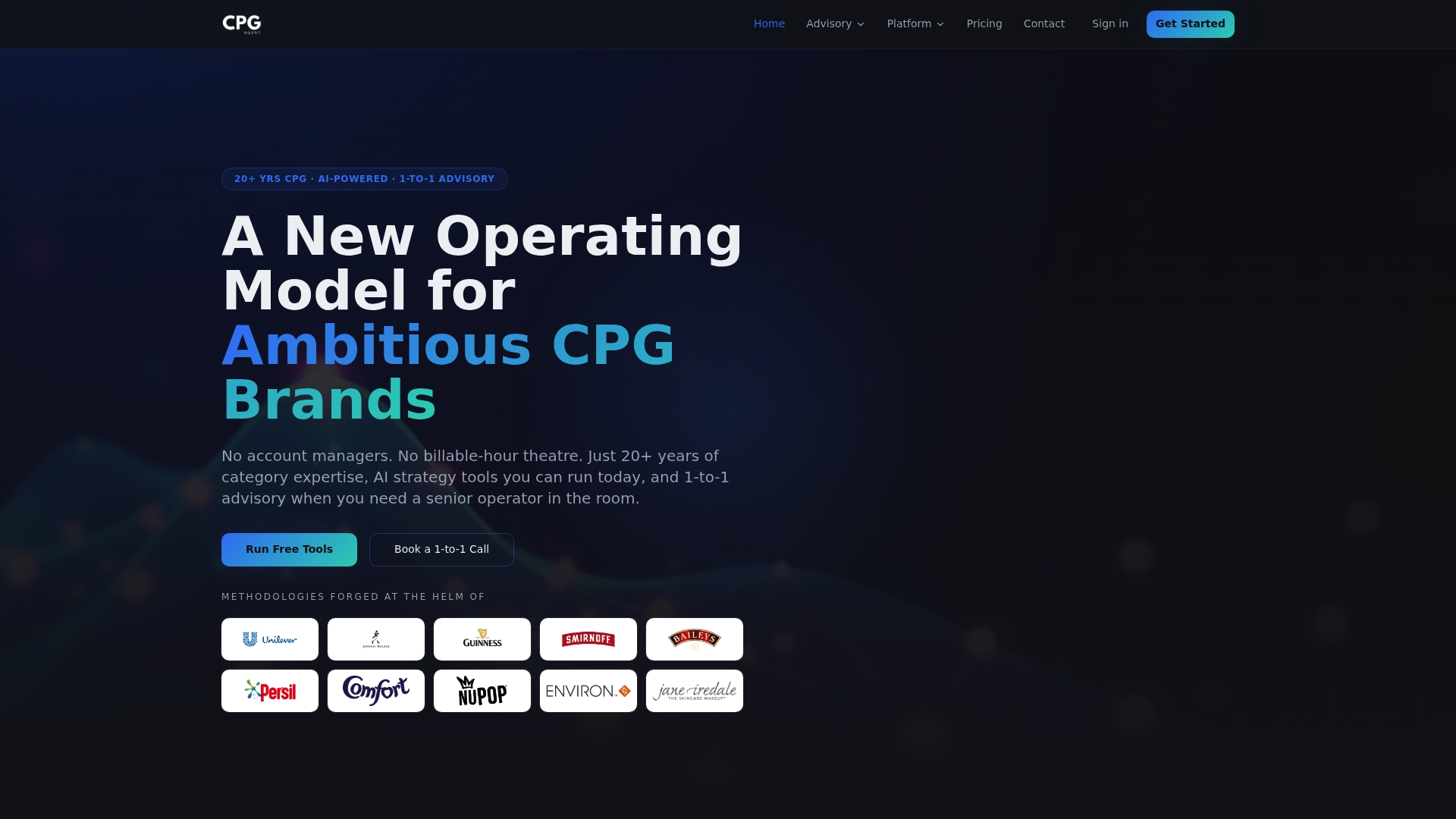
CPG Agent reports 20+ years of CPG industry expertise paired with AI driven tools to speed validated brand decisions. The platform highlights tools for audience targeting and product validation. It also offers one on one senior advisory to shorten planning cycles.
Core Features
CPG Agent combines AI powered audience identification and product validation with one on one senior advisory and flexible fractional executive options. The platform uses tools such as PersonaForge and Launch Validator to test concepts and buyer segments before production. It provides plug and play workflows and automated strategy outputs that integrate into existing brand operations.
Key Differentiator
That experience combined with AI driven tooling lets teams skip long discovery decks and move straight to revenue focused experiments. The vendor frames the approach as a way to remove traditional agency overhead and compress planning time. Those elements make the platform work like an on demand strategy team plus testing toolkit.
Pros
The platform turns senior CPG experience into repeatable, automated workflows so brands get faster, practical decisions rather than long reports. One on one advisory and fractional CMO options let you add senior leadership without a full time hire. Free diagnostic tools surface where to focus first and the testing tools reduce launch risk for new SKUs.
Cons
- Pricing is not publicly listed, which requires direct inquiry to get rates and contract details.
Who It's For
CPG Agent fits startups validating product concepts and challenger brands breaking revenue plateaus. It also suits legacy brands that need shorter planning cycles and on demand strategic leadership. The typical user wants data driven decisions plus senior marketing guidance without agency overhead.
Unique Value Proposition
PersonaForge and Launch Validator let brands validate audiences and pricing before committing to manufacturing. That capability reduces upfront development cost and shortens time to market for new products. Combined with fractional advisory, the model shifts budget from long discovery to fast, revenue oriented experiments.
Real World Use Case
A CPG startup runs concept tests in PersonaForge to identify its highest value buyer segment. The team uses Launch Validator to check pricing tolerance and packaging cues. They decide on a single SKU for initial production, which lowers inventory risk and speeds the store launch.
Pricing
Public pricing is not available. The site lists the offering as informational only, so you must contact the vendor for packages, hourly rates, or retained advisory terms. Expect pricing to vary with advisory scope and the level of fractional executive support.
Website: https://cpgagent.com
Jinnify
At a Glance
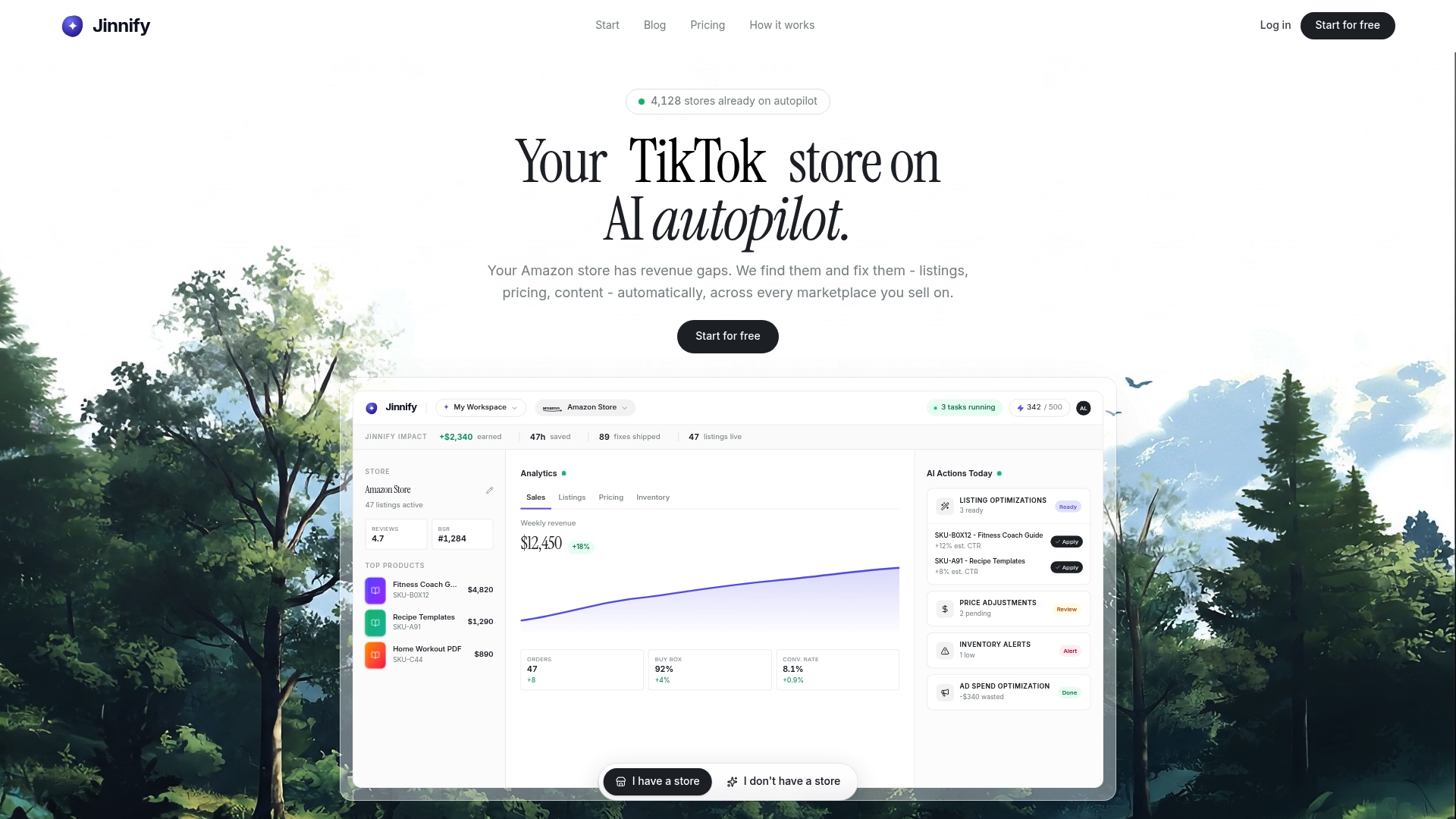
Jinnify's marketing materials report an 18% revenue lift within the first month for one connected seller. The platform ties automated listing updates to price monitoring and catalog diagnostics. Setup uses scoped permissions so teams can run AI-driven fixes without coding. Many routine listing tasks move from manual to scheduled checks and proposed changes.
Core Features
Jinnify runs automatic listing optimization for titles, bullets, and product content while syncing changes across Amazon, TikTok Shop, and Walmart. It pairs real-time competitor price monitoring with automated price adjustment and catalog diagnostics to flag delayed updates or missing attributes. The system also accepts existing AI agents and supports customized workflows under scoped permissions.
Key Differentiator
The product centers on a single workflow that finds and fixes revenue leaks across marketplaces with minimal setup. That unified approach reduces the need to combine separate listing, pricing, and catalog tools. For teams juggling multiple storefronts, the unified automation and scoped AI proposals are the main practical advantage.
Pros
Automates repetitive listing and pricing tasks so teams spend less time on copy and manual price checks. The platform supports multiple marketplaces, which cuts tool churn for sellers listing beyond Amazon. Setup requires no coding, so small teams or agencies can onboard stores quickly and start receiving suggested fixes.
Cons
- Trust in AI fixes still requires human review, especially for high-visibility listings.
- Subscription pricing may feel expensive for sellers with very small catalogs.
- Final listing state depends on marketplace validation, limiting complete control over published appearance.
- The platform relies on API and marketplace support, which can vary by region.
When It May Not Fit
Teams that require precise final-control over listing appearance will find the workflow limiting. Brands launching a first catalog should note the product favors optimizing existing listings over original product creation. Very small sellers with narrow budgets may prefer a point tool or manual edits instead.
Who It's For
Small to medium Amazon seller teams and boutique agencies managing 1–100 SKUs will get the most from Jinnify. Teams that run multiple marketplaces and want to reduce listing and pricing overhead will find the feature set relevant. Organizations expecting tight, final-control publishing should plan for a manual approval step.
Real World Use Case
A seller connects their Amazon store and lets the platform scan titles, content, and prices. Jinnify then proposes updates and pushes changes under scoped permissions. The seller reported the platform produced the revenue lift referenced above within the first month after automated fixes.
Pricing
Jinnify starts at $49/month after a 14-day free trial, which includes 500 AI credits per month, unlimited stores, and full platform access. Higher-tier plans are available for larger teams and volume catalogs.
Website: https://jinnify.ai
KwickMetrics
At a Glance
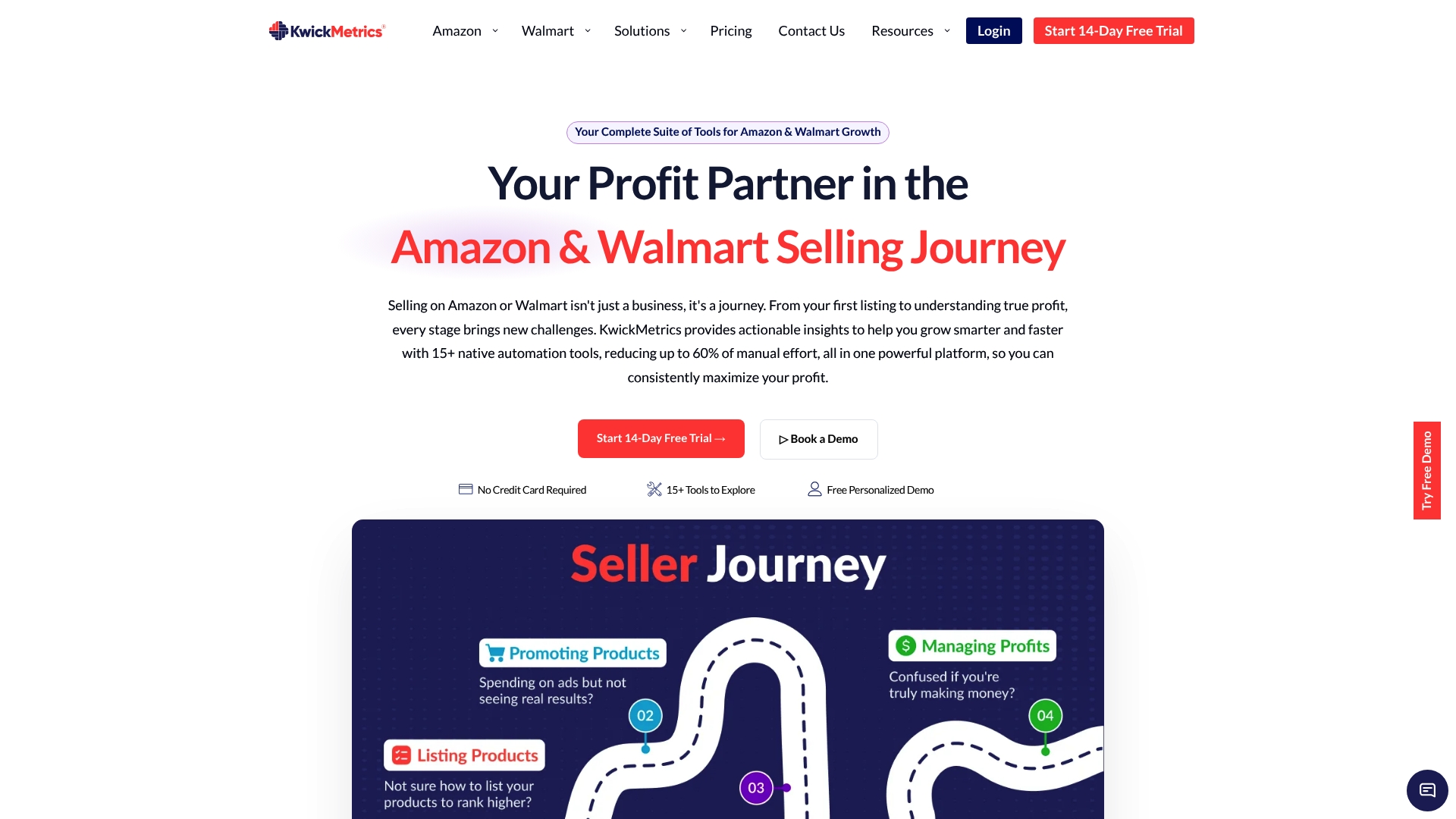
KwickMetrics reports automation that reduces up to 60% of manual effort across listing, advertising, inventory, and profit tasks. The platform targets Amazon and Walmart sellers plus agencies with 15+ native automation tools covering the full seller workflow. It bundles cross marketplace tracking and customizable plans for single sellers, brands, and agencies.
Core Features
KwickMetrics combines listing optimization, campaign management, and inventory forecasting in one interface. It uses AI-optimized listings and keyword research alongside real-time marketplace data and analytics. The product also provides profit & loss dashboards with reimbursement automation and unified reporting across marketplaces.
Key Differentiator
The one thing that sets KwickMetrics apart is its unified all in one approach that ties listing work to advertising and profit tracking. That integration lets teams move from discovery to margin-focused actions without switching platforms or rebuilding reports.
Pros
Centralized tools reduce context switching and keep listing, advertising, and inventory work together. The platform supports multi channel selling across Amazon and Walmart with real-time insights that help you act faster. Detailed profitability tracking makes it easier to spot loss drivers and allocate ad spend more profitably, and support is widely reported as responsive and helpful.
Cons
- Pricing can be high for small sellers starting out. Some user reviews describe the tiered plans as expensive.
- Several features have a learning curve for beginners. New sellers may need time to get full value.
- Some customers report complexity when integrating multiple marketplaces. Complex accounts can require additional setup and testing.
When It May Not Fit
If you are an absolute beginner with a single listing and no advertising, the platform may feel oversized. If budget is tightly constrained, the higher plans may not justify the cost for low-volume sellers. Large enterprise migration may need custom onboarding to avoid initial complexity.
Who It's For
KwickMetrics fits Amazon and Walmart sellers who manage multiple SKUs or run active advertising. It also fits agencies that handle several seller accounts and need centralized reporting. Brands that want profit focused workflows will find the platform aligned with margin improvement work.
Real World Use Case
According to the vendor, a seller company used KwickMetrics to analyze its product portfolio and achieved a 20% increase in profit margins and a 30% reduction in manual reporting hours. That example shows how portfolio analysis plus automated ad optimization and reporting can free time and improve margins.
Pricing
Pricing ranges from $15/month to $299/month depending on plan and feature set. The vendor offers monthly, half yearly, and yearly billing, and lists local currency pricing in INR for regional customers.
Website: https://kwickmetrics.com
SELLRZ
At a Glance
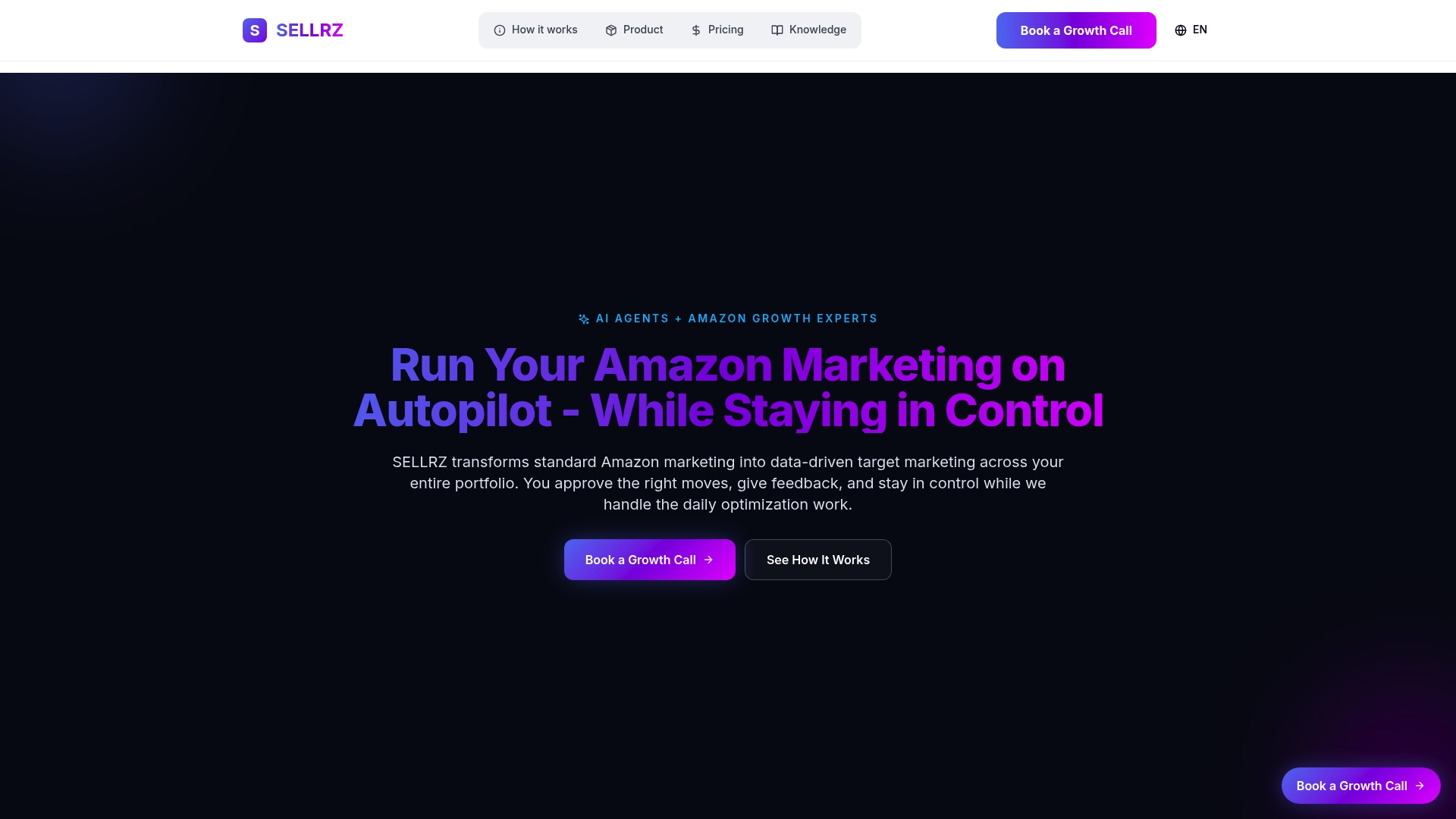
From €500/month, SELLRZ packages listing, image, ad, and portfolio optimization into a single system aimed at sellers who want to avoid agency retainers. The vendor advertises the ability to build Best-Sellers systematically in minutes while combining AI with human review. SELLRZ also syncs directly to Amazon via SP-API to keep data and changes current.
Core Features
SELLRZ uses SP-API synchronization, an AI-powered Growth Radar, and a user-friendly listing editor to identify and execute improvements across content, images, and ads. The Atlas management system lets teams manage large portfolios, and the SWF Framework pinpoints listing issues then deploys fixes through continuous optimization loops and AI missions with human review. Customizable workflows let you prioritize which SKUs receive automated interventions and which need manual approval.
Key Differentiator
SELLRZ automates the entire growth cycle with AI-driven workflows that include expert review at key decision points. That mix reduces dependency on outside agencies by moving testing, fixes, and iterative improvements into repeatable missions. The automation model focuses on scaling processes so you can apply the same optimization logic across dozens or hundreds of listings.
Pros
SELLRZ helps sellers replicate best-practice listing builds without hiring an agency, which keeps costs lower for growing catalogs. The platform combines machine suggestions with human review so you get faster hypothesis cycles and fewer risky live edits. Built-in portfolio tools and continuous loops make it practical to manage many SKUs, and pricing starting at €500/month positions the service as a lower-cost alternative to retained agencies.
Cons
- The system requires time to learn. Several third-party reviews mention a steep initial learning curve that slows early wins.
- New users may need help mapping internal workflows to SELLRZ missions. That can delay full adoption.
- Customization limits exist for highly niche markets where off-the-shelf rules do not apply.
When It May Not Fit
SELLRZ depends on existing Amazon listings and sales to generate meaningful recommendations, so it is not a match for brands without any marketplace history. Teams without data-savvy staff or bandwidth for setup will feel the learning curve. If you need highly bespoke creative or bespoke GTM workflows outside Amazon, the platform can feel constrained.
Who It's For
This product fits Amazon sellers with active listings, multiple SKUs, and limited internal optimization resources. It suits brand managers who want to scale listing experiments across portfolios. Use it when you need repeatable, data-driven fixes rather than one-off agency projects.
Real World Use Case
According to the company, a seller with 100+ products used SELLRZ and doubled revenue in six months. They ran continuous optimization workflows to improve listing quality and scale advertising efficiently. The example shows how automated missions plus human review can shift effort from manual edits to strategy.
Pricing
Pricing starts from €500/month. Plans range across Light, Growth, Premium, and Ultimate, and the vendor includes a free Beta Brand Analytics feature in plan options.
Website: https://sellrz.io
Seller Suite
At a Glance
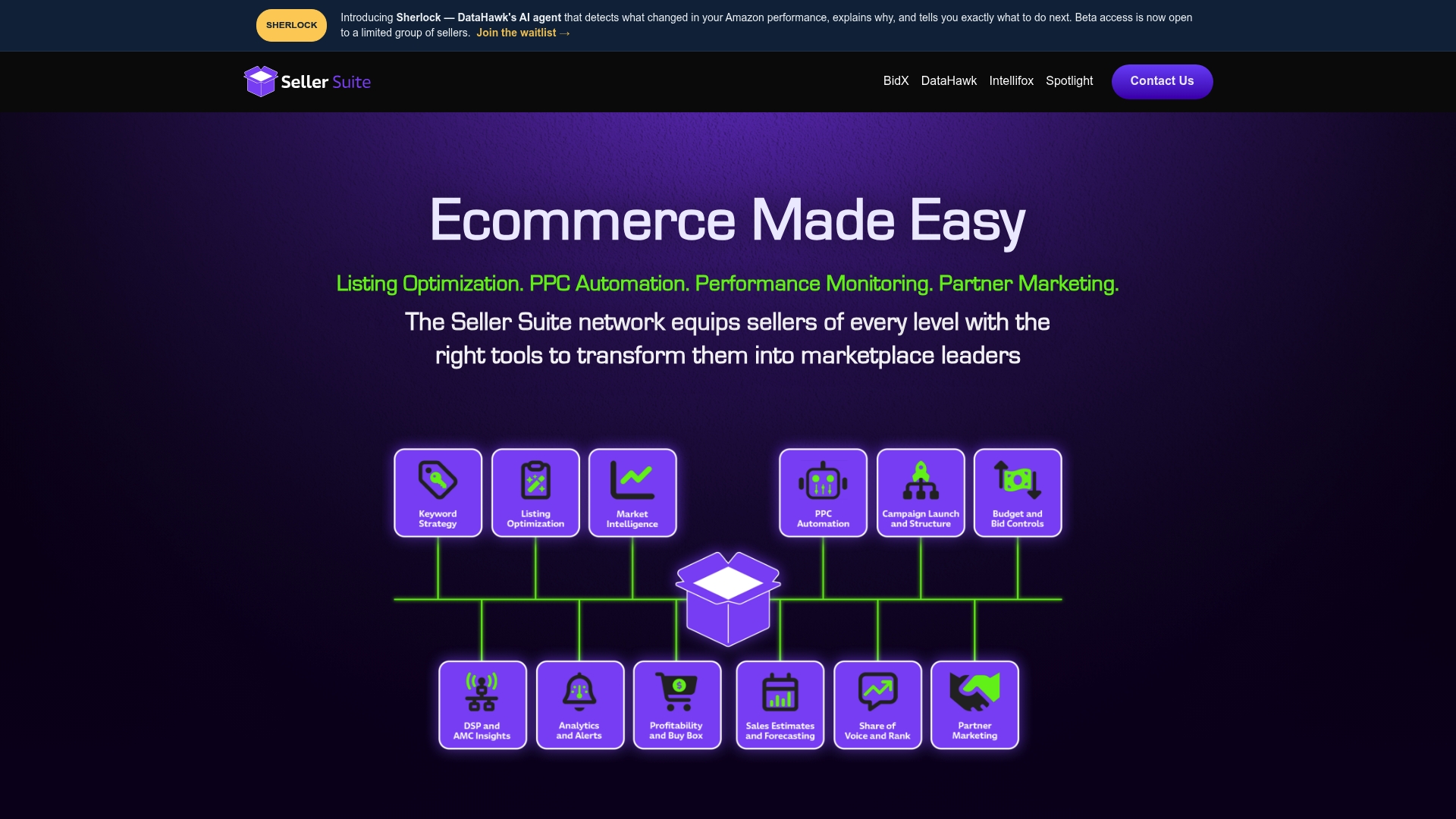
Each app in the Seller Suite requires a separate login, a detail that will surprise teams expecting a single sign on. The suite groups focused tools such as BidX, DataHawk, Intellifox, and Spotlight to cover listing, advertising, analytics, and partner marketing. That division lets brands pick specialist tools for specific problems while accepting a multi-account workflow.
Core Features
Seller Suite combines AI-driven listing optimization and keyword insights with automated ad campaign and bid management for Amazon and Walmart. The product also offers marketplace analytics with dashboards, alerts, and BI integration plus partner marketing features to drive external traffic and affiliate growth. It presents unified management across Amazon, Walmart, and Shopify, though each component uses its own access credentials.
Key Differentiator
The suite’s defining trait is its modular approach: separate, specialist applications for listings, ads, analytics, and partner marketing under one brand umbrella. That model lets teams deploy a dedicated tool for a discrete task instead of forcing one tool to cover every need. The tradeoff is tighter functional fit at the cost of cross-product session and credential overhead.
Pros
The offering maps clearly to distinct ecommerce roles, so ad managers, analysts, and affiliate teams can use tools that match their day to day needs. Built-in automation for campaigns and reporting reduces repetitive work across Amazon, Walmart, and Shopify channels. The vendor advertises high-profile brand trust and proven performance in boosting sales, which may matter when evaluating vendor credibility.
Cons
-
Each platform requires its own login, which fragments workflows and adds administrative overhead.
-
The extensive feature set may overwhelm small sellers who need a single, simple interface.
-
Pricing details are not publicly listed, which forces direct vendor contact for budget planning.
When It May Not Fit
Buyers who need single sign on or a one-login command center will struggle with this suite. Teams that require predictable, published pricing before vendor conversations may find the lack of transparent rates a blocker. Companies wanting a single consolidated product experience are likely better off with a unified-dashboard competitor.
Who It's For
Seller Suite fits ecommerce brands, marketplace sellers, and marketing agencies that prefer specialist tools for each core function. It suits teams with segmented roles where analysts, PPC managers, and partnership managers each need a dedicated application. Agencies managing multiple seller accounts will benefit from the functional depth across listing, ads, analytics, and affiliate channels.
Real World Use Case
A brand selling on Amazon and Walmart uses BidX to automate PPC bids and DataHawk to track sales and stock alerts. The brand uses listing AI to refine titles and keywords and uses Spotlight to recruit partners for external traffic. The combined workflow raises visibility while the team treats each tool as a specialist in the wider stack.
Pricing
Pricing is not listed publicly. Prospective customers must contact Seller Suite for plan details and quotes. Expect vendor sales conversations to cover licensing, module-level fees, and onboarding costs.
Website: https://sellersuite.com
SellerSprite
At a Glance
SellerSprite has tracked Amazon markets in China and Japan since 2017. It combines product research, keyword intelligence, and listing analysis into a single web based interface. A free three day trial helps you test discovery and alert workflows before committing.
Core Features
Market discovery uses filters and trend signals to narrow niche opportunities quickly. Keyword tools include reverse ASIN lookups and seed expansion to populate listings with relevant search terms. Big data analysis highlights keyword gaps, sales trends, review insights, and real time alerts for monitoring competitors. Detailed reporting exports let you track performance and share evidence with stakeholders.
Key Differentiator
The platform bundles niche discovery, keyword insights, competitor analysis, and listing optimization inside one unified interface. That combination with real time market signals reduces the need to stitch multiple point tools together. The approach favors teams that want research, validation, and listing updates inside a single workflow.
Pros
SellerSprite centralizes market, product, and keyword research so you can move from idea to listing faster. Its browser extension surfaces on page analytics during product browsing, which speeds up validation tasks. Global coverage and frequent updates make trend signals useful for sellers working across multiple Amazon marketplaces.
Cons
- Interface may be complex for beginners because the feature set is extensive.
- Advanced insights require time to learn before teams can apply them reliably.
- Pricing can be expensive for very small or casual sellers.
- Data accuracy depends on update frequency and changes to the Amazon platform.
When It May Not Fit
Not a great choice if you need a minimal interface with few options. Very small sellers with tight budgets may find the pricing structure too heavy. Teams that require guaranteed data accuracy for regulatory use should account for dependency on Amazon update cycles.
Who It's For
Amazon sellers who rely on data to select products and improve listings will get the most value. Product managers and growth teams listing in multiple countries benefit from market coverage and alerting. Sellers new to Amazon should plan time for training before they use advanced reports.
Real World Use Case
A seller uses SellerSprite to scan niches, run reverse ASIN checks, and rank markets by demand signals. They export keyword lists, update listing copy with high intent terms, and set alerts for competitor price moves. Those workflows keep listings current and reduce the risk of launching into oversaturated categories.
Pricing
See the detailed tiers at Pricing. The vendor advertises a free three day trial to test core features without commitment. Plan details and limits are posted on the pricing page for current rates.
Website: https://sellersprite.ai
Comparison of alternatives
The comparison of leading growth tools reveals tradeoffs between strategic expertise and integrated feature sets for consumer packaged goods sellers. Each platform targets specific workflows, making their strengths suited for different organizational priorities.
Product Validation vs. Listing Automation
CPG Agent excels by providing audience and concept validation tools alongside seasoned executive advisory options. PersonaForge and Launch Validator empower brands to make informed decisions before production, reducing premature investments. However, Jinnify simplifies listing optimization and pricing management for sellers active across multiple storefronts. Its automation capabilities reduce manual effort, though reliance on AI for critical adjustments may require oversight for high-stakes listings.
Financial Tracking and Optimization Scaling
KwickMetrics shines with integrated tools for listing, advertising, and profitability management. Sellers benefit from centralized dashboards that enhance decision-making across Amazon and Walmart. On the other hand, SELLRZ advocates scalable optimization experiments through iterative workflows and a blend of AI-driven and human-reviewed processes. Both platforms address operational efficiency, albeit targeting different facets of strategic growth.
Best fit
- Brands needing tailored strategic direction for concept validation will benefit most from CPG Agent given its advisory services and pre-production testing workflows.
- Sellers focused on improving operational efficiency through automated listing adjustments should consider Jinnify for its integration across marketplaces.
- Organizations prioritizing multi-dimensional financial tracking alongside advertising optimization will find KwickMetrics aligned with profit-driven workflows.
- Teams aiming to scale portfolio listing experiments effectively while retaining decision control can explore SELLRZ, leveraging its continuous optimization missions.
Our pick
CPG Agent supports brands focused on rapid concept validation and agile strategic planning. With PersonaForge and Launch Validator automating audience testing, brands gain insights, complemented by fractional executive advisory for strategic implementations. While it might not suit teams seeking out-of-the-box automation for existing listings, its pre-production value ensures reduced launch risk and faster market entry through data-validated experiments.
CPG Agent offers flexible tools and expert guidance, empowering brands to streamline their product development and validation processes.
| Platform | Core Feature | Key Differentiator | Best For | Pricing | Notable Limitation |
|---|---|---|---|---|---|
| Cpgagent | PersonaForge and Launch Validator for CPG | AI-driven tools with senior advisory | Startups and legacy brands needing fast insights | Price not published | Pricing details require direct inquiry |
| Jinnify | Automated listing optimization | Unified workflow across marketplaces | Small to medium Amazon sellers | $49/month | Limited control over final listing appearance |
| KwickMetrics | Listing, ad, and inventory automation | Unified all-in-one profit-focused tools | Sellers managing multiple SKUs with ads | $15–$299/month | High-tier plans may exceed beginner budgets |
| SELLRZ | AI workflows with human review | Scalable optimization loop for portfolio growth | Established brands refining existing listings | €500/month | Initial learning curve for setup |
| SellerSprite | Product research and keyword intelligence | Unified discovery and listing insights | Data-driven Amazon sellers | Subscription plans vary | Requires training to master advanced features |
How Can You Improve Your Amazon Conversion Readiness Score Effectively?
Many CPG and FMCG brands struggle to validate product concepts and target the right audience before launching on Amazon. Traditional approaches often involve long planning cycles and costly agency fees that slow down decision-making. Cpgagent solves this with AI-driven strategy tools like PersonaForge and Launch Validator that deliver fast, data-backed validation and audience targeting.
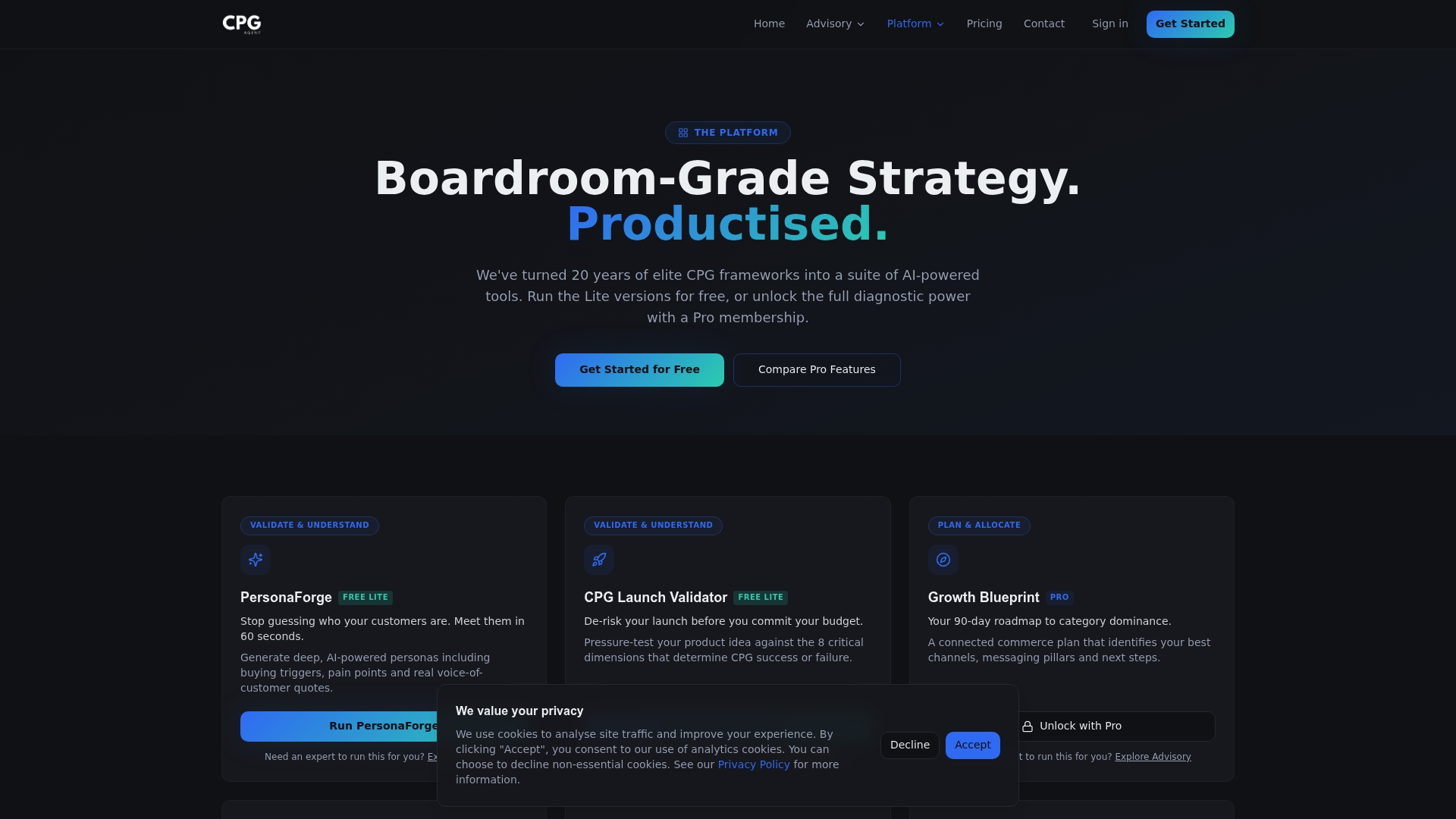
Explore how Cpgagent speeds up brand decisions and cuts launch risks by integrating senior marketing advisory with automated workflows. Visit the Cpgagent platform and see how you can test your concepts and buyer segments before production. Book a session to reduce planning time and improve your Amazon conversion readiness with smarter experiments.
FAQ
How does Cpgagent help with audience targeting?
Cpgagent excels in audience targeting through its PersonaForge feature, which tests concepts and buyer segments effectively. This capability allows brands to focus on their highest-value audience before product launch. Consider starting with Cpgagent to enhance your product validation strategies.
What is the difference between Cpgagent and Jinnify?
Jinnify automates listing updates and price monitoring across multiple marketplaces, streamlining everyday tasks for sellers. Cpgagent, by contrast, is best for brands needing senior marketing guidance combined with strategic decision-making tools. Choose Cpgagent if you are looking for a platform that integrates audience validation with senior advisory support.
Can I use Cpgagent if I have multiple SKUs?
Cpgagent is designed to support brands managing multiple SKUs effectively, particularly through its automated strategy outputs and flexible workflows. This helps reduce launch risks and improve decision-making across your product lines. Use Cpgagent to streamline your product management process.
How does Cpgagent reduce project planning time?
Cpgagent compresses planning cycles by combining AI-driven insights with senior advisory services, allowing teams to skip lengthy discovery phases. This approach leads to faster, revenue-focused decisions. Consider implementing Cpgagent to expedite your planning and execution.
What will I receive with Cpgagent's advisory services?
Cpgagent offers one-on-one advisory services that provide senior leadership support without the need for full-time hires. This personalized service helps brands navigate their product development and marketing strategies efficiently. Reach out to Cpgagent to explore how this service can benefit your growth initiatives.