

Finding an Amazon listing optimization tool that delivers detailed product-page insight without long-term contracts or agency retainers remains difficult. Most available platforms gate core optimization features behind expensive plans or fail to support teams selling on multiple marketplaces. This comparison lays out price, automation level, and team fit so brand managers and e-commerce teams can pick the best audit tool alternative for their catalog size and workflow.
Table of Contents
CPG Agent
At a Glance
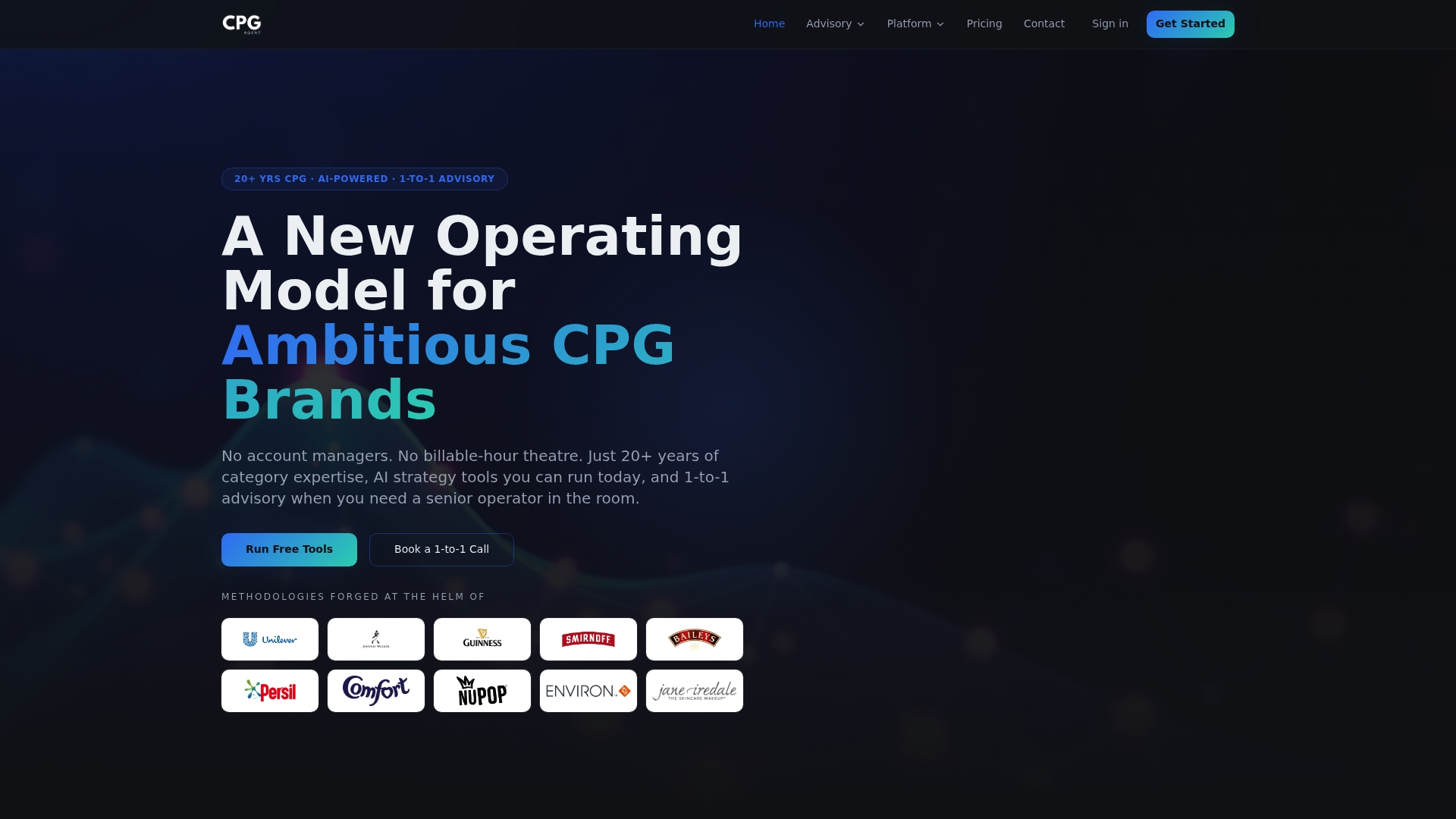
Free AI tools include PersonaForge and Launch Validator for rapid product and audience checks. The company says it pairs those tools with over 20 years of industry expertise to shorten decision cycles. Advisory services range from fractional CMO to growth hacking and AI strategy consulting.
Core Features
CPG Agent combines AI-driven strategy tools for audience identification and product validation with a suite of automated tools that deliver fast, practical insights. The product includes 1-to-1 senior advisory from experienced CPG professionals and integrates industry best practices into repeatable frameworks. The vendor advertises quick delivery with minimal meetings and fewer handoffs than typical agency relationships.
Key Differentiator
The defining trait is the blend of direct senior advisory and automated strategy tools that keep leadership closely involved. That setup reduces the time between hypothesis and market test because senior advisors interpret AI outputs directly for the team. Brands trade traditional retainers for shorter engagements that prioritize pipeline contribution and contribution margin.
Pros
Teams get senior CPG experience without an agency account manager layer, which shortens feedback loops and preserves institutional knowledge. The free tools let you validate concepts and customer segments before committing to manufacturing or large media spends. Advisory options scale from short experiments to a fractional CMO, making it easier to buy expertise only when you need it.
Cons
- May not replace full-service agency relationships for branding or creative work that requires studio resources and long creative production cycles
Who It's For
Growth-oriented CPG startups and challenger brands that need fast experiments and expert guidance will get the most from CPG Agent. Established brands looking to modernize legacy portfolios and test new concepts without long agency contracts will also benefit. Teams with internal capacity to act on AI outputs will extract the most value.
Unique Value Proposition
Free named tools PersonaForge and Launch Validator let teams validate product-market fit before buying advisory time. That sequence keeps early costs low and shifts spend toward targeted senior advice when validation shows promise. The model reduces agency overhead and helps you direct budget toward revenue-driving experiments.
Real World Use Case
A challenger brand ran audience tests in PersonaForge to find an underserved segment and used Launch Validator to confirm demand. The brand then engaged a fractional CMO to translate those findings into a six-week launch plan. The team avoided a long agency contract and moved from concept to shelf-ready strategy quickly.
Pricing
The AI tools are free. Advisory and fractional-executive services are offered via custom quotes. The vendor advertises advisory work as an affordable alternative to traditional agency retainer ships.
Website: https://cpgagent.com
Jinnify
At a Glance
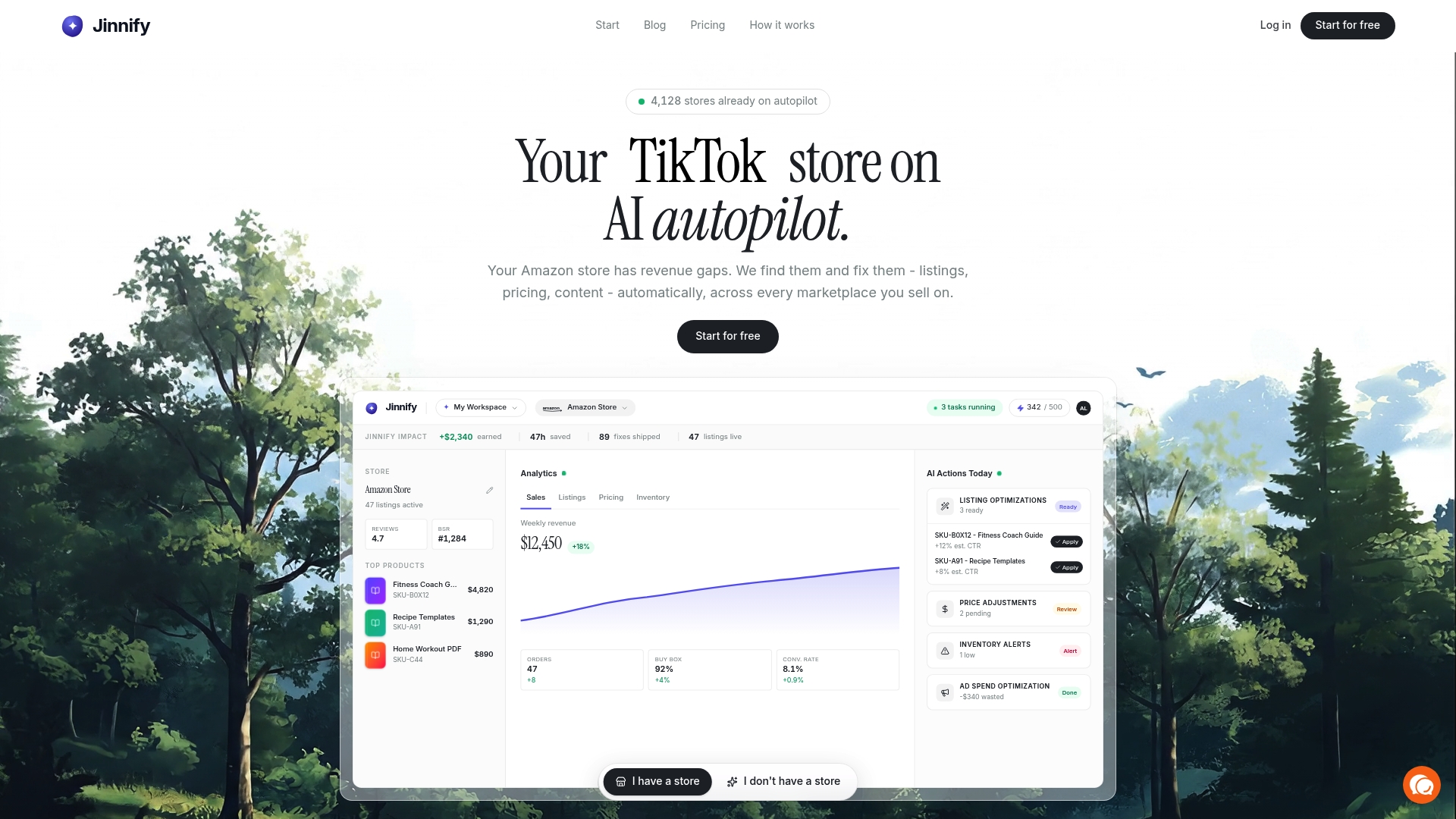
Jinnify's marketing materials claim an average 18% revenue lift within 30 days. The platform automates listing, pricing, and content updates across Amazon, TikTok Shop, and Walmart. It also generates product ideas and reusable content such as digital books without manual CSV uploads.
Core Features
Jinnify automates listings and pricing by applying rule sets and model recommendations to live marketplace entries. It performs real-time competitor and performance analysis and rewrites titles, bullet points, descriptions, and keywords in bulk. Multi-platform synchronization keeps content consistent across Amazon, TikTok Shop, and Walmart while the content creation tools speed new product launches.
Key Differentiator
The product’s distinguishing feature is end-to-end store management automation that combines listing edits, dynamic pricing, and continuous market-trend adjustments. That approach reduces the number of tools needed to manage listings across several marketplaces. The multi-platform sync is built into the core workflow rather than added as an afterthought.
Pros
The platform automates routine tasks and can free up hours of manual work each week for a listings team. It supports multiple marketplaces from a single interface, which simplifies cross-listing and consistency checks. Store connection requires no coding, and continuous keyword and listing optimization tracks current market trends to keep content aligned with shifting search behavior.
Cons
- Third-party reviews raise questions about how seamless listing updates remain during high-volume operations. Users report occasional delays or partial syncs when many SKUs update simultaneously.
- Some buyers note that pricing features may become limited once monthly credits deplete. That constraint forces manual intervention or a plan upgrade.
- Sellers with nonstandard workflows or marketplaces outside Amazon, TikTok Shop, and Walmart may find the tool less useful. The platform focuses on listing, pricing, and content rather than order or inventory control.
When It May Not Fit
Jinnify is primarily designed for existing marketplace listings and may not support initial product creation for complex custom SKUs. The product depends on Amazon API access for listing updates, and marketplace validation rules still apply. Brands that need inventory, order management, or specialized ERP links will likely need a separate system.
Notable Integrations
- Amazon Seller Central for direct listing and pricing updates.
- TikTok Shop for content and listing synchronization.
- Walmart Marketplace for cross-channel publishing and monitoring.
Who It's For
The product fits small to medium e-commerce sellers and in-house marketing teams that manage multiple marketplace listings. You should be seeking automation to reduce manual listing work while keeping pricing and copy aligned with market shifts. It suits teams that can accept a dedicated listing and content tool without inventory management.
Real World Use Case
A seller with an Amazon catalog used Jinnify to update titles, bullet points, and prices to comply with new title length rules. The tool applied bulk edits, refreshed keywords, and synchronized changes across other marketplaces. That workflow raised search ranking and produced higher sales for the affected SKUs.
Pricing
Monthly plans start at $49 for the Pro plan and $299 for the Business plan. A 14-day free trial is available so you can test listing automation against your live store before committing.
Website: https://jinnify.ai
Genrise

At a Glance
Genrise reports an average conversion uplift of up to 6% and an estimated annual revenue increase of over $9 million for a leading consumer healthcare brand. That case shows how continuous content updates tied to AI queries can translate into measurable top line impact. Genrise targets product content for three distinct audiences at once: human shoppers, AI shopping assistants, and autonomous agents.
Core Features
Genrise runs continuous monitoring and content updates across catalogs while linking into PIM, syndication, and analytics systems. It produces automated draft briefs for SKU groups and generates AI copy for titles, bullets, Q and A, structured data, and A+ content, then routes drafts into a human review queue. The platform supports end to end content management from gap detection to syndication so updates reach live listings at scale.
Key Differentiator
The platform optimizes product pages simultaneously for human shoppers, AI shopping assistants, and autonomous agents within a single integrated system. That approach removes the need to build separate workflows for agent oriented queries and human search optimization.
Pros
Genrise scales updates across a full product catalog, which makes continuous improvements practical for thousands of SKUs. It integrates with major PIMs and syndication tools so content changes flow into existing pipelines without repeated manual exports. The platform combines AI generated copy with a human review and approvals step to keep brand voice and claims aligned while preparing catalogs for the growing AI reader market.
Cons
- Requires integration with enterprise systems, so initial setup can be complex and resource intensive.
- Implementation timelines depend on data readiness and existing infrastructure, which may lengthen onboarding periods.
- Best outcomes rely on ongoing human review, which increases internal operational workload.
When It May Not Fit
Small teams with single digit SKUs or no PIM will find this solution overengineered. Brands that cannot commit staff to regular content review will not realize the platform's full benefit. Organizations that lack clean product data or stable syndication endpoints will face longer implementation and limited early returns.
Notable Integrations
- Stibo Systems
- Pimcore
- Akeneo
- CommerceIQ
- Profitero
- NIQ Brandbank
- Vizit
- Dragonfly AI','EyeQuant','Salsify','Syndigo
Who It's For
Enterprise consumer brand teams that manage large catalogs and require continuous, AI ready content optimization will get the most value. Product and catalog managers who already use PIM and syndication tooling can slot Genrise into existing workflows. Teams preparing catalogs for AI assisted purchase flows will find the three persona focus relevant.
Real World Use Case
A leading consumer healthcare brand used Genrise to continuously update eight SKUs and reported up to a 6% average conversion uplift. The vendor also cites an estimated annual revenue increase of over $9 million tied to those optimizations. That example highlights how focused content alignment with AI queries can change conversion metrics for specific product groups.
Pricing
Not applicable. The vendor lists this offering as informational only and does not publish standard tiered pricing publicly. Enterprise pricing is likely available by contacting sales.
Website: https://genrise.ai
Amapulse
At a Glance
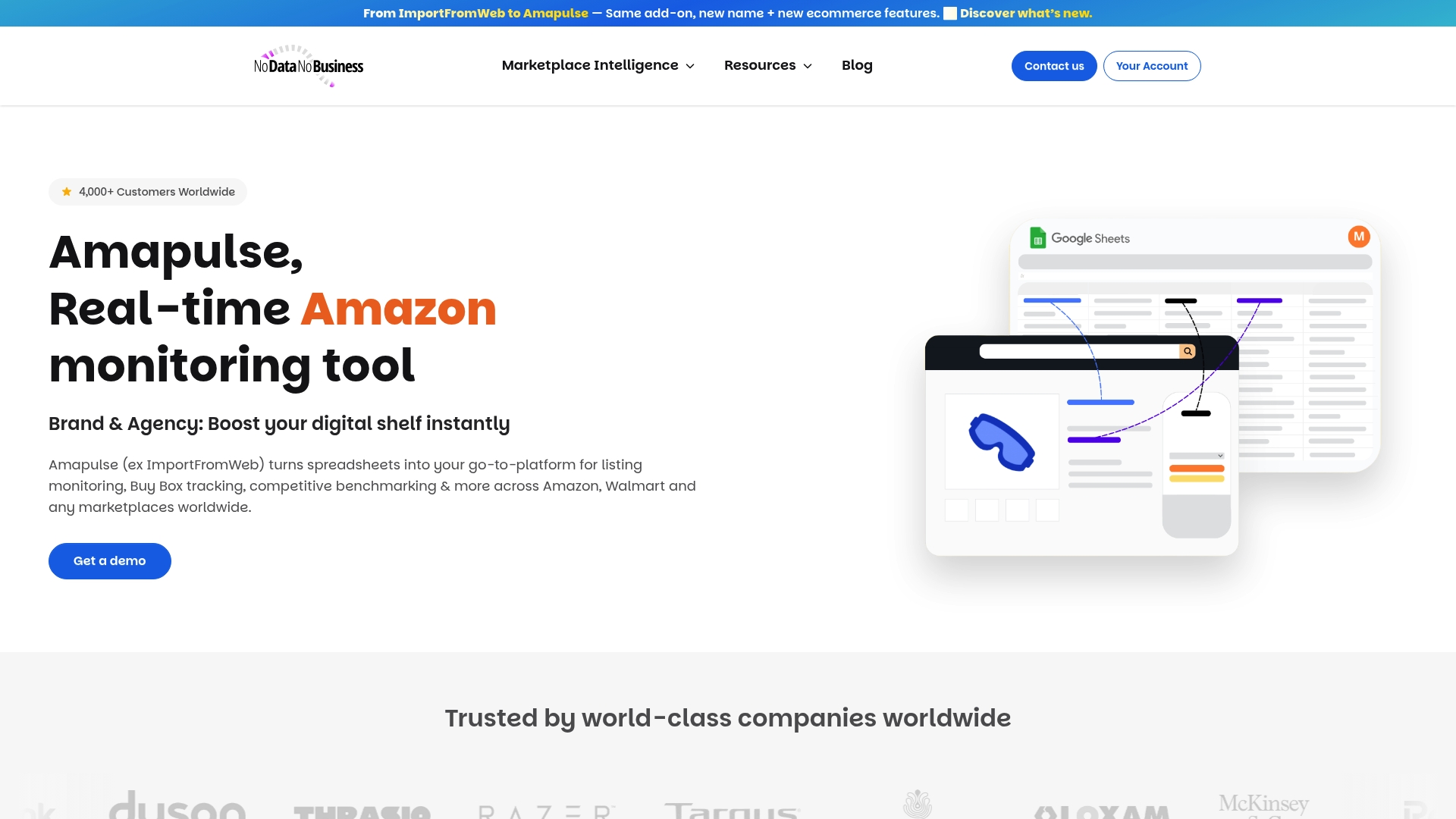
Amapulse reports it is trusted by over 4,000 companies globally and claims a high user satisfaction score. The tool ties live marketplace feeds directly into spreadsheets for hands-on analysis. That approach removes the need to build custom ingestion pipelines for basic monitoring.
Core Features
Amapulse delivers direct-to-sheet data that populates Google Sheets with marketplace listings, prices, and Buy Box status while preserving historical snapshots. The product supports real-time data updates and alerts, and it keeps a running history for trend analysis and retrospective checks. Live source snapshots let you verify raw marketplace pages alongside the sheet view.
Key Differentiator
Amapulse stands out for its tight integration with Google Sheets, which turns familiar spreadsheets into live dashboards without coding. That design reduces ramp time for teams that already base reporting and workflows in Sheets.
Pros
The platform gives teams highly flexible templates that convert static spreadsheets into interactive dashboards. Nontechnical staff can set up trackers and alerts without help from developers. Reliability and strong documentation mean reports remain stable over time and require little maintenance. Support is responsive, which reduces time spent troubleshooting connectors.
Cons
- Pricing details and tier breakdowns are not clearly published. That makes budgeting difficult for procurement teams.
- The feature set centers on Google Sheets integration rather than a standalone web app. Teams wanting a native console may find this limiting.
- Heavy dependence on spreadsheets requires users familiar with Sheets functions and formulas.
Who It's For
Brand managers and e-commerce analysts who standardize reporting in Google Sheets will get the most value. Marketing agencies and marketplace sellers that need fast, hands-on access to pricing and Buy Box data will benefit. Teams that avoid spreadsheets are not the ideal match.
Real World Use Case
A mid-size brand used Amapulse to stream competitor prices into a shared sheet and to trigger email alerts when Buy Box ownership changed. Analysts updated repricing rules within hours because the data arrived in their existing reports. That shortened decision cycles and clarified price movement reasons without new tooling.
Pricing
Pricing information is not publicly listed and the vendor labels pricing as informational only. Procurement should contact the vendor for subscription options and seat or volume terms.
Website: https://amapulse.io
SELLRZ
At a Glance
SELLRZ supports scalable workflows that can handle thousands of listings while keeping sellers in control. It pairs AI agents with human review to run continuous Amazon PDP audit tool processes across marketplaces. Founded in Germany, the product targets sellers who prefer in-house execution instead of outsourcing to an agency.
Core Features
SELLRZ runs automated listing analysis, growth opportunity detection, and continuous improvement loops that include human approval. The platform includes portfolio management for multiple listings, market and competitor analysis via the SWF Framework, and tools to manage creative assets and image templates. It also supports secure connections to Amazon through SP-API and tracks progress with version control for listing changes.
Key Differentiator
The product combines automated AI workflows with expert review to create repeatable growth cycles for listings. That blend lets teams scale optimization across many SKUs while keeping manual checks in critical decision nodes. The result is a system built to reduce reliance on outside agencies while keeping control inside the seller organization.
Pros
SELLRZ lets a seller operate a large portfolio without hiring an agency, which lowers external retainers and keeps IP in-house. The platform surfaces targeted listing recommendations through AI and connects those suggestions to human review for safer rollouts. Built-in creative and image tools reduce handoffs between teams, and the version control feature records every listing change for accountability and rollback.
Cons
- Some users report a learning curve for sellers not familiar with structured workflows. The platform expects process discipline.
- Advanced features may require dedicated onboarding or training to get the most value from the system.
- Pricing requires a consultation, which adds a step before procurement for smaller sellers.
- Competitor benchmarking beyond a seller’s own data is limited, affecting brands that rely on external market panels.
When It May Not Fit
Sellers without an active Amazon account cannot use SELLRZ. Teams with only one or two SKUs may find the platform to feature rich for their needs. Organizations that need deep external market benchmarking will miss some capabilities. Companies without capacity for initial onboarding should plan for extra setup time.
Who It's For
SELLRZ fits Amazon sellers who already manage multiple listings and want a repeatable, in-house optimization system. It suits brand owners and e-commerce teams that expect to scale listing work across marketplaces. The tool also works for agencies that need a platform to run optimization services for client portfolios.
Real World Use Case
A brand with more than 500 SKUs used SELLRZ to inspect listings, prioritize fixes, and iterate creative assets. The team ran continuous improvement cycles without expanding headcount and kept a single source of truth for listing versions. That workflow improved ranking and ad performance while retaining control of creative and strategic decisions.
Pricing
Pricing is available on request, with plans reportedly starting from €500/month. The vendor customizes plans to match portfolio size and required onboarding services. Prospective buyers should request a consultation to get a tailored quote.
Website: https://sellrz.io
Comparison of alternatives
CPG Agent's unique approach blends senior advisory with AI tools to optimize decision-making speed and accuracy, setting it apart in a field dominated by automation-focused competitors. This section evaluates how it and other prominent solutions perform across key factors for e-commerce and brand managers.
Decision-making efficiency and customization
CPG Agent excels in providing highly customizable advisory services complemented by AI-driven tools for audience analysis and launch validation. Other solutions like Jinnify and SELLRZ focus primarily on automated workflows. Jinnify's multi-platform synchronization offers efficiency for teams managing diverse marketplaces but lacks the strategic advisory provided by CPG Agent. SELLRZ offers automation and creative asset management, tailored for Amazon sellers operating large portfolios, though it may seem complex for smaller operations.
Automation for marketplace management
When evaluating direct automation capabilities, Jinnify emerges as a strong contender with its integrated marketplace synchronization across Amazon, TikTok Shop, and Walmart. This capability significantly reduces manual input for e-commerce teams managing cross-channel listings. Meanwhile, Genrise prioritizes AI-driven content optimization for expansive product catalogs, benefiting firms with large-scale operations but requiring significant initial integration work.
Best fit
- Growth-oriented CPG startups seeking rapid validation will find CPG Agent's advisory and AI tools highly effective for swift experimentation.
- E-commerce teams prioritizing marketplace synchronization between Amazon and TikTok can benefit from Jinnify's specialized features.
- Enterprises handling expansive product catalogs should consider Genrise for its continuous AI-powered optimization capabilities.
- Businesses relying on highly customizable, spreadsheet-based monitoring should explore Amapulse for its direct-to-Sheets data integration.
Our pick
CPG Agent remains the top choice for companies needing the unique combination of senior advisory expertise intertwined with practical AI tools for market fit evaluation and strategy development. Teams prioritizing edge-to-edge marketplace updates or large catalog optimization may consider competitors to address these specific needs.
Choose the optimal platform for your growth and marketplace optimization needs with the following table comparing key solutions.
| Product | Core Features | Key Differentiator | Pricing | Notable Limitation |
|---|---|---|---|---|
| Cpgagent | AI tools for product validation, senior CPG advisory | Blend of AI tools with senior advisory for strategy application | AI tools free; advisory services are custom quotes | May not replace full-service agencies for branding needs |
| Jinnify | Automated listing, pricing updates, content synchronization | End-to-end store automation integration for major marketplaces | From $49/month with a free trial available | Limited functionality with non-standard workflows |
| Genrise | Continuous content updates for catalogs with integrated tools | Optimization for human shoppers and AI agents simultaneously | Price not published | Complex initial setup with resource-intensive dependencies |
| Amapulse | Live marketplace data integration with Google Sheets | Real-time sheet integration as live interactive dashboard | Price not published | Spreadsheet-dependent; standalone app not available |
| SELLRZ | Amazon PDP audits and growth opportunity detection | Combines AI optimization with manual review for large portfolios | From €500/month | Best suited for stakeholders managing large portfolios |
How Can You Improve Amazon PDP Audits and Product Strategy?
Managing Amazon product detail page audits often means juggling complex data and slow feedback loops. Cpgagent addresses these challenges by combining AI-driven tools like PersonaForge and Launch Validator with senior-level advisory. This enables brands to quickly assess product-market fit and audience segments before costly launches or media spends.
Benefits include:
- Faster decision-making without layers of agency management
- Validating concepts early to reduce risk
- Flexible advisory options from short experiments to fractional CMO support
Learn how Cpgagent’s platform integrates AI and expert guidance to shorten your go-to-market cycle and enhance listing performance.
Visit Cpgagent’s website to see how your brand can gain a sharper edge on the shelf and act on insights that drive measurable growth.
FAQ
How does Cpgagent's advisory service support Amazon listing optimization?
Cpgagent offers personalized advisory services that help brands translate insights into actionable strategies. The platform provides 1-to-1 senior advisory from experienced CPG professionals, ensuring quick and practical feedback for optimizing Amazon listings. Brands can expect tailored recommendations without extensive meeting requirements, allowing for rapid adjustments to their strategies.
What is the difference between Jinnify and Cpgagent in terms of marketplace synchronization?
Jinnify excels at automating listings and syncing them across multiple marketplaces seamlessly. It supports Amazon, TikTok Shop, and Walmart with real-time updates. Cpgagent, in contrast, focuses more on offering direct senior advisory and automated strategy tools, which may be more beneficial for brands looking to validate concepts before broader marketplace management.
Which platform is better for small e-commerce sellers, Jinnify or Cpgagent?
Jinnify is designed specifically for small to medium e-commerce sellers and automates routine listing tasks, making it well-suited for those who manage multiple marketplace entries. Cpgagent, while offering immense value, may be better for growth-oriented brands needing direct advisory support to guide optimization strategies.
Can I use Cpgagent's free tools for product validation?
Yes, Cpgagent provides free tools such as PersonaForge and Launch Validator to help teams validate product-market fit. These tools allow brands to assess concepts and customer segments before committing to larger investments in manufacturing or marketing.
How effective is Cpgagent for brands looking to modernize their portfolios?
Cpgagent is highly effective for established brands aiming to modernize legacy portfolios since it combines senior advisory with automated tools that assist in testing new concepts. Companies can engage with minimal commitments and quickly adapt to changing consumer demands.