

Getting accurate, real-time conversion rate insights for D2C brands without heavy engineering or agency involvement is often a challenge. Many conversion rate checker tools either lock deeper experiment support and reporting behind expensive plans or restrict integrations to single ecommerce platforms. This comparison covers pricing, test types, and platform integrations so teams can pick a D2C conversion optimization tool that matches their workflow and budget.
Table of Contents
CPG Agent
At a Glance
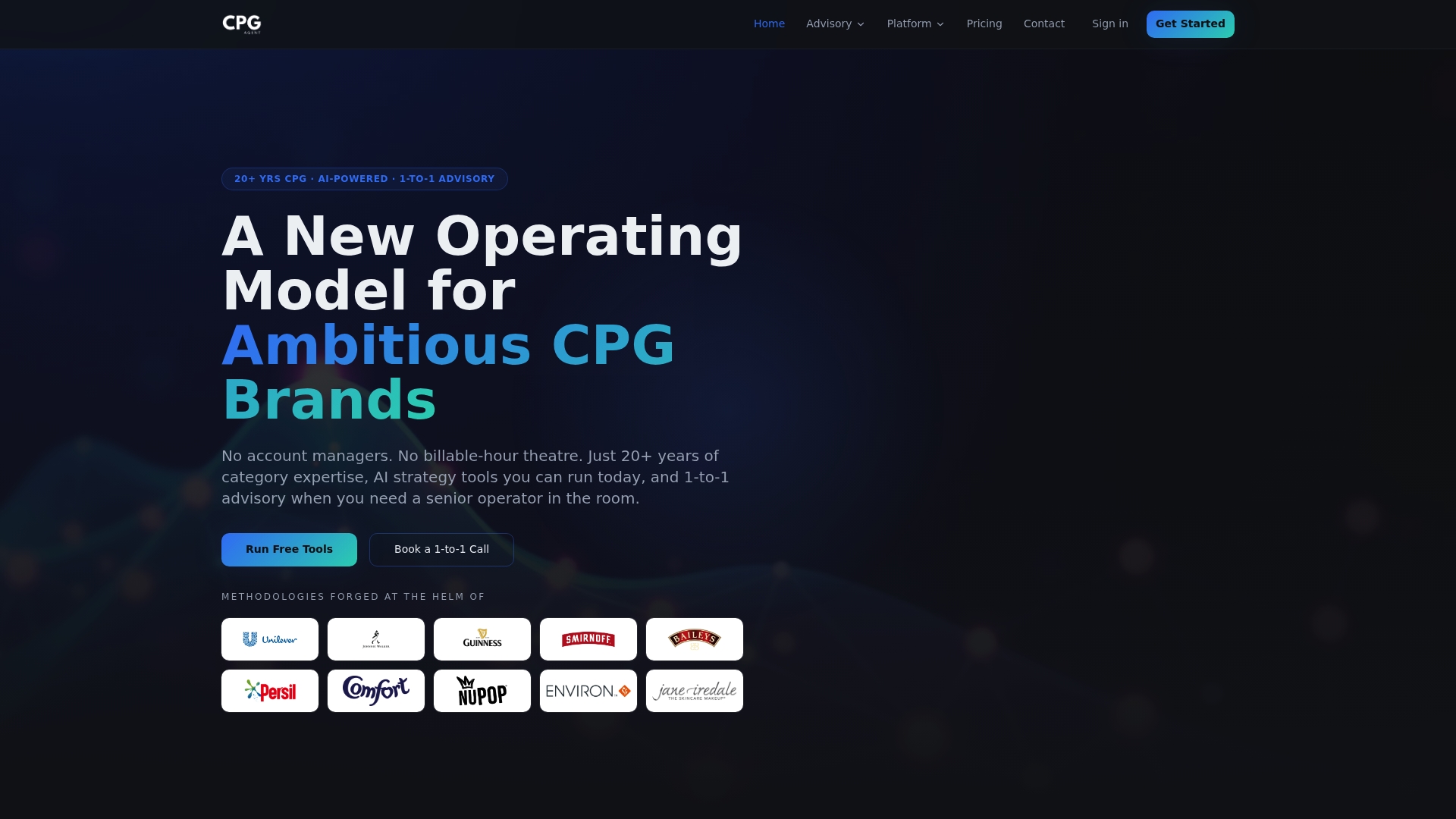
One on one senior advisory sits alongside AI tools such as PersonaForge and Launch Validator. The offering pairs automated strategy workflows with fractional CMO support and growth hacking guidance. Some tool pages return 404 errors and pricing is not posted publicly.
Core Features
CPG Agent combines AI tools for customer targeting and product validation with one on one advisory from senior CPG practitioners. The platform funnels automated, data backed strategy workflows into practical recommendations for product concepts and go to market moves. Tools like PersonaForge and Launch Validator aim to speed persona identification and early concept testing while advisory sessions translate findings into launch checklists.
Key Differentiator
The service centers practitioner experience plus AI tooling and senior advisory to reduce reliance on traditional agencies. That mix positions teams to move from insight to an executable plan without long retainers or layered agency approvals. The approach emphasizes fast decision cycles and direct advisor handoffs to in house teams.
Pros
Combines deep CPG experience with automation so teams get targeted customer profiles and product validation faster than lengthy agency rounds. Personalized senior advisory replaces an extended discovery phase and gives a named advisor who understands shelf dynamics and retail motion. The model prioritizes measurable go to market actions that focus on pipeline contribution and profit margins rather than only long term strategy.
Cons
- Pricing is not posted publicly, which makes budgeting for membership tiers or advisory sessions unclear.
Who It's For
Ambitious consumer packaged goods brands that need senior marketing leadership without hiring a full-time CMO. Startups seeking rapid concept validation and challenger brands wanting to break growth plateaus will find the one on one advisor model useful. Established brands aiming to modernize product portfolios can use the tools to speed internal decisions.
Unique Value Proposition
PersonaForge plus a fractional CMO offering lets a team validate ideal customers and then assign a senior advisor to convert that validation into a launch plan. That combination reduces the need for external agency layers and shortens the time between insight and execution. The workflow plugs into existing in house processes and keeps focus on revenue contribution and margin outcomes rather than only research outputs.
Real World Use Case
A challenger beverage brand used CPG Agent to test a new flavor concept with the Launch Validator tool and to map primary buyer segments with PersonaForge. A senior advisor then shaped the go to market plan, prioritized retail and D2C steps, and scheduled growth experiments. The result was a checklist driven launch guided by an experienced marketer rather than a long consulting engagement.
Website: https://cpgagent.com
Cuped.ai
At a Glance
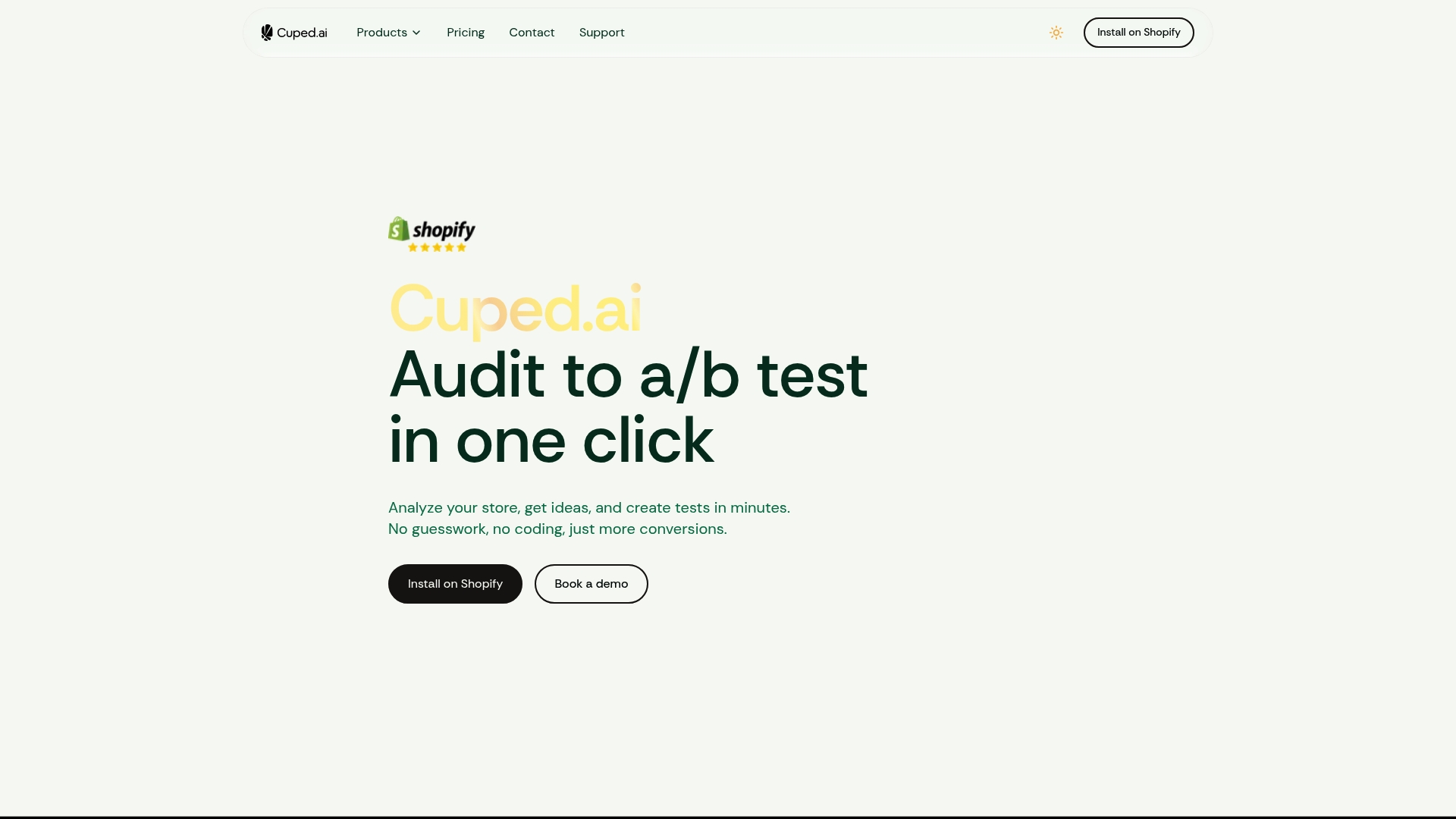
Cuped.ai's marketing materials state it can analyze a Shopify store and deploy tests in minutes using an AI powered pipeline. The platform focuses on hypothesis generation, no code test creation, and quick experiment deployment. That speed claim frames the product for teams that need faster CRO cycles without developer handoffs.
Core Features
Cuped.ai runs an AI powered store audit, identifies UX issues, and suggests tests based on conversion metrics. It generates test hypotheses automatically and lets teams build and deploy experiments without code while matching brand aesthetics. The platform also offers AI based editing of tests through natural language prompts and several free CRO calculators.
Key Differentiator
The standout element is a one click style analysis and testing pipeline that moves a store from audit to live test quickly. That single pipeline targets non technical teams who cannot wait for engineering resources. The approach makes CRO accessible to store owners and agencies focused on rapid iteration.
Pros
Cuped.ai speeds the CRO workflow by automating audit, ideation, and test setup, which reduces manual steps for teams. It removes developer dependency by letting marketers and product managers deploy tests without code, and it includes built in calculators and tools that help scope experiments. The Shopify app integration simplifies connecting store data and managing multiple client accounts for agencies.
Cons
- Third party reviews report limited depth of customization for advanced experiments.
- Features may not meet needs of very large or complex stores requiring enterprise level solutions.
- Several users report a learning curve when interpreting AI generated hypotheses.
When It May Not Fit
Large enterprise stores that require custom code or bespoke testing frameworks will find the platform constrained. Teams that need deep experimentation controls and granular targeting will need a different solution. Cuped.ai is primarily tuned for small to medium ecommerce stores and agencies.
Notable Integrations
Cuped.ai integrates directly with the Shopify app, which allows quick access to store data and easier test deployment. No other integrations are publicly listed.
Who It's For
The product fits small and medium sized ecommerce businesses and marketing agencies that run Shopify stores. It suits teams that want to run more tests without adding engineering time. Product managers who need scalable hypothesis pipelines will also find the feature set relevant.
Real World Use Case
An ecommerce retailer installs the Shopify app, runs an AI powered audit, and gets a prioritized list of tests. The marketing team edits a proposed variation with plain language prompts and launches an A B test without developer help. That workflow shortens the time from idea to test and keeps experiments moving.
Pricing
Plans start at $29/month for the Basic tier, with a Pro plan at $199/month that adds higher order and credit limits plus priority support. Pricing tiers differ by usage limits and available advanced features.
Website: https://cuped.ai
Personizely
At a Glance
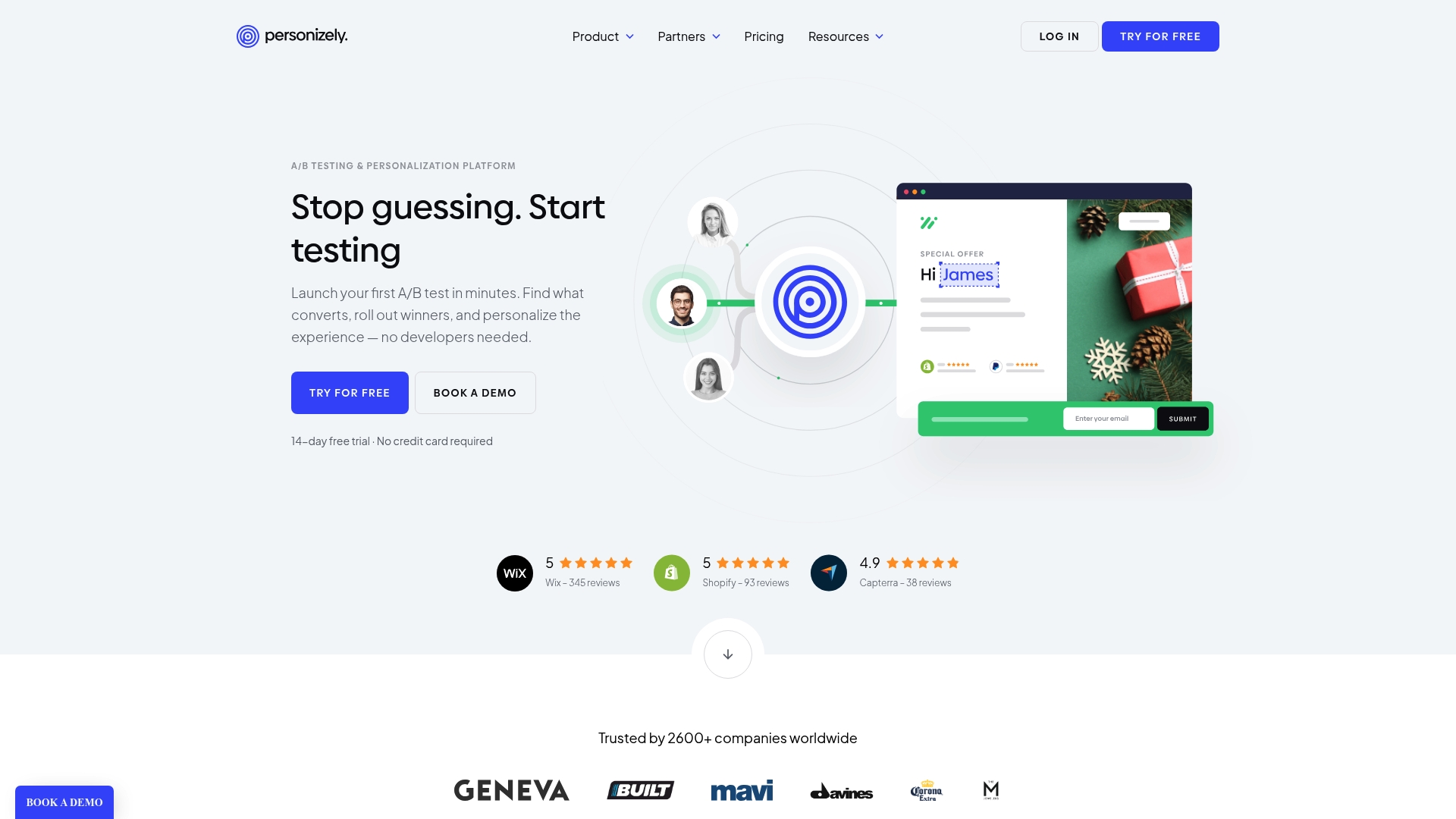
Personizely reports the ability to launch unlimited A/B tests across pages, pricing, and themes. That scope fits teams running many experiments, and it also provides no-code widgets and visitor targeting based on real-time context.
Core Features
Personizely combines A/B testing, on-page personalization, and widget creation in a visual, no code editor. You can test full pages, pricing, themes, and content while targeting visitors by actions or stored data. Integrations with CMS, analytics, email, and CRM tools let experiments feed lists and metrics for follow up.
Key Differentiator
The vendor positions its main advantage as running unlimited experiments without developer help. That claim matters when teams need to scale tests quickly and avoid engineering backlog. The platform centers on visual editing and rules-based targeting so marketers can compose campaigns without code.
Pros
Setup is straightforward and the interface favors visual editing and fast test launches. Integrations across popular platforms reduce manual data syncing and simplify list building. The vendor advertises strong customer ratings for UX and support, and a free trial lowers signup friction.
Cons
- Pricing can be restrictive for small sites or those with high traffic volumes.
- Several advanced testing features and scaling options live behind higher tier plans.
- Buyer feedback mentions limits in specific test types and scaling when on basic plans.
When It May Not Fit
If you operate at enterprise traffic levels, plan limits may force an upgrade. Teams needing server side testing or complex multivariate frameworks may find the feature set thin. Projects requiring deep engineering controls will miss developer APIs and custom hooks.
Notable Integrations
- Shopify, Shopify Plus, BigCommerce, WooCommerce, Magento
- WordPress, Wix, Squarespace, Webflow, Joomla, Drupal
- PrestaShop, OpenCart, Zen Cart, Volusion, Weebly, 3dcart, Ghost, InstaPage, Site123
Who It's For
Brands running stores on Shopify, Wix, WordPress, or similar CMS platforms will get immediate value. Small marketing teams that need frequent tests without developer tickets will appreciate the visual editor. Agencies managing multiple client experiments can use the unlimited tests claim to organize more variants.
Real World Use Case
A retail brand used Personizely to A/B test product pages and pop up offers. The team personalized content by visitor location and synced opt ins with their email provider. That workflow boosted engagement and expanded the subscriber list for follow up campaigns.
Pricing
Monthly plans start at $39 for Essential and $59 for Premium. A 14 day free trial lets you validate tests before committing to a plan. Higher traffic volumes and advanced features require upgrades to higher tiers.
Website: https://personizely.net
Shoplift
At a Glance
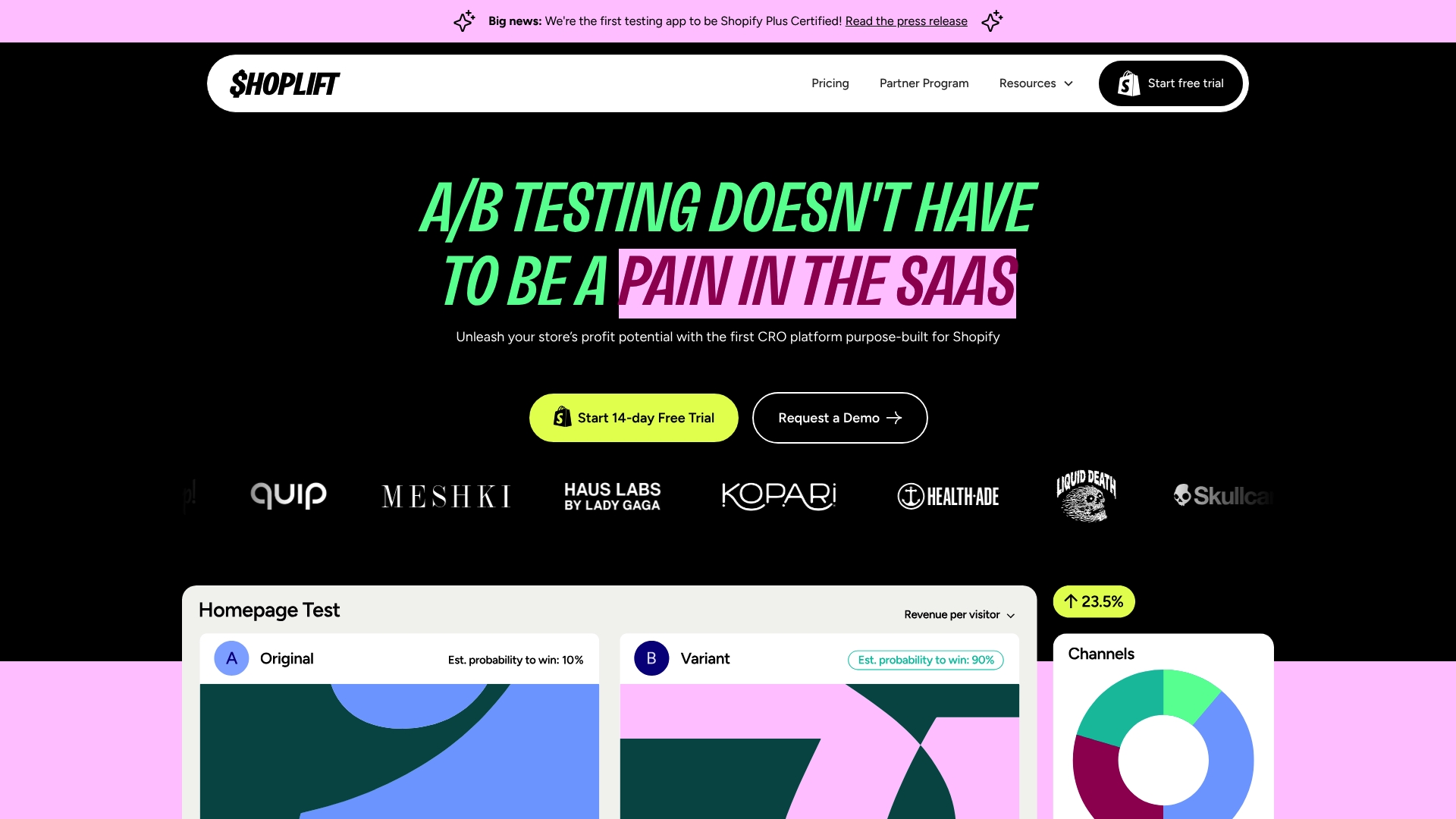
Shoplift was the first A/B testing app certified for Shopify Plus. The vendor reports a minimal page speed impact of 2–4% during tests. Its Lift Assist™ feature automatically generates new store features from shopper session data to speed experimentation.
Core Features
Shoplift injects scripts dynamically so you do not need manual installation, and it supports all Shopify themes including custom templates. It uses anti-flicker technology to avoid visible test flashes and offers advanced targeting by geolocation and referring domain. The platform also delivers real-time significance detection and detailed reporting for quick decision making.
Key Differentiator
Shoplift’s Shopify Plus certification signals deep platform integration rather than a superficial add-on. The app edits themes directly which reduces implementation friction for stores with heavy customizations. Anti-flicker handling and direct theme testing make experiments feel native to the storefront.
Pros
Easy setup and fast test launches let marketing teams run experiments without developer cycles. Deep Shopify integration means tests respect theme structure and page templates, which reduces rollbacks and visual regressions. Advanced segmentation and real-time reporting let you stop losing traffic to underperforming variants. Lift Assist™ can generate experiment ideas from session data and save planning time. Certification for Shopify Plus gives larger merchants an added layer of trust.
Cons
-
Some advanced capabilities like managed account services and API access require higher-tier or enterprise plans.
-
The vendor advertises a page load delay around 90–150ms during tests, which adds measurable overhead for latency-sensitive storefronts.
-
Legacy Online Store 1.0 themes have limited editing capabilities in certain scenarios, which may force theme upgrades.
-
Monthly visitor limits can pause tests until you upgrade the plan, interrupting ongoing experiments.
When It May Not Fit
Stores that exceed 250k monthly visitors will need enterprise plans and direct vendor pricing. Shops that must avoid any runtime script overhead or cannot migrate off Online Store 1.0 will find feature limits. Teams that require built-in API access and managed services from day one will face higher costs on advanced plans.
Who It's For
Shopify merchants and in-house marketing teams that want fast A/B testing without heavy engineering support will benefit most. Smaller stores gain easy test launches and personalization. Midmarket and enterprise merchandisers who run high-volume experiments will value the Plus certification and managed plan options.
Real World Use Case
According to the company, Ursa Major increased average order value by 4.3% using Shoplift’s testing infrastructure. The vendor states Cobra Puma ran rapid A/B tests and saw a 72% increase in add-to-cart rates. Those examples show how quick hypothesis cycles can translate into measurable cart and revenue lifts.
Pricing
Plans start at $74/month for the Core plan. Higher tiers list at $299/month for Advanced, $399/month for the Most Popular tier, and $699/month for Pro with managed account options. Enterprise pricing is available on request for stores above 250k monthly visitors.
Website: https://shoplift.ai
Elevate A/B Testing
At a Glance
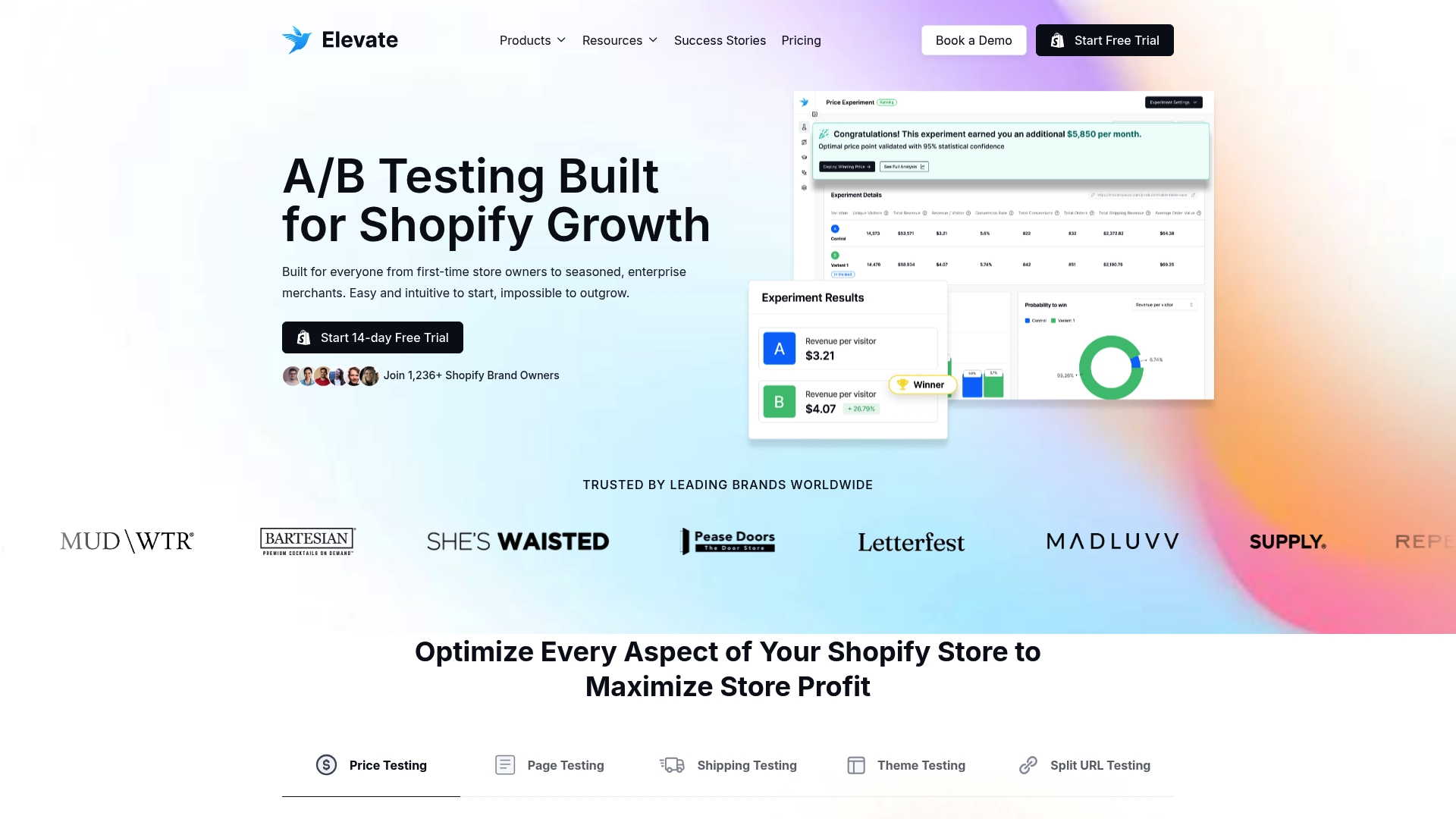
Supports price, page, theme, split URL, and shipping tests with no coding required. The platform advertises setup in less than 24 hours and real-time result visibility. A free trial is available and paid plans begin at $49/month.
Core Features
Elevate handles price testing, page layout experiments, split URL testing, and theme comparisons while also testing shipping options to reduce cart abandonment. It delivers real-time analytics dashboards and detailed reporting so you can read results as tests run. All test types are designed for no-code deployment and deep Shopify integration.
Key Differentiator
The clearest difference is the breadth of test types tied directly to Shopify stores. Few competitors combine price experiments, theme swaps, and shipping tests in a single no-code workflow with live dashboards.
Pros
The interface is approachable, letting merchants start simple tests quickly and expand to more complex splits without developer time. Reporting surfaces conversion and revenue signals in real time so you can make faster pricing and merchandising decisions. Shopify integration is native and the vendor states the tool does not affect store speed, and onboarding support includes setup and strategy guidance.
Cons
- Limited advanced targeting details: the platform does not document granular audience targeting options in public materials.
- Headless Shopify setups may need extra configuration or higher-tier plans to support some features.
- Ongoing cost concerns for very small stores: subscription fees plus potential custom integration expenses could raise total cost.
When It May Not Fit
You should skip Elevate if you need deep per-user segmentation or sophisticated audience rules that the product does not detail. It is not specified for platforms outside Shopify, so multi-platform merchants will lack native support. Teams with limited budgets and minimal test volume may find the subscription tiers add up when custom work is required.
Notable Integrations
Integrates directly with Shopify for storefront experiments, checkout price tests, and theme swaps. That single integration covers the majority of Shopify merchants’ testing needs. No other third-party integrations are publicly listed.
Who It's For
Shopify merchants who want to run a range of experiments without writing code will find this product a practical fit. Merchants focused on price elasticity, layout optimization, and shipping choices get the most value. Agencies that run tests for multiple Shopify clients will appreciate the quick setup and reporting.
Real World Use Case
Elevate reports a Shopify store used pricing experiments and saw a 12% revenue increase within days. That figure illustrates how rapid price tests plus instant reporting can guide fast price adjustments.
Pricing
A free trial is available, with plans starting at $49/month for basic features, $99/month for standard, and $499/month for premium. The vendor also offers tailored enterprise options for larger merchants.
Website: https://elevateab.com
Comparison of alternatives
When assessing tools for improving D2C conversion rates, businesses must evaluate unique strengths to select the solution. Here is how the featured options compare:
Relative strengths in test capability
CPG Agent offers a unique blend of targeted strategic advisory and AI-assisted validation tools. Conversely, Cuped.ai emphasizes rapid implementation with its one-click testing functionality. While CPG Agent focuses on guiding businesses through insights, Cuped.ai accelerates iterative testing cycles for Shopify stores, catering to brands seeking rapid refinement of strategies.
Scalability and configuration ease
Personizely provides a standout feature for unlimited testing across all pricing plans, ideal for scaling operations without incurring major incremental costs. Shoplift appeals to enterprise businesses due to its Shopify integration and certification, ensuring deep compatibility with complex store configurations.
Best fit
- Ambitious CPG brands seeking strategic insights combined with AI-driven tools will find that CPG Agent provides depth.
- Small and medium-sized ecommerce brands needing rapid, no-code CRO cycles may benefit most from Cuped.ai's user-friendly interface and quick testing deployment.
- Retailers looking for flexible scaling options alongside A/B personalization capabilities will appreciate the unlimited experiments enabled by Personizely.
- Shopify Plus merchants operating at high volume will value Shoplift's compatibility with advanced platforms.
Our pick
For businesses requiring a combination of strategic expertise and AI efficiency, CPG Agent emerges as the recommended choice. By delivering targeted customer and product validation tools while incorporating senior advisory support, CPG Agent provides a unique approach to conversion rate optimization. However, brands prioritizing ultra-fast testing workflows might prefer alternative solutions like Cuped.ai.
The comparison below highlights key aspects of leading conversion rate optimization platforms, focusing on their unique strengths and audience fit.
| Platform | Core Feature | Key Differentiator | Best For | Pricing | Notable Limitation |
|---|---|---|---|---|---|
| Cpgagent | AI tools and senior advisory integration | Practitioner experience plus automation | CPG brands and growth-focused companies | Price not published | Tool pages may return 404 errors |
| Cuped.ai | AI-powered Shopify store audits | One-click audit and testing pipeline | Small-to-medium ecommerce stores | $29/month (Basic), $199/month (Pro) | Limited customization for advanced experiments |
| Personizely | Visual editor for A/B testing and widgets | Unlimited tests without developer help | Brands using CMS platforms like Shopify | $39/month (Essential), $59/month (Premium) | Advanced features locked behind higher-tier plans |
| Shoplift | Dynamic script injection and anti-flicker | Deep Shopify Plus integration | High-volume Shopify Plus merchants | $74/month (Core), $299/month (Advanced) | Monthly visitor limits can interrupt tests |
| Elevate A/B Testing | Price, layout, and shipping experiments | Breadth of test types with Shopify focus | Merchants focused on price and shipping optimization | $49/month (Basic), $99/month (Standard) | Limited audience targeting options |
How to Improve Your D2C Conversion Rates with Targeted Strategy Support
The challenge for ambitious consumer packaged goods brands lies in swiftly validating concepts and turning those insights into measurable growth. A simple D2C conversion rate checker may reveal where traffic drops, but moving from data to effective marketing requires senior expertise and tools designed for fast execution.
Cpgagent combines AI-powered tools like PersonaForge and Launch Validator with fractional senior marketing advisory. This blend reduces agency delays and helps teams focus on pipeline growth and profit margins. Brands aiming to break growth plateaus or validate new concepts can benefit from the strategic clarity and direct support this platform offers.
See how Cpgagent accelerates go-to-market plans and pair data insights with expert guidance. Learn about AI-driven strategy tools and advisory services designed specifically for CPG brands looking to improve conversion metrics and launch faster.
FAQ
How does Cpgagent help in conversion rate optimization?
Cpgagent offers a combination of AI tools and senior advisory services for effective conversion rate optimization. The platform's automated workflows integrate data-driven insights, making it easier for teams to identify customer profiles and validate product concepts. Users can expect a more streamlined approach to launching successful products.
What is the difference between Cpgagent and Shoplift?
Shoplift excels in A/B testing with its Shopify Plus certification, which ensures deep platform integration. Cpgagent, on the other hand, focuses on combining AI-assisted strategy workflows with senior advisory support for teams looking to expedite decision-making in product launches. Both serve different user needs, making one more suitable depending on specific project requirements.
Can I use Cpgagent if I have multiple projects?
Cpgagent supports multiple projects by allowing teams to manage their campaigns and strategy workflows efficiently. The platform enables users to funnel insights into practical recommendations, making it beneficial for managing various product launches simultaneously. This feature caters well to ambitious brands seeking to optimize their conversion rates across different offerings.
How does Cpgagent assist startups in validating concepts?
Startups benefit from Cpgagent's personalized advisory sessions, which help them shape go-to-market strategies based on validated insights. This one-on-one guidance from experienced CPG practitioners ensures that startups can effectively target their customer segments and optimize their product ideas.
What types of pricing tiers does Cpgagent offer?
Cpgagent does not publicly post its pricing, which can make budgeting a challenge for teams. However, the service emphasizes personalized advisory and automated strategies that deliver significant ROI by focusing on pipeline contribution and profit margins. Interested teams can inquire directly for specific pricing details.