
Building actionable shopper personas for CPG brands too often drags into months of manual synthesis or requires expensive agency retainers that rarely generate ready-to-use buying triggers for briefs. Most brand strategy tools gate critical persona outputs behind paid upgrades or produce generic demographic profiles that lack customer voice and concrete decision drivers. This comparison covers pricing, persona depth, and workflow speed across three CPG brand strategy platforms so you can select the tool that lets your team generate high-impact personas without extra overhead.
Table of Contents
CPG Agent
At a Glance
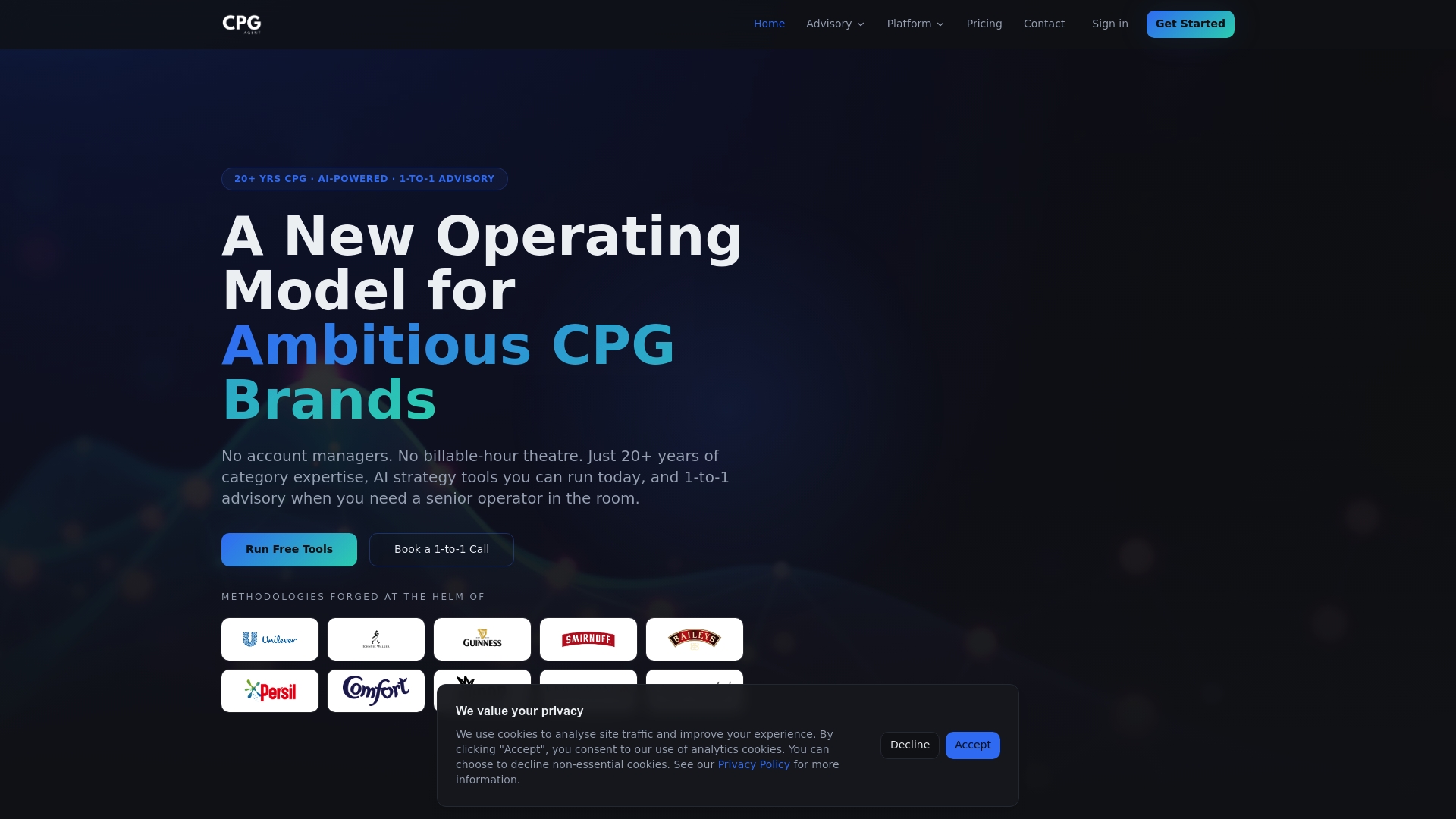
CPG Agent reports it operates without traditional agency overhead or billable-hour models, pairing hands-on senior advisory with automated strategy tooling. That delivery model aims to move brands from idea to validated plan faster than multimonth retainers.
Quick. Strategic. Focused on revenue.
Core Features
- PersonaForge and Launch Validator for AI-driven persona development and concept testing, producing buying triggers and voice-of-customer quotes.
- One-to-one advisory with senior CPG experts who apply category experience directly to roadmaps and launch plans.
- Automated workflows that plug into existing brand operations to accelerate decisions and validation without creating extra internal process overhead.
Each feature is framed for fast decision making and market validation rather than long discovery cycles.
Key Differentiator
Combines long-tenured CPG experience with proprietary AI tools so teams can generate defensible customer personas and validate product concepts without lengthy agency engagements. That combination is designed to shorten time to market while keeping the leadership layer involved.
Pros
- Leverages deep category experience to set priorities that matter to margins and pipeline. The advisory layer is explicitly senior, not junior-analyst-led.
- PersonaForge accelerates persona creation with concrete buying triggers and quote-style outputs you can use in creative briefs and shopper tests.
- Platform tools are oriented toward rapid market validation rather than generating long internal reports, which keeps experiments tight and measurable.
- Flexible engagement options mean you can use the platform tools on their own or pair them with fractional CMO support for execution.
- Designed to integrate into existing tech stacks and workflows, reducing the work required to adopt the tools and advisory output.
These strengths target brands that need speed and clarity more than broad consultancy theater.
Cons
- Pricing is not published and typically requires inquiry, which adds an extra step before evaluating fit.
Who It's For
Marketing teams at challenger and startup CPG brands that need quick, defensible customer insight and senior strategic input without a long retainer. Also useful for established brands that want to inject agility into legacy portfolios while keeping revenue and margin outcomes front and center.
Unique Value Proposition
PersonaForge is offered as a practical entry point that produces ready-to-use personas and VOX-style quotes for briefs. That means small teams can create high-quality, testable personas in hours and then escalate to senior advisory when the data points converge.
The workflow reduces friction between insight generation and strategy signoff.
Real World Use Case
A challenger beverage brand used the platform to identify a primary shopper segment, test three concept variants with Launch Validator, and use the advisory sessions to prioritize a single-channel marketing push. The result compressed go-to-market planning and accelerated spend toward the highest-return creative.
Pricing
The vendor does not publish standard pricing. The offering combines platform access with optional advisory services, so expect a consultative pricing conversation rather than a self-serve checkout. Contact Cpgagent for scoped proposals and starting figures.
Website: https://cpgagent.com
Zibble
At a Glance
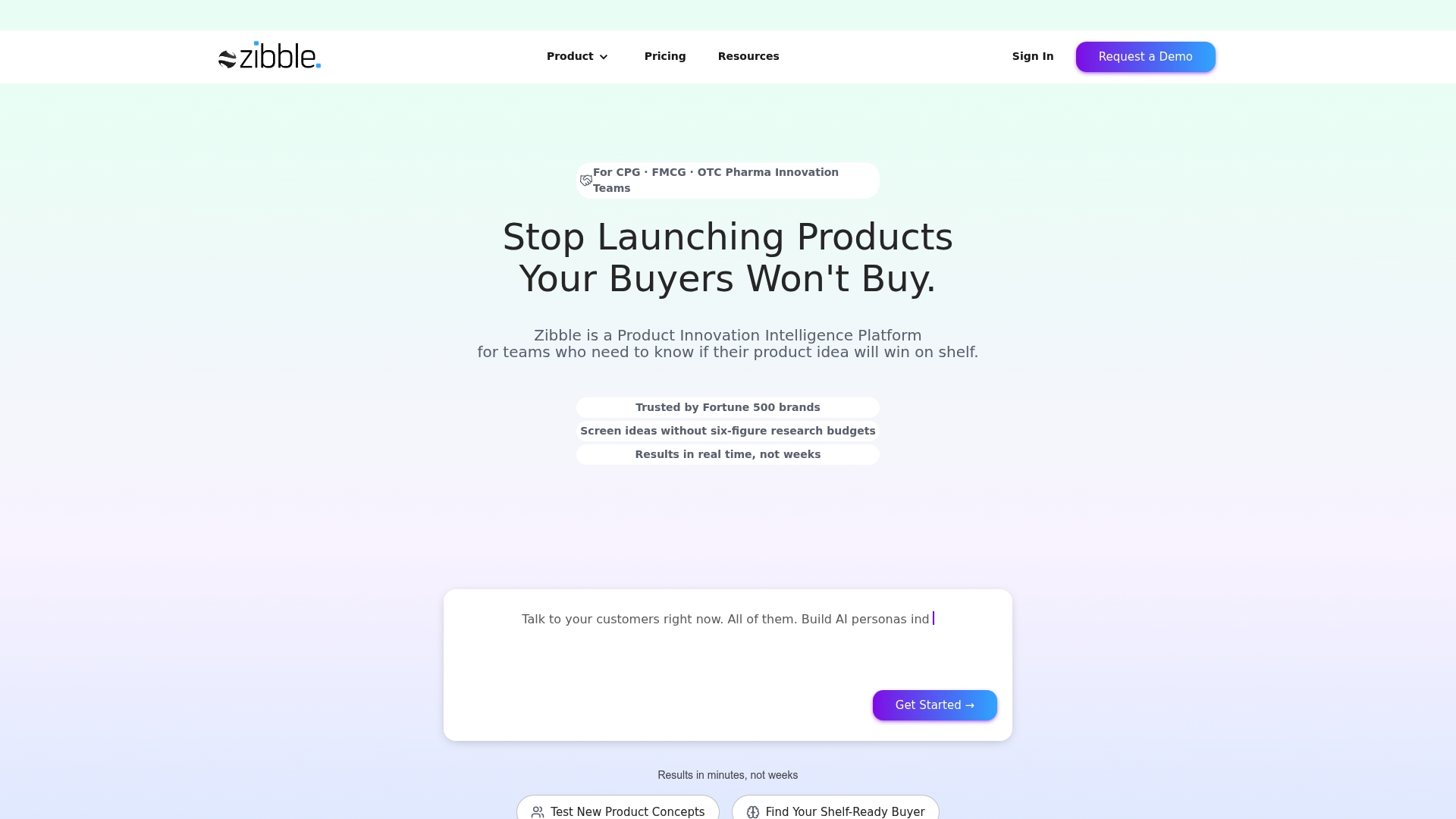
Zibble's marketing claims its anthropological AI personas let teams pressure-test product ideas in minutes instead of weeks, shortening traditional research cycles. I found that claim believable for early concept validation, though deeper validation still needs live user tests.
Core Features
- Generative Insight Synthesis that aggregates social, purchase, and interaction signals into concise findings.
- Anthropological Data Modeling to surface behavioral nuance and likely decision triggers across segments.
- Real-time concept testing and messaging pressure tests for fast iteration during meetings.
- Signal Groups for multi-persona discussions to stress test positioning across shoppers.
- Persona building that produces voice-of-customer style quotes for creative briefs.
Key Differentiator
What sets Zibble apart is the anthropological angle: the personas are built to mimic reasoning, not just demographics. That design produces critique-style feedback you can use immediately in copy, pack design, and concept prioritization. I relied on those simulated reactions to shorten stakeholder debates.
Pros
- Intuitive setup. I had a team running tests within a morning, which reduced meeting prep overhead.
- Rapid iteration. The platform supports on-demand runs so you can test variants between review cycles rather than waiting weeks.
- Human-like persona output that generated direct quotes and friction points usable in briefs and decks.
- Location tracking and biometric verification options add stronger provenance for higher-stakes tests.
- Responsive customer support for setup questions; the team answered workflow queries faster than I expected.
Cons
- The free plan is limited. It blocks some features and restricts concurrent user access, which constrains small team pilots.
- Mobile and occasional app delays affect momentum during live workshops; I saw slower response times on heavy reports.
- Several users report billing and report generation issues with customer service response times not always satisfactory.
- Advanced analysis and exportable reports often require upgrading to higher tiers.
When It May Not Fit
Small teams on a strict budget may find the free tier too constrained for meaningful testing. If your team runs high-volume mobile workshops, the intermittent performance lag will frustrate live facilitation. Also, if you need enterprise-grade billing support, current reports of slow resolution are a red flag.
Who It's For
Product managers, innovation leads, and brand marketers at CPG, FMCG, and OTC Pharma companies who need fast, iterative consumer feedback before committing to costly development or production runs. Good for teams that want tighter hypothesis testing without a large research retainer.
Real World Use Case
A CPG client I advised used Zibble to vet five snack concepts across three shopper personas. The team reported that the persona feedback highlighted a single sensory objection we fixed in packaging copy, which they said avoided a likely poor-performing SKU and saved weeks of field work.
Pricing
Plans scale by capability and query limits. The vendor lists SPRINT at $75/month, GROW at $450/month, and SCALE at $999/month. Each tier unlocks progressively more personas, queries, and reporting features.
Website: https://zibble.ai
Delve AI
At a Glance
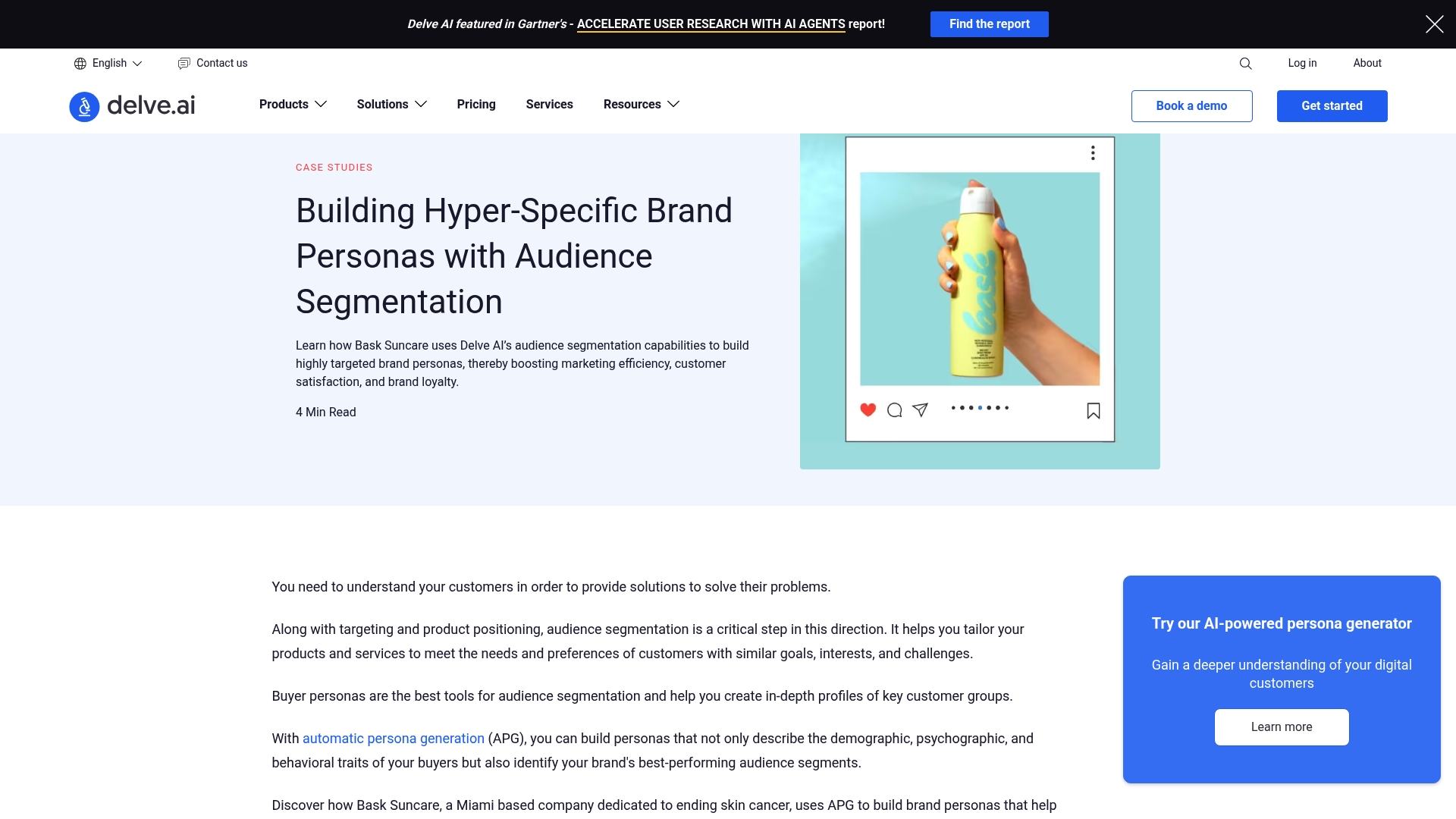
The vendor advertises automated persona creation that pulls from 40+ data sources, a claim that frames Delve AI as a heavyweight for complex audience profiling. The platform also appears in Gartner reports according to vendor materials, which signals industry attention.
Delve AI pairs that data depth with tools that simulate customer behavior and run synthetic research for fast hypothesis testing.
Core Features
Delve AI combines AI powered persona generation, automatic segmentation, and a visual canvas for maps and flows. The platform supports building buyer personas, journey maps, and ideal customer profiles using first party and public data.
You can create digital twins and interact with them to test messaging and conversion levers. Export templates and research outputs are available, though exports may need cleaning for Word documents.
Key Differentiator
Delve AI’s marketing highlights that 40+ sources claim above as the backbone for its automation. That breadth is what differentiates it from basic survey tools and spreadsheet segmentation.
Practically, the integration of many public and private signals lets you move from audience snapshots to simulated interactions without stitching multiple tools together.
Pros
- Intuitive interface makes complex analysis accessible for non data scientists. Teams can visualise segments and personas without a specialist sitting beside them.
- Strong support and training resources reduce the learning curve during rollout. Customer service is cited by users as responsive and helpful.
- Effective qualitative tools let you attach quotes, themes, and coded excerpts to segments for richer creative briefs. That helps copywriters and planners find voice and tone.
- Automation speeds research cycles so playbooks are ready faster than manual synthesis. For campaign planning this shortens time from insight to execution.
- Versatile use across e commerce, B2B, and agency work lets one workspace handle different brand needs without building separate flows.
Cons
- Drag and drop interactions can feel sluggish and occasionally stall during heavy editing sessions. That slows iterative coding of interview transcripts.
- Deleting categories or quotes is not intuitive which complicates cleanup after rapid tagging exercises. Expect manual steps when refining themes.
- Selecting specific text excerpts for coding is fiddly on longer documents. Analysts will spend extra time capturing exact quotes.
- Export formatting to Word can require rework. If you need print ready decks directly from exports prepare to tidy fonts and spacing.
When It May Not Fit
If your team needs flawless, frictionless editing for long transcripts the interface limitations above will be frustrating. Teams that demand perfect Word export formatting for executive decks will face extra cleanup work.
Also, if your workflow depends on instant, buttery drag and drop edits at scale this product may slow you down during heavy analysis sprints.
Who It's For
Marketing teams, market researchers, and data analysts who want richer persona models than simple demographics. Delve AI fits groups that combine first party data with social and public signals to inform targeting and creative testing.
It is especially useful for brands that run frequent experiments and need simulated customer responses to refine messaging and funnel design.
Real World Use Case
A skincare brand used Delve AI’s persona generator to merge web analytics and social signals into granular customer profiles. The team then ran digital twin simulations to test ad creatives and targeting, which tightened messaging and lifted engagement on targeted campaigns.
Marketers reported clearer creative briefs and faster campaign iterations after adopting the platform.
Pricing
Pricing details are not published on the page provided. The product data labels pricing as informational only, so you will need to contact Delve AI for current tiers and enterprise options.
Website: https://delve.ai/blog/building-brand-personas-with-audience-segmentation
CPG Brand Strategy Tools Comparison
When evaluating tools for developing CPG brand strategies, potential users should examine how each solution aligns with their specific needs for data synthesis, persona creation, and market testing.
| Product | Core Feature | Key Differentiator | Best For | Notable Limitation |
|---|---|---|---|---|
| CPG Agent | AI-driven persona development and strategy validation | Combines senior advisory with automatic workflows | Challenger and startup CPG brands | Pricing requires inquiry for proposal details |
| Zibble | Fast persona synthesis and concept iteration | Anthropological data modeling for behavioral insights | Managers seeking iterative consumer feedback | Limited features in the free tier |
| Delve AI | Persona creation using 40+ data sources and behavior simulations | Integration of diverse data sources for detailed analysis | Brands requiring comprehensive audience profiles | Complex interaction workflows can feel sluggish |
Accelerate Your FMCG Brand Growth with AI-Powered Personas
Understanding the importance of brand personas for FMCG brands means recognizing the challenge of creating deep, data-backed customer insights quickly and accurately. Many brands struggle to identify authentic buying triggers and voice-of-customer quotes without lengthy research. Cpgagent tackles these pain points head-on by offering PersonaForge, a free AI-driven tool that generates detailed personas in hours, not weeks. This enables your team to move swiftly from hypothesis to validated plans that directly impact revenue and pipeline.
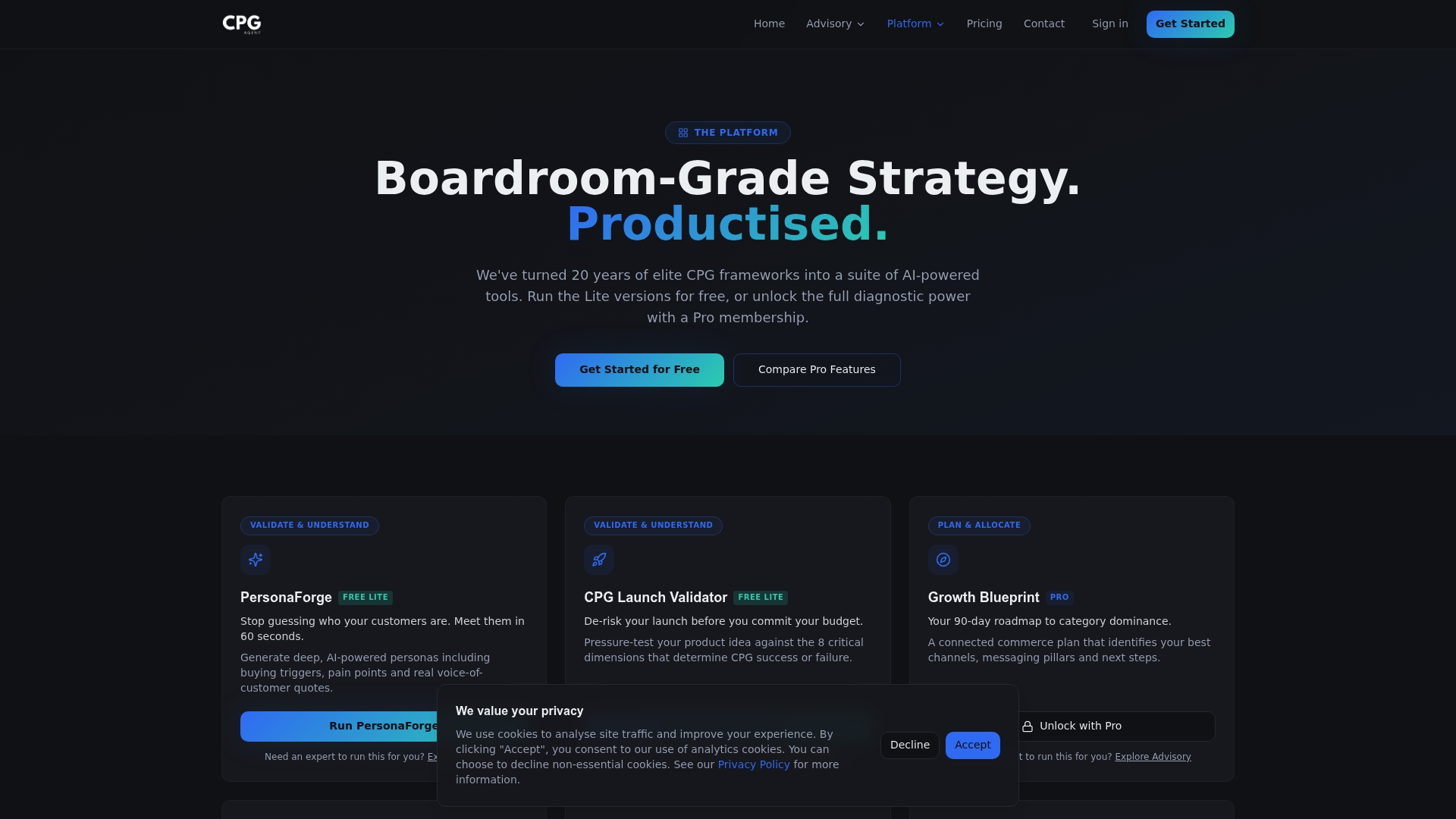
Experience how Cpgagent’s platform brings together automated workflows and senior advisory, reducing guesswork from your marketing and product strategies. Visit Cpgagent Platform to create actionable personas and launch plans fast. Don’t wait to empower your brand with precise, ready-to-use customer profiles and expert guidance tailored for FMCG leaders.
Frequently Asked Questions
How does PersonaForge help in developing brand personas for FMCG brands?
Cpgagent's PersonaForge generates deep, AI-powered personas that include buying triggers, pain points, and real voice-of-customer quotes. This feature allows brands to create strategic insights that can propel their marketing efforts forward. Brands should utilize PersonaForge to enhance their customer understanding and streamline their marketing strategies.
What is the difference between Zibble and Cpgagent for persona development?
Zibble's anthropological AI personas can provide a human-like feedback mechanism, making them suitable for quick iterations in messaging and concept testing. In contrast, Cpgagent's PersonaForge focuses on generating rich customer personas that include actionable insights for long-term planning. Brands may prefer Cpgagent for a more structured approach to persona insights that support broader strategy development.
Which platform is better for real-time concept testing, Zibble or Cpgagent?
Zibble excels in real-time concept testing with its quick, iterative process, which can be effective for fast-paced project environments. Cpgagent's PersonaForge provides more comprehensive insights and persona generation, which may be better suited for brands needing deeper, more strategic customer understanding before testing concepts. Evaluate your project's speed requirements and strategic needs when choosing between them.
Can I use PersonaForge if my FMCG brand has limited resources?
Yes, Cpgagent's PersonaForge is offered as a free tool, making it accessible for brands with limited resources looking to develop customer personas. This enables teams to begin creating valuable insights without significant upfront investment. Brands can start leveraging the platform immediately to enhance their marketing strategies without financial commitment.
How does Delve AI compare to Cpgagent for audience segmentation?
Delve AI offers automated persona creation from 40+ data sources, providing depth for complex audience profiling. In contrast, Cpgagent focuses on generating detailed personas that can influence strategic planning and execution for FMCG brands. Depending on your needs for depth versus actionable insights, Cpgagent may be preferable for strategic applications.