

TL;DR:
- Getting your CPG brand recommended by AI search engines requires implementing GEO, which focuses on entity presence and external citations rather than traditional keyword ranking. Structured data, including comprehensive schema markup and authoritative third-party mentions, significantly enhance AI citations, while ensuring your robots.txt allows AI crawlers is essential. Regular prompt audits and technical optimizations build your brand's AI visibility, shifting focus from ranking to belonging in AI-generated recommendation shortlists.
Getting your CPG brand recommended by AI search engines requires Generative Engine Optimization (GEO), a discipline distinct from traditional SEO that focuses on earning citations in AI-generated answers from platforms like ChatGPT Shopping, Google AI Overviews, and Perplexity. These engines do not rank pages. They synthesize answers from multiple trusted sources and decide which brands belong in a recommendation set. For functional food, beverage, and wellness brands, this distinction is critical. A shopper asking "best organic high-fiber snack" gets a curated shortlist, not a list of blue links. If your brand is not in that shortlist, you are invisible at the moment of decision.
How to get your CPG brand recommended by AI search engines
Traditional SEO built visibility through keyword density, backlink volume, and domain authority scores. AI search engines operate on an entirely different logic. Google AI Overviews, ChatGPT, and Perplexity do not reward the brand that ranks first for a keyword. They reward the brand that appears most credibly across multiple authoritative, contextually relevant sources.
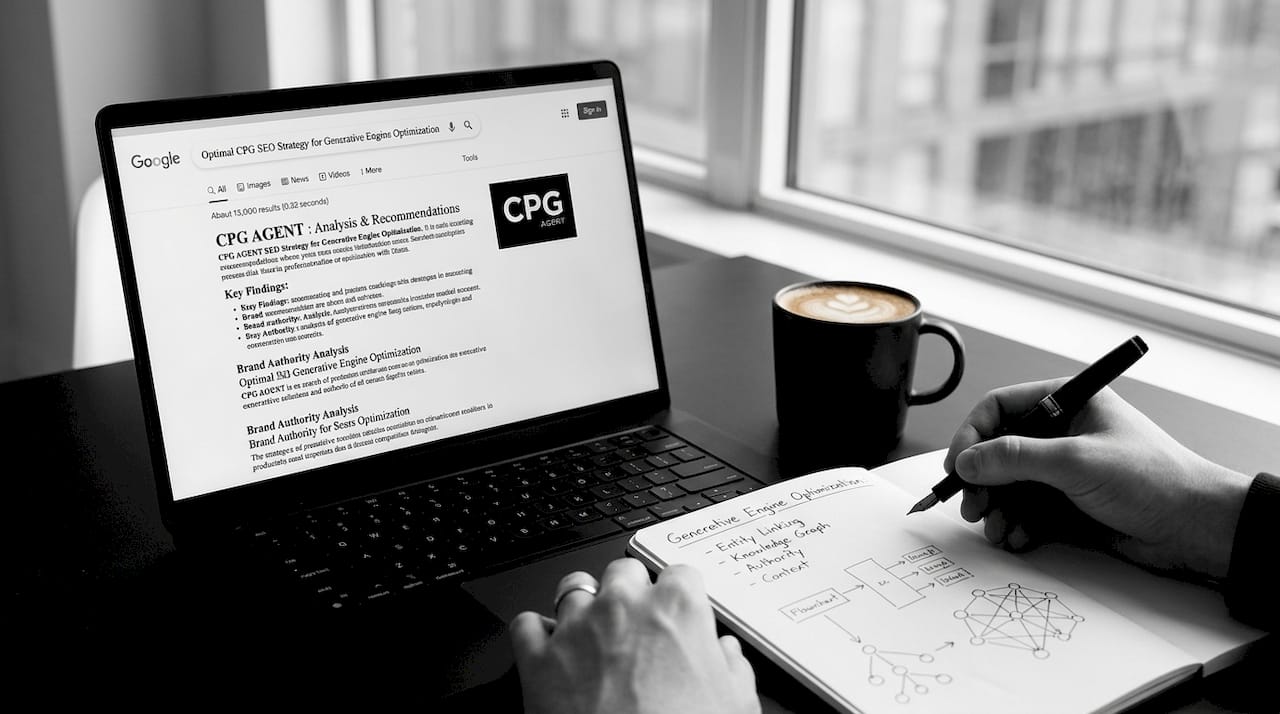
The shift is from keyword ranking to entity presence. Your brand must exist as a recognized entity in the AI's world model, meaning it appears in trusted databases, editorial reviews, comparison articles, and structured product data. Decision-set inclusion is the operative mental model: AI engines build shortlists of brands that belong in a category, not catalogs of every brand that exists.
Three signals drive that inclusion:
- Entity authority: Your brand appears consistently across Google Knowledge Graph, Wikidata, and schema-verified product pages with matching identity signals.
- Contextual coverage: Third-party sources, not just your own website, mention your brand in the context of specific use cases, such as "high-protein plant-based bars for athletes."
- Extractable content: Your pages present facts in formats AI crawlers can parse: definition-first paragraphs, tables, numbered lists, and complete schema markup.
Brands with only owned content consistently struggle to earn AI citations. Authoritative external sources with editorial accountability are the trust signals that move a brand from "exists" to "recommended." A functional beverage brand with a polished website but zero editorial mentions in nutrition media will lose to a smaller competitor that has earned three credible roundup placements.
Pro Tip: Run the query "best [your category] for [your target use case]" in ChatGPT, Perplexity, and Google AI Overviews right now. If your brand does not appear, you have a GEO gap, not an SEO gap.
What structured data and content signals actually boost AI citations
Getting cited by AI engines starts with making your content technically extractable. This is the practical checklist every CPG brand needs to work through before investing in content volume.
-
Implement Product schema with 2026-required fields. Your JSON-LD must include name, brand, sku or gtin, offers, aggregateRating, returnPolicy, and shippingDetails. Pages with comprehensive schema markup are cited 3.1x more frequently in Google AI Overviews, yet only 12% of Shopify merchants meet these standards. If you sell functional snacks or wellness supplements, this gap is your competitive opening.
-
Add FAQPage and HowTo schema to relevant content. A "how to choose a protein bar" guide with HowTo schema signals procedural intent to AI engines. A product FAQ with FAQPage schema answers the exact comparison questions shoppers ask AI assistants. Matching schema types precisely to page content maximizes AI extractability signals.
-
Use dateModified in your JSON-LD and update content regularly. Google AI Overviews synthesizes answers from 4 to 7 indexed sources at query time. Fresh content on crawlable domains can appear in citations within days. Stale pages lose ground fast.
-
Write definition-first paragraphs. CPG brands routinely bury key facts inside marketing prose. AI engines extract from the first 40 to 60 words of a section. Open every section with a direct factual claim, then expand. "This bar contains 18g of plant-based protein per serving from pea and hemp sources" beats "We crafted this bar with your active lifestyle in mind."
-
Include comparison tables and numbered lists. Pages with extractable formats are 2.3x more likely to be cited in ChatGPT browsing results. A table comparing your SKUs by protein content, fiber, and sugar per serving is exactly what AI engines pull into "best of" answers.
-
Open your robots.txt to AI crawlers. Allowing GPTBot, ClaudeBot, PerplexityBot, and Google-Extended in your robots.txt is non-negotiable. Blocking these bots eliminates your brand from generative AI recommendations entirely, even if your classic SEO indexing remains intact.
| Content element | AI citation impact |
|---|---|
| Complete Product schema (all 2026 fields) | 3.1x more frequent citations in Google AI Overviews |
| Definition-first paragraph structure | Directly extractable in 40-60 word answer blocks |
| FAQPage and HowTo schema | Matches procedural and comparison query intents |
| Comparison tables and numbered lists | 2.3x more likely to appear in ChatGPT browsing answers |
| Open robots.txt for AI crawlers | Required for any generative AI indexing |
Pro Tip: Use Google's Rich Results Test and the Schema Markup Validator to check every product page before publishing. Incomplete schema is the single most common reason CPG brands get skipped by AI engines despite having strong content.
How to build the third-party citations AI engines actually trust
Structured data gets you technically eligible. Third-party citations get you actually recommended. This is where most CPG brands underinvest, and where the biggest GEO gains are available right now.
AI engines treat contextual mentions from credible external sources as verification that your brand belongs in a category. A mention in a Healthline roundup of high-fiber snacks, a Reddit thread where a nutritionist recommends your product, or a YouTube review from a credible fitness creator all send the same signal: this brand is recognized by sources that have editorial accountability.
The most effective coverage types for CPG brands include:
- Expert roundups and editorial reviews in nutrition, wellness, and food media (publications like Healthline, Eat This Not That, and Food Navigator carry strong trust signals for AI engines).
- Comparison articles that place your product against category alternatives, since contextual coverage signals to AI engines that your brand belongs in specific recommendation sets.
- Reddit and forum mentions from verified users discussing real use cases, particularly in subreddits like r/nutrition, r/veganfitness, or r/snacks.
- YouTube influencer reviews with transcripts indexed by Google, since AI engines increasingly pull from video content metadata and descriptions.
To track your progress, run a structured prompt audit across ChatGPT, Perplexity, and Google AI Overviews every 30 days. Use category queries ("best plant-based protein bar"), use-case queries ("high-fiber snack for weight loss"), and comparison queries ("X vs Y protein bar"). Record which brands appear and how often. This is the AI shelf monitoring process that leading brands use to measure share of voice across AI engines.
| AI engine | Best query type to test | Citation update speed |
|---|---|---|
| Google AI Overviews | Category and comparison queries | Days (real-time index) |
| ChatGPT (browsing mode) | Use-case and "best for" queries | Days to weeks |
| Perplexity | Research and ingredient queries | Near real-time |
Prioritize Google AI Overviews first if your category has high purchase intent. Perplexity is the right target for ingredient-conscious shoppers researching functional foods. Building a go-to-market content plan that maps coverage goals to specific AI engines by query type is the most efficient path to measurable citation growth.
How to audit your AI visibility and fix what is blocking you
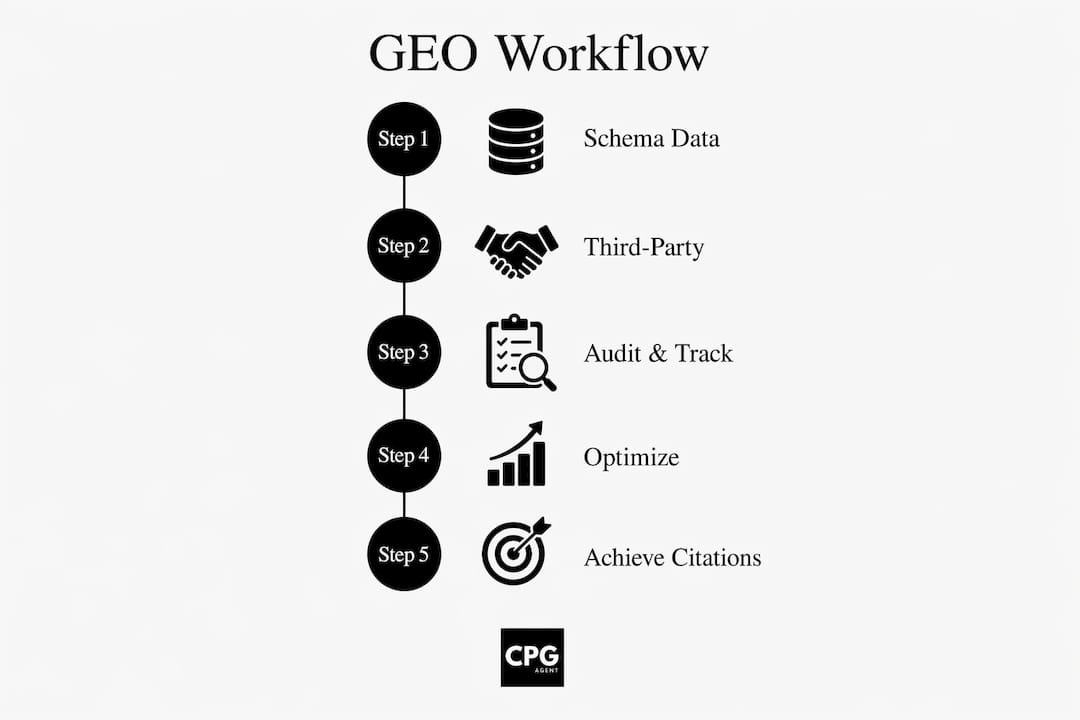
Running an AI visibility audit is a five-step process that any CPG marketer can execute without a developer.
-
Run prompt sets across all three major AI engines. Query ChatGPT, Perplexity, and Google AI Overviews with 10 to 15 category and use-case terms relevant to your SKUs. Document every brand cited and note where yours appears or is absent. This gives you a citation baseline and identifies which competitors currently own your category in AI search.
-
Check your robots.txt for crawler blocks. Visit yourdomain.com/robots.txt and confirm GPTBot, ClaudeBot, PerplexityBot, and Google-Extended are not disallowed. CDN firewall rules from providers like Cloudflare can also block AI crawlers even when robots.txt is open. Check your WAF settings and whitelist known AI crawler IP ranges.
-
Validate your schema on every product and content page. Use Google's Rich Results Test at search.google.com/test/rich-results. Incomplete or mismatched schema is the most common technical blocker. A product page with HowTo schema instead of Product schema sends the wrong signal to AI engines.
-
Audit your Knowledge Graph entity. Search your brand name in Google and check whether a Knowledge Panel appears. If it does not, Google Knowledge Graph entries require Organization schema with sameAs links, a Wikidata Q-number entry, and consistent identity signals across your Google Business Profile, LinkedIn, and social profiles. The verification cycle runs 4 to 12 weeks, so start now.
-
Refresh stale content with updated dateModified timestamps. Google's AI Mode, powered by Gemini 3.5 Flash, prioritizes real-time indexed content for personalized recommendations. A product page last updated in 2023 competes poorly against a competitor who refreshed theirs last month.
Pro Tip: Track your AI citation share at the prompt level monthly, not just the domain level. Prompt-level tracking lets you adjust content focus at the SKU and query granularity where actual purchase decisions happen.
Key takeaways
Getting recommended by AI search engines requires GEO, structured data, and verified third-party coverage working together as a system, not as separate tactics.
| Point | Details |
|---|---|
| GEO over traditional SEO | AI engines cite brands based on entity presence and contextual coverage, not keyword rank. |
| Complete schema markup | Product schema with all 2026 fields increases AI citation frequency by 3.1x. |
| Third-party citations | Editorial reviews, Reddit mentions, and comparison articles signal category belonging to AI engines. |
| Open AI crawlers | Allowing GPTBot, ClaudeBot, and PerplexityBot in robots.txt is required for generative AI indexing. |
| Monthly prompt audits | Track citation share across ChatGPT, Perplexity, and Google AI Overviews at the SKU and query level. |
Why most CPG brands will get this wrong before they get it right
I have watched brands pour budget into content calendars and influencer campaigns while their robots.txt quietly blocked every AI crawler on the internet. The disconnect between marketing execution and technical infrastructure is the real GEO problem for CPG brands in 2026.
What strikes me most is how the mental model shift from "ranking" to "belonging" trips people up. Marketers are trained to chase positions. GEO asks you to think about membership: does your brand belong in the shortlist an AI engine builds when a shopper asks a specific question? That requires a different kind of evidence. It requires brand differentiation that is legible to machines, not just appealing to humans.
The brands that will win AI search in the next 18 months are not the ones with the biggest budgets. They are the ones running monthly prompt audits, maintaining clean schema across every SKU page, and systematically earning placements in the editorial sources AI engines trust. That is a process discipline, not a creative one. And process disciplines favor the organized, not the well-funded.
The uncomfortable truth is that most CPG brands are not even eligible for AI citation yet because their technical foundations are broken. Fix the crawlability, complete the schema, and build the external coverage. In that order. Everything else is optimization on top of a foundation that does not exist yet.
— Matthew
How CPG Agent helps you win AI search recommendations
CPG Agent is built for exactly this challenge. The platform gives CPG and FMCG brands the AI-driven tools to run category-level visibility audits, identify schema gaps across their product catalog, and track citation share of voice across ChatGPT, Perplexity, and Google AI Overviews. Instead of managing GEO manually across disconnected tools, you get a single environment where structured data compliance, competitor analysis, and content optimization work together. If you are ready to move from invisible to recommended in AI search, explore what the CPG Agent platform can do for your brand's AI visibility strategy today.
FAQ
What is Generative Engine Optimization for CPG brands?
Generative Engine Optimization (GEO) is the practice of structuring your brand's content, schema markup, and third-party citations so AI engines like ChatGPT, Perplexity, and Google AI Overviews include your products in generated recommendations. It replaces keyword-rank thinking with entity presence and decision-set inclusion.
Which AI engines should CPG brands prioritize first?
Prioritize Google AI Overviews for high-purchase-intent category queries, Perplexity for ingredient-conscious and research-driven shoppers, and ChatGPT browsing mode for use-case and "best for" comparisons. Each engine updates citations at different speeds, with Google being the fastest.
Does blocking AI crawlers in robots.txt hurt my brand?
Yes. Blocking GPTBot, ClaudeBot, PerplexityBot, or Google-Extended removes your content from generative AI training and real-time citation pools entirely, even if your classic SEO indexing remains intact.
How long does it take to appear in AI search recommendations?
Fresh content on crawlable, schema-complete domains can appear in Google AI Overviews citations within days. ChatGPT browsing results update within days to weeks. Knowledge Graph entity verification takes 4 to 12 weeks. Start the technical work before the content work.
What schema markup matters most for CPG product pages?
Product schema with complete 2026 fields (name, brand, gtin, offers, aggregateRating, returnPolicy, shippingDetails) is the highest-priority markup. Add FAQPage schema to Q&A content and HowTo schema to procedural guides to match the full range of AI query intents.