

TL;DR:
- Expanding a CPG brand into new retail channels requires thorough readiness assessment and precise execution to avoid costly failures.
- Using data-driven tools, building strong supply chain capacity, and crafting a compelling, differentiated brand story are essential steps pre-approach.
- Successful retail expansion hinges on targeted outreach, in-store activation, ongoing performance measurement, and overcoming logistical and competitive challenges.
Breaking into new retail channels is one of the most high-stakes moves a CPG brand can make. The cost of a failed retail launch goes well beyond lost margin. It damages your credibility with buyers and can set your growth back by years. If you want to expand your CPG brand into new retailers without burning budget on guesswork, you need a strategy built on data, preparation, and precise execution. This article walks you through exactly that: from assessing your retail readiness to executing outreach, measuring performance, and troubleshooting the obstacles that trip up even experienced teams.
Table of Contents
- Key takeaways
- How to expand your CPG brand into new retailers
- Executing your retail expansion step by step
- Measuring performance after you enter new retail markets
- Overcoming common roadblocks during retail expansion
- My honest take on retail expansion strategy
- Take your retail expansion further with Cpgagent
- FAQ
Key takeaways
| Point | Details |
|---|---|
| Validate before you pitch | Use tools like CPG Launch Validator to pressure-test your product before committing to a retail expansion. |
| Target with AI precision | AI-driven retail analytics identify white space and high-potential stores so you stop guessing and start placing. |
| Treat retail media as distribution | Retail media campaigns timed to in-stock availability build retailer confidence and accelerate shelf placement. |
| Measure velocity, not just volume | Sell-through rate and velocity per store are the metrics that actually predict whether a retailer keeps you on shelf. |
| Preparation beats speed | Entering retail too early without supply chain readiness or compelling sales data is the most common and most expensive mistake. |
How to expand your CPG brand into new retailers
Before you send a single pitch deck to a buyer, you need to know whether your brand is actually ready for the shelf you are targeting. Most brands that fail at retail expansion do not fail because of a bad product. They fail because they entered too early, with the wrong data, or without a clear differentiation story that a buyer could act on.
Start with a rigorous product-market fit assessment. Cpgagent's CPG Launch Validator is a free tool that pressure-tests your product idea across eight critical dimensions before you commit budget. Think of it as a pre-flight check. It surfaces the gaps in your positioning, pricing, and distribution readiness that would otherwise show up as a failed retail launch six months down the road.
Supply chain scalability is the next non-negotiable. A buyer at a regional grocery chain will ask you point-blank: "Can you support 200 stores at launch?" If your co-manufacturer is already running at capacity or your lead times are unpredictable, you are not ready. Audit your production capacity and get written confirmation from your supply partners before you start any outreach.
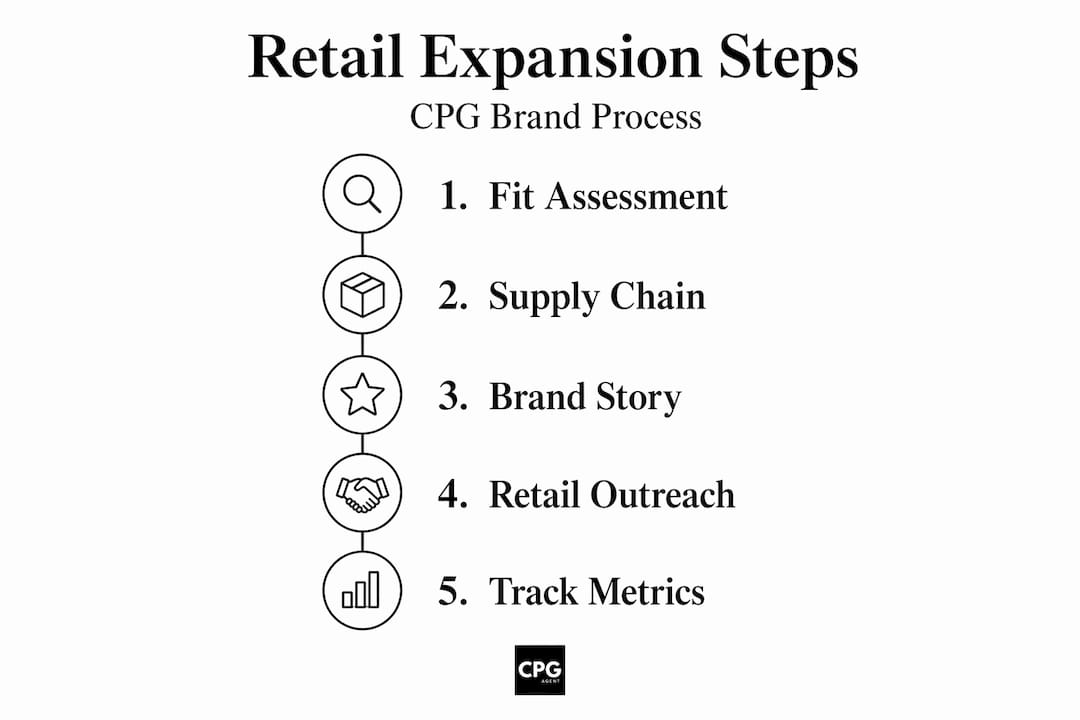
Your brand story also needs to be retailer-ready, not just consumer-ready. Buyers respond to clear shelf differentiation backed by data. That means velocity numbers from existing channels, consumer research, and a tight explanation of why your product wins in the category. Cpgagent's PersonaForge tool generates deep, AI-powered buyer personas including purchasing triggers, pain points, and real voice-of-customer language. This is what transforms a generic pitch into one that speaks directly to what a buyer cares about.
| Preparation step | Timeline | Resource needed |
|---|---|---|
| Product-market fit validation | 2 to 4 weeks | CPG Launch Validator |
| Supply chain audit | 2 to 6 weeks | Operations lead, co-man contracts |
| Sales data packaging | 1 to 2 weeks | POS data, velocity reports |
| Retail-ready packaging review | 4 to 8 weeks | Design team, compliance review |
| Buyer persona development | 1 week | PersonaForge |
Pro Tip: Do not wait until you have a buyer meeting scheduled to build your sell sheet. Your sell sheet, your velocity data, and your consumer research should all be ready before your first outreach email goes out. Buyers move fast and they do not wait for follow-up materials.
Executing your retail expansion step by step
Once your brand is prepared, the execution phase is where most teams either gain momentum or stall out. The difference usually comes down to how precisely you target and how efficiently you activate.
Here is a practical sequence that works:
-
Identify white space with AI retail analytics. Services like AisleAI's GAS platform guarantee monthly store placements for CPG brands by combining detailed retail datasets with nationwide field teams. Rather than cold-calling buyers, you are entering stores where the data already shows your product has a high probability of winning.
-
Segment your retailer targets by type. Independent retailers, regional chains, and club stores each require a different pitch, different margin structures, and different activation plans. Do not send the same deck to a Costco buyer and an independent natural grocer. The business model is different and buyers know immediately when you have not done your homework.
-
Build your broker and distributor relationships early. Broker networks give you access to retail relationships that would take years to build on your own. Vet brokers by category expertise, not just by the size of their network. A broker who specializes in natural and specialty food will outperform a generalist broker in that channel every time.
-
Align your retail media spend with your distribution rollout. Coordinated launch timing that connects supply, merchandising, and media spend is what drives velocity and builds retailer confidence. Retailers want proof that your paid media actually lifts trial and velocity before they give you more shelf space.
-
Execute in-store activation at launch. Demos, shelf talkers, and secondary placement displays drive trial in the first 90 days. This is the window where you either prove velocity or get cut. Do not treat in-store activation as optional.
-
Track and report back to buyers. After your first 60 days in a new retailer, share velocity data proactively. Buyers who see a brand actively managing its own performance are far more likely to expand distribution.
Pro Tip: Time your retail media campaigns to launch only when you have confirmed in-stock availability across your target stores. Running ads before product is on shelf is a common and costly mistake that burns media budget and frustrates shoppers.
Measuring performance after you enter new retail markets
Getting on shelf is the beginning of the work, not the end. The brands that sustain retail presence are the ones that treat post-entry measurement as a core discipline, not an afterthought.
The metrics that matter most are:
- Velocity per store per week. This is the single number buyers use to decide whether to keep you, expand you, or cut you. Know yours before they ask.
- Sell-through rate. How quickly is your product moving relative to what was ordered? Low sell-through signals a pricing, placement, or awareness problem.
- Distribution coverage. What percentage of your target stores are actually stocking and displaying your product correctly? Distribution gaps are often invisible until you look at field audit data.
- Retail media return on ad spend. Are your media campaigns actually lifting product velocity and generating the trial data that supports retailer confidence?
The biggest measurement mistake CPG brands make is using fragmented data sources. POS data from one retailer, distributor sell-in data from another, and digital analytics from a third platform with no unified view. Fragmented analytics and siloed planning consistently lead to missed opportunities and poor trade decisions. Invest in a data integration layer that unifies these signals early.
Price-pack-assortment decisions should also be made on live elasticity signals, not annual planning cycles. Integrated channel strategy that connects pricing, promotions, and distribution decisions frequently rather than annually is what separates brands that grow in retail from those that plateau.
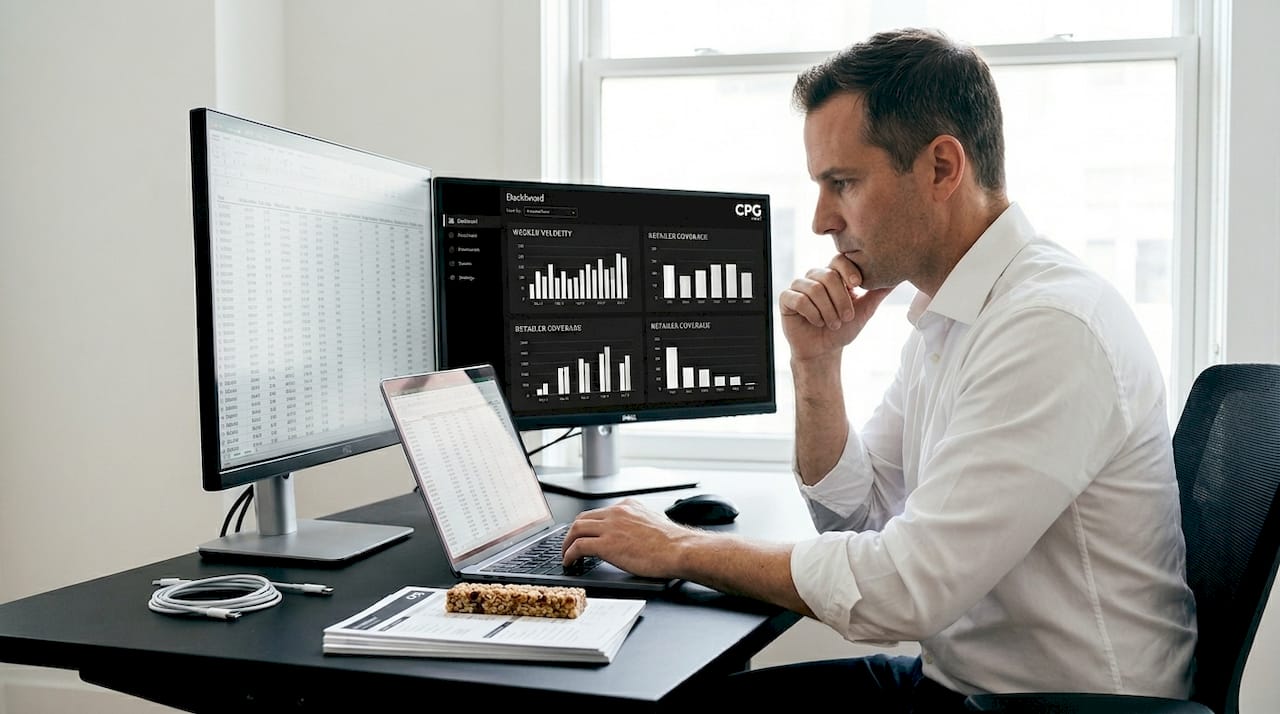
Pro Tip: Build a simple weekly dashboard that tracks velocity, sell-through, and distribution coverage by retailer. Share it with your field team and your broker every Monday. This single habit will surface problems weeks before a buyer raises them.
Overcoming common roadblocks during retail expansion
Even well-prepared brands hit friction during retail expansion. Knowing what to expect makes the difference between a temporary setback and a derailed launch.
Distributor complexity and negotiation delays are the most common source of lost momentum. Distributors have their own timelines, margin requirements, and priorities. Build buffer time into your launch schedule and have a direct-to-retailer backup plan for your highest-priority accounts.
Promotional support that erodes margins is a trap that catches brands at every stage. Retailers will ask for slotting fees, promotional allowances, and scan-back deals. Know your minimum viable margin before you walk into any negotiation. If a promotional structure makes the business unprofitable at current volume, it is not a growth opportunity. It is a liability.
Private label competition is intensifying across every major retail channel. U.S. private label CPG sales reached $330 billion, capturing 24% unit share. Retailers are actively investing in their own premium and wellness-oriented private brands, particularly in club channels. Your differentiation story needs to be specific enough that a buyer cannot easily replicate it with their own label.
Inventory and supply chain disruptions can destroy retailer confidence faster than anything else. A single out-of-stock event in your first 90 days can result in a deauthorization. Build safety stock before launch and establish a rapid-response protocol with your logistics team.
"Retailer confidence is built slowly and lost instantly. The brands that protect their supply reliability above all else are the ones that get expanded, not cut."
Sustaining shopper loyalty in new retail environments also requires localized thinking. What works in a Pacific Northwest natural grocery chain may not translate to a Midwest club store. Your messaging, your promotional cadence, and even your pack size may need to adapt by channel.
My honest take on retail expansion strategy
I've spent years watching CPG brands approach retail expansion the same way. They get excited about a buyer meeting, rush the pitch, land a small test, and then scramble to support it. The scramble is where the damage happens.
What I've learned is that the brands that win at retail expansion treat it as a capital allocation decision, not a sales activity. Every new retailer you enter is a bet. You are betting margin, operational capacity, and brand credibility. The question is not "Can we get into this retailer?" It is "Should we, and can we win there?"
The shift to volume-led growth that integrates price, pack, assortment, and channel decisions is not a new idea. But I've seen very few brands actually operationalize it. Most still plan promotions in one silo, pricing in another, and channel strategy in a third. That fragmentation is expensive.
My take on retail media is also different from what most brand managers hear. Retail media is not a marketing line item. It is a distribution tool. When you coordinate media with in-stock availability, you are giving buyers evidence that your brand can drive trial and velocity. That evidence is what gets you expanded from 50 stores to 500. Treat it accordingly.
The AI tools now available to CPG brands, from retail analytics platforms to persona generators, have genuinely changed what is possible for a lean team. The brands that use them well are not just moving faster. They are making better decisions with less waste. That is the real advantage.
— Matthew
Take your retail expansion further with Cpgagent
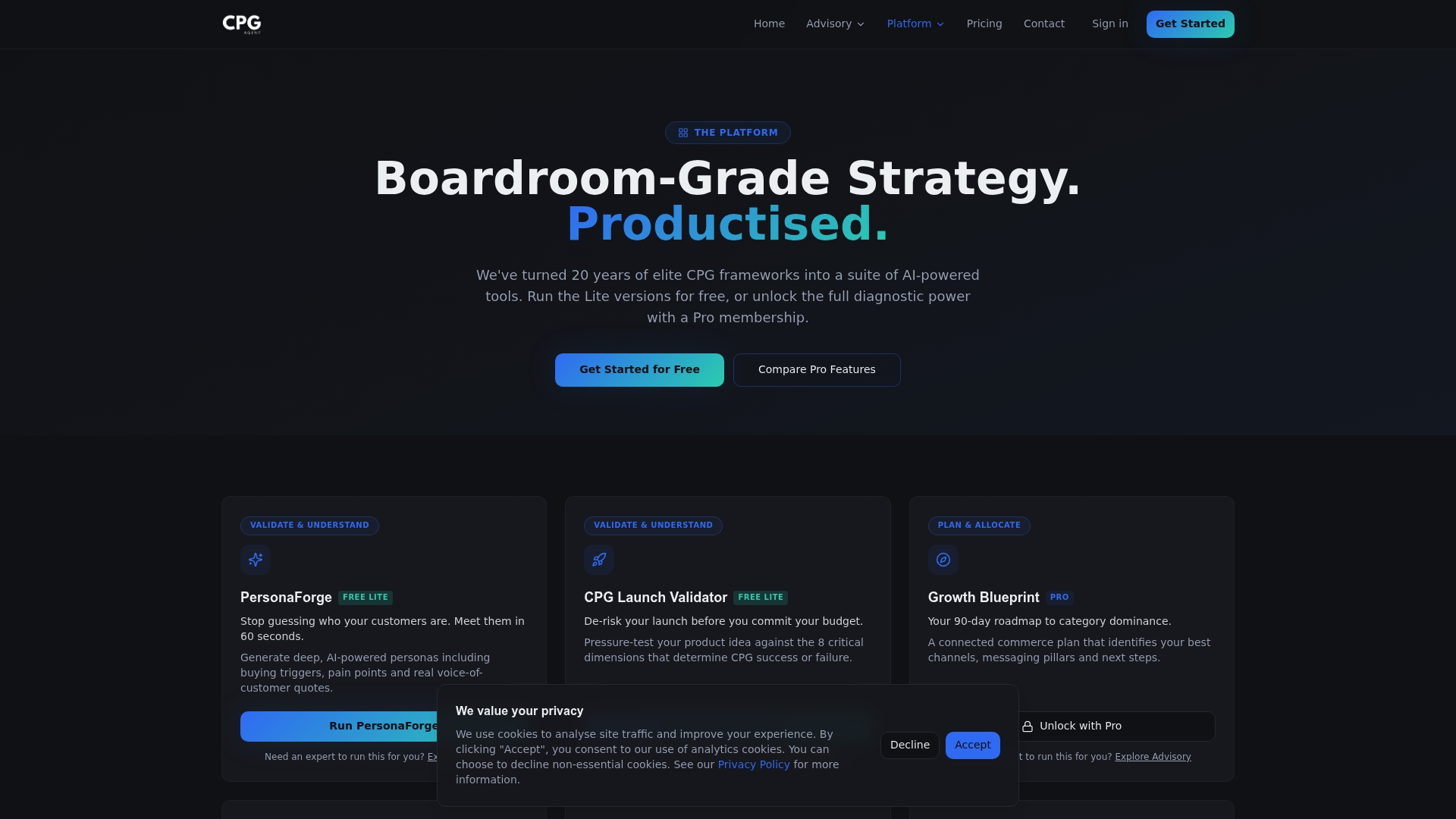
Cpgagent built its platform specifically for CPG brands that are serious about growth without the overhead of a traditional agency. If you are preparing to expand your retail presence, start with two free tools that will immediately sharpen your strategy. PersonaForge generates deep, AI-powered buyer personas with real purchasing triggers and voice-of-customer language that makes your pitch land. CPG Launch Validator pressure-tests your product across eight critical dimensions before you commit budget to a launch. Both are free and available now on the Cpgagent platform. When you are ready for a full 90-day roadmap, the Growth Blueprint builds a connected commerce plan that identifies your best channels, messaging priorities, and next steps. Visit cpgagent.com to get started.
FAQ
What does it mean to expand a CPG brand into new retailers?
Expanding a CPG brand into new retailers means securing shelf space or distribution agreements with retail accounts where your product is not currently sold. This includes independent stores, regional chains, national chains, and club or mass channels.
How do I know if my CPG brand is ready for retail expansion?
Your brand is ready when you have confirmed supply chain capacity, compelling velocity data from existing channels, retail-ready packaging, and a differentiated brand story that a buyer can act on. Tools like CPG Launch Validator can identify gaps before you pitch.
What metrics should I track after entering a new retailer?
Track velocity per store per week, sell-through rate, distribution coverage, and retail media return on ad spend. These four metrics give you the clearest picture of whether a new retail relationship is performing or at risk.
How does retail media support CPG retail expansion?
Retail media acts as a distribution accelerator by giving retailers evidence that your brand can drive trial and velocity. Campaigns timed to in-stock availability maximize both shopper conversion and buyer confidence.
How do I compete with private label products in new retail channels?
Build differentiation that is specific, defensible, and consumer-validated. Private label CPG sales are growing fastest in premium and wellness categories, so your positioning needs to go beyond price and speak to a consumer need that a retailer's own brand cannot easily replicate.