

Choosing a consumer goods strategy platform that balances speed, industry expertise, and pricing transparency is difficult for growth-focused CPG teams. Many available solutions either hide pricing behind a sales call, lack hands-on advisory, or demand enterprise contracts that exclude smaller brands. This list compares price points, advisory depth, and platform setup across five CMO Growth Partners alternatives so you can match your brand's needs without risk or commitment first.
Table of contents
CPG agent
At a glance
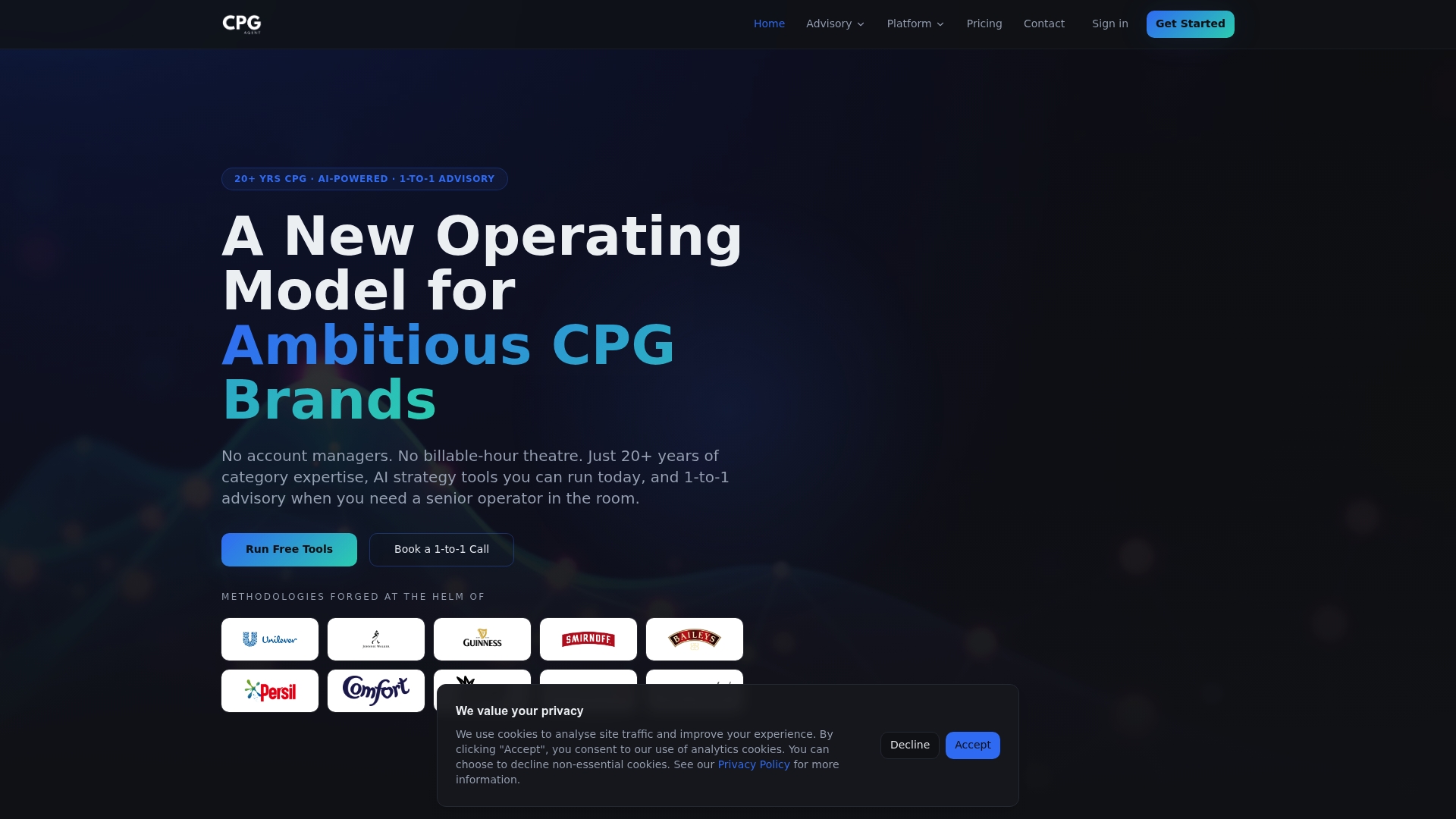
According to the company, CPG Agent has over 20 years of industry expertise and pairs AI tools with senior CPG advisors. The platform targets product validation and go to market work for consumer packaged goods brands. Its selling point is doing decision work in days and weeks rather than drawn out agency timelines.
Core features
-
PersonaForge and Launch Validator for rapid audience modeling and concept validation. These tools aim to test product ideas before full launch.
-
1-to-1 senior advisory from experienced CPG professionals to translate AI outputs into executable plans. Advisors act as fractional CMO or growth leads.
-
Fast, data driven decision frameworks that emphasize quick tests and measurable next steps. The approach reduces long planning cycles.
-
Automated workflows that run validation and experiment steps in the background. This reduces meeting load while keeping progress visible.
-
Background integration into existing brand workstreams so teams keep momentum without replacing internal systems. The model minimizes agency overhead.
Key differentiator
CPG Agent combines proprietary AI tooling with direct senior leadership involvement to compress validation and planning. That mix lets brands skip long discovery retainers and move straight to experiments. The model focuses on pipeline contribution and profit margin rather than lengthy creative briefs.
Pros
-
Combines AI tools with senior advisory. The combination gives concrete next steps rather than generic recommendations.
-
The vendor advertises fast timelines, reporting days and weeks rather than months. That short timeline suits teams that need quick market answers.
-
Designed specifically for CPG and FMCG brands. The focus means templates and advice reflect retail shelf dynamics and category norms.
-
Lower overhead compared with traditional agencies. The platform reduces layers between strategy and execution.
-
Works across stages from startup validation to updating legacy portfolios. Teams can use the same methods for new launches or repositioning.
Cons
- Pricing details are not public and appear to be bespoke, so you will need a sales conversation to get exact costs.
Who it's for
Ambitious CPG brands that want senior marketing leadership without a yearlong agency retainer will fit this model. Teams validating product market fit or looking to inject test velocity into legacy portfolios will gain the most. The platform suits brands that can act on rapid recommendations.
Unique value proposition
PersonaForge and Launch Validator let you validate audience and product hypotheses quickly, then hand the plan to a senior advisor for immediate execution. That combination shortens the path from idea to test and reduces the need for long agency commitments. For brands with internal execution capacity, the model converts analysis into runnable campaigns fast.
Real world use case
A challenger beverage brand used the AI tools to identify a new target segment and validate a concept. The brand then worked one on one with a senior advisor to build a go to market plan without hiring an agency. The result was a prioritized test plan ready for retail and direct to consumer channels.
Pricing
The vendor lists pricing as informational only and does not publish standard tiers. Costs appear to be custom and based on advisory scope and tool access. Contact the vendor for a proposal and scope that matches your needs.
Website: https://cpgagent.com
Simporter
At a glance
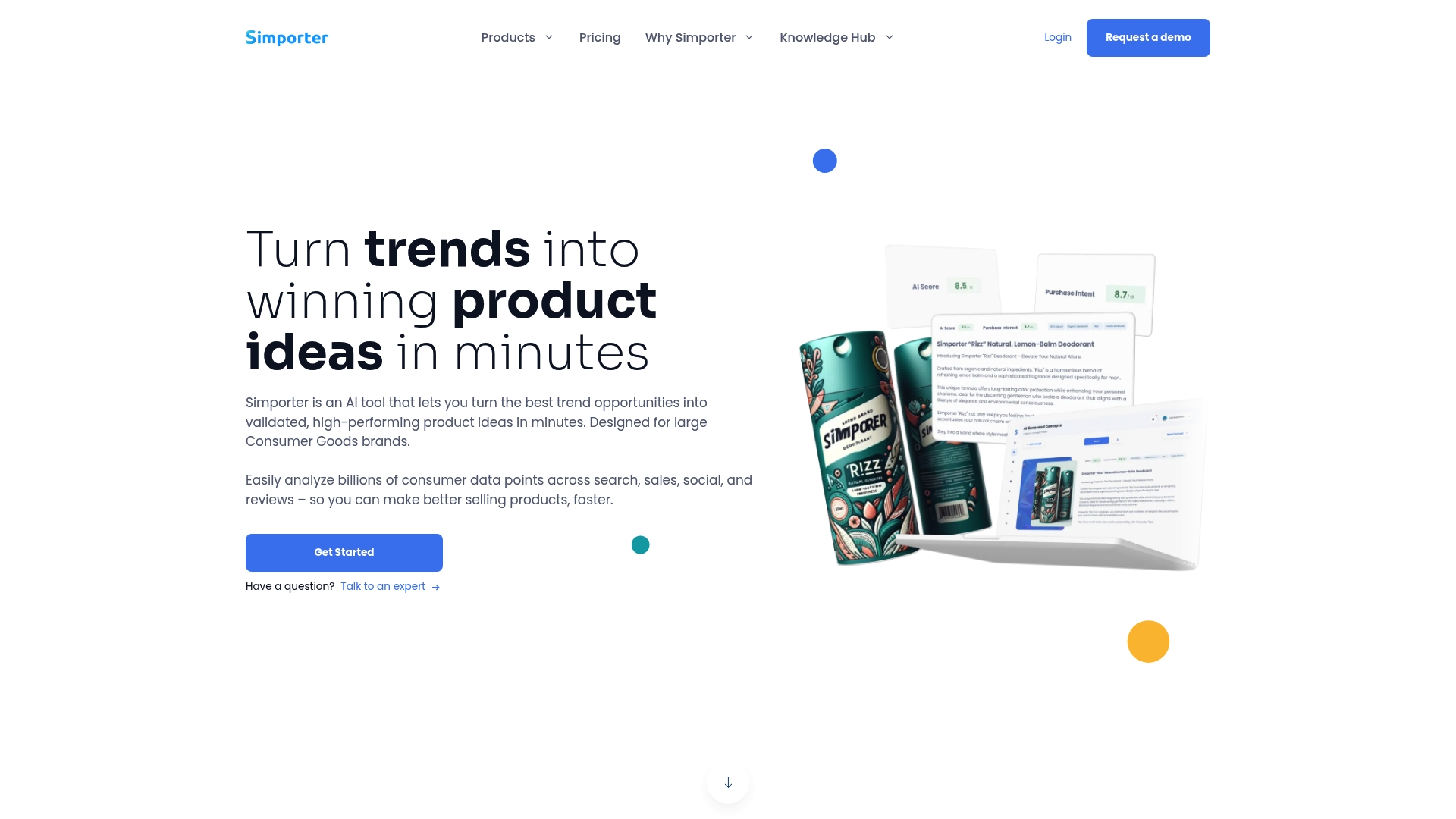
Simporter reports up to 86% accuracy for pre launch sales forecasting. That figure comes from the vendor and sets expectations for how forecasts perform in pilot scenarios. The platform collects search, social, reviews, and sales signals to spot trends. Teams use those signals to shorten product validation cycles and reduce launch guesswork.
Core features
- AI powered trend analysis across search, social, reviews, and sales data for signal detection.
- Holistic platform that consolidates multiple data sources into a single view for product teams.
- Pre launch sales forecasting that the vendor reports can reach an accuracy of up to 86 percent.
- Idea generation and validation routines supported by data science and automation.
- Market monitoring and post launch product performance tracking with ongoing forecast updates.
Key differentiator
Simporter cross analyzes multiple consumer data sources to surface trends that single source tools miss. The platform combines behavioral signals with review sentiment and sales patterns to estimate demand before launch. That breadth distinguishes it from point solutions that focus on only one channel. The accuracy claim above is a central part of its pitch.
Pros
-
Provides a multi source, data driven approach that reduces reliance on gut feel. This helps product teams build evidence for concepts.
-
The forecasting model is presented with an explicit accuracy figure. That gives procurement and finance a concrete benchmark for pilots.
-
Automation lets analysts run repeated scans quickly. Teams can refresh idea lists and forecasts without manual data stitching.
-
Scales to enterprise needs and multiple markets. The architecture is cloud based and built for larger consumer goods portfolios.
-
Forecasts and signals update continuously, which keeps insights current as market conditions change.
Cons
-
No substantive third party user reviews are publicly available, so real world buyer experiences are thin.
-
Pricing details and the full cost structure are not openly published, which complicates budgeting for mid market buyers.
-
Public information about integrations with ERP or enterprise systems is limited, so you may need custom connectors.
When it may not fit
Simporter is not a good match for small brands with limited budgets or single SKU portfolios. Organizations that need an off the shelf ERP integration may face additional implementation work. If you require public user case studies or broad independent reviews, the current scarcity of third party feedback is a drawback.
Who it's for
Large consumer packaged goods brands and product teams that need faster evidence for new SKUs will get the most value. Marketing and innovation groups that already handle enterprise data and can absorb an annual platform commitment fit best. It suits teams focused on concept validation and demand forecasting at scale.
Real world use case
A major CPG company uses Simporter to scan social conversations and reviews for unmet needs. The team turns those signals into candidate product concepts and runs pre launch forecasts. That workflow cut decision time and lowered the number of failed SKU launches.
Pricing
Pricing varies by plan. The vendor lists options starting at $15,000 for Starter and going to $80,000+ for Advanced, billed annually. Exact costs depend on data scope, market coverage, and negotiated enterprise terms.
Website: https://simporter.com
Peekage
At a glance
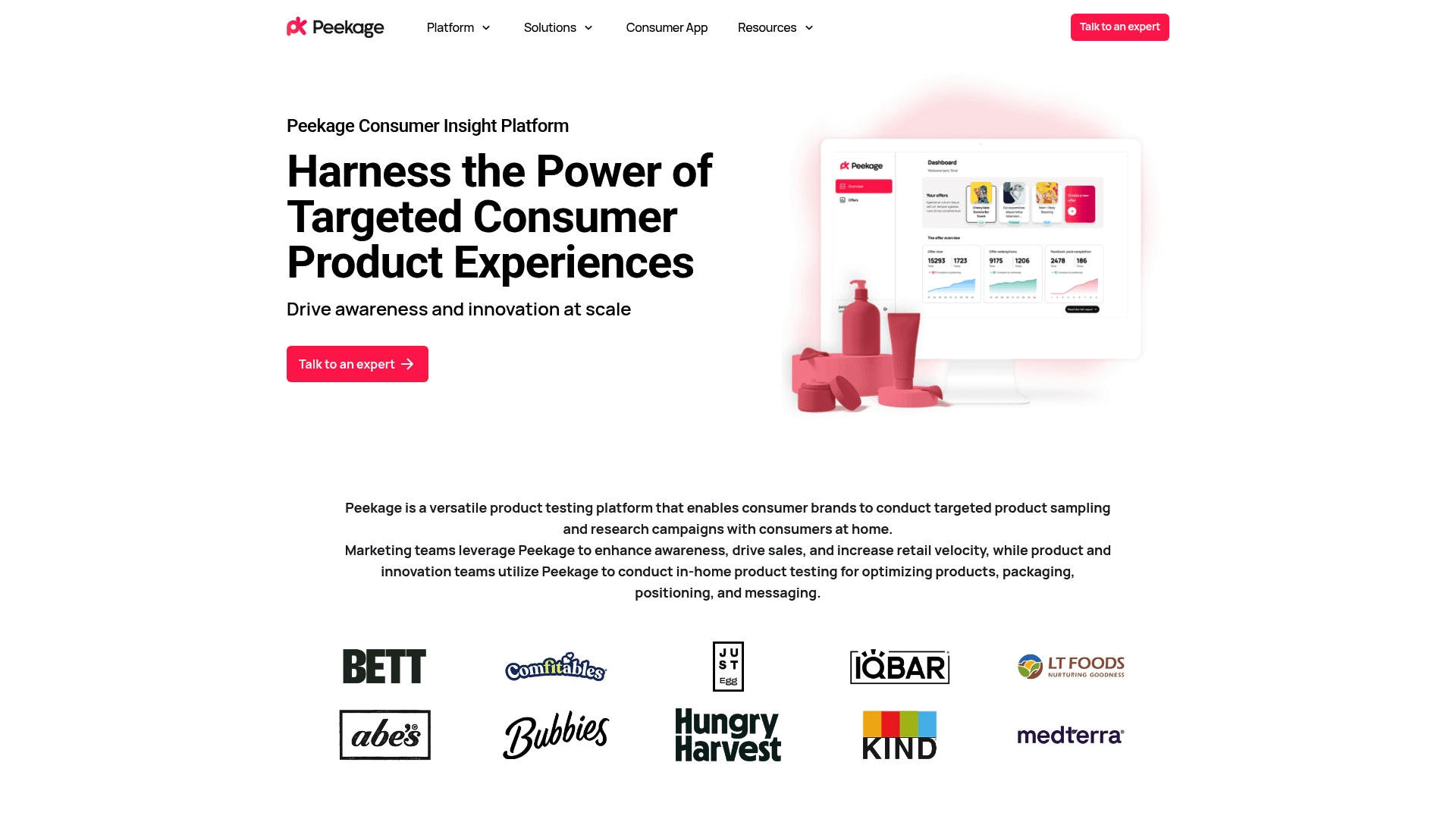
Peekage's marketing materials report a community of over 5 million consumers. That scale promises wide reach for sampling and product trials. User feedback, however, flags recurring problems with reward fulfillment and slow support, which undermines campaign trust for some brands.
Core features
- Targeted in-home product testing and sampling campaigns to reach specific consumer segments.
- Community access for broad outreach and feedback across the United States and Canada.
- Data collection and analysis through an easy to use dashboard for campaign results and consumer responses.
- Customized consumer surveys you can create and manage inside the platform.
- Logistical support for product shipping and fulfillment across North America and other markets.
Key differentiator
Peekage combines sampling, basic analytics, and fulfillment in a single platform. That makes it a one stop choice for brands that want to run testing campaigns without contracting separate vendors for shipping and data. The trade off is heavier reliance on consumer participation and platform processes that some users report as opaque.
Pros
-
Useful for early market feedback. Teams can test formulations and packaging before committing to large production runs.
-
Large reported consumer pool helps execute geo focused sampling and target by demographics or location.
-
Integrated campaign tools let you manage surveys, shipments, and feedback tracking from one place.
-
Logistics support reduces the vendor coordination burden for brands shipping samples across regions.
-
Potential to increase retail visits when sampling is paired with targeted store promotions.
Cons
-
Many users report missing rewards and unfulfilled sampling offers, which damages participant trust.
-
Customer support often unresponsive or slow to respond according to reviews, delaying issue resolution.
-
Some campaigns appear misleading to participants, which raises questions about transparency and data quality.
-
Email communications have been described as spam like or overly promotional by community members.
When it may not fit
Peekage relies heavily on consumer participation, which can be inconsistent for niche products or very small runs. If you need guaranteed, audited panel responses for regulatory claims, this platform may not meet that requirement. Brands that require tight control of reward fulfillment or immediate support should plan extra oversight.
Who it's for
Marketing teams, product development managers, and brand managers at consumer packaged goods companies who want scalable sampling and quick feedback. It fits teams that can tolerate some platform friction in exchange for a single vendor handling both sampling and shipping.
Real world use case
A beverage brand ran a geo targeted sampling campaign through Peekage. The brand collected taste and packaging feedback, adjusted the formula, and reported increased store visits at targeted outlets. The example shows how sampling plus retail focus can feed both product changes and short term sales lifts.
Pricing
Not applicable. Peekage lists its service information publicly but does not publish standard pricing on the site. You will need to contact the vendor for a campaign quote and fulfillment estimates.
Website: https://peekage.com
Toodu
At a glance
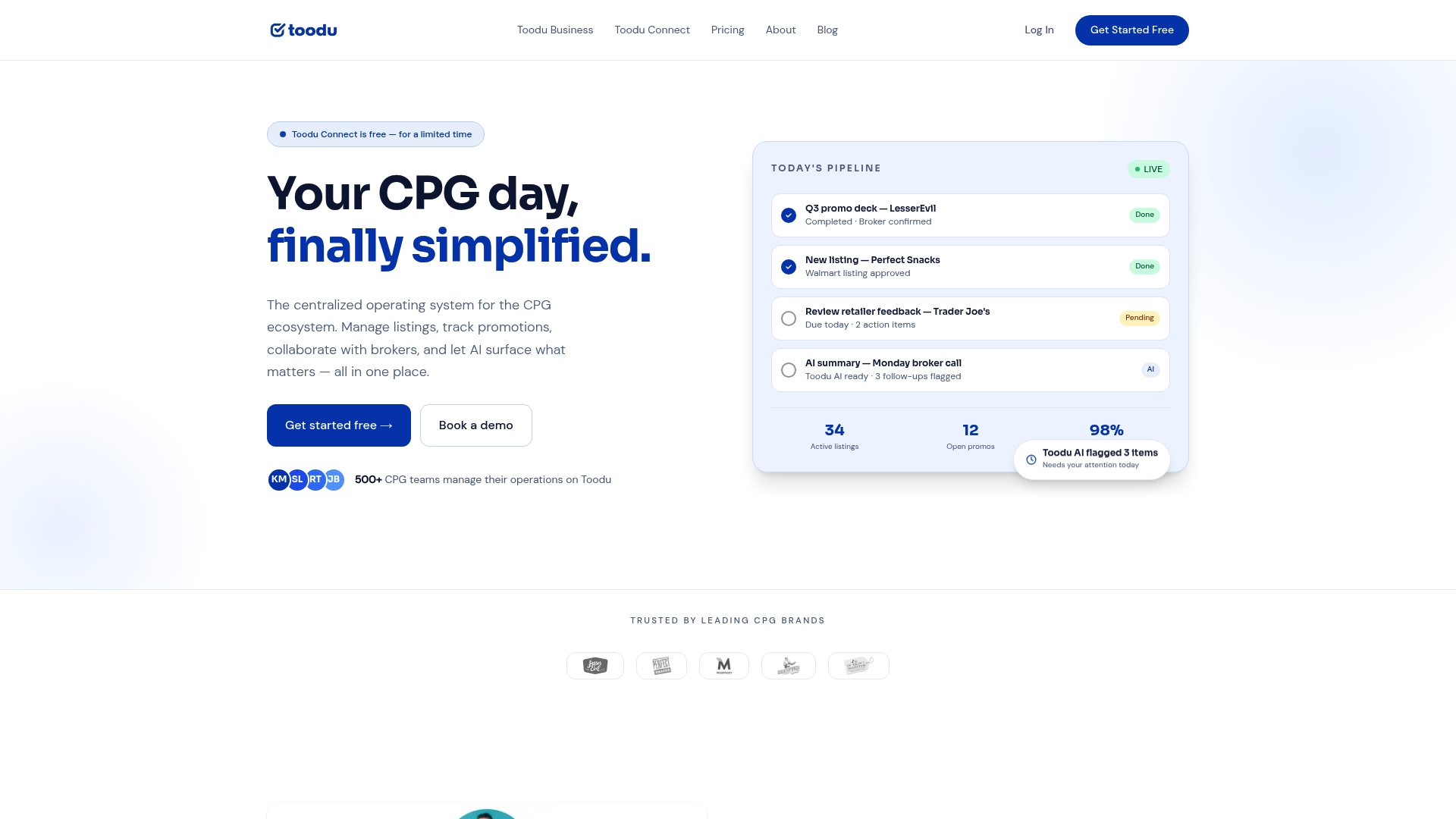
AI powered summaries turn conversations, calls, and meetings into concise, searchable notes. Toodu centralizes listings, promotions, and retail data for brands, brokers, and retailers. The platform groups collaboration, sales pipeline tracking, and digital selling tools into a single interface for CPG operations.
Core features
Toodu provides centralized management for product listings, promotions, and retail execution. It includes real time collaboration and communication tools tailored to multi role CPG teams. The platform offers AI powered summaries of meetings and calls to reduce follow up time. Digital selling features such as Brandfeed let teams showcase products without sending static PDFs.
Key differentiator
The product was built by CPG professionals with operational experience in retail accounts and broker relationships. That background shows in feature choices that match real CPG workflows. The platform focuses on aligning brand teams, brokers, and retail partners inside one operational view rather than forcing separate tools.
Pros
-
Built for CPG workflows. The product maps familiar tasks like listings, promotions, and retail execution into one interface so teams spend less time switching apps.
-
Supports multiple stakeholder roles. Brands, brokers, retailers, and suppliers can work within the same workspace while keeping role based access and context.
-
Includes AI powered meeting and call summaries. Those summaries reduce manual note taking and help keep distributed teams aligned after calls.
-
Offers flexible plans and a free trial option. The vendor lists a free tier called Toodu Connect, a Growth plan, and custom enterprise pricing for larger teams.
-
Clean user interface focused on speed. The layout and navigation prioritize sales and retail tasks so common actions take fewer clicks.
Cons
-
No third party reviews are available to gauge user satisfaction or long term reliability. That lack makes it harder to verify claims beyond vendor materials.
-
Integration details with existing ERP or CRM systems are not specified. Implementation teams will need to validate technical fit before committing.
-
Pricing transparency beyond basic plans is limited. The company advertises custom Scale plans but does not publish tiered enterprise pricing publicly.
Who it's for
Mid sized to large CPG brands, brokers, retailers, distributors, and marketing agencies that need a single platform for retail operations and partner collaboration. Teams that manage multiple brands and retail accounts will see the most immediate benefit. Organizations expecting deep ERP or CRM integration should confirm technical details first.
Real world use case
A brand launches three SKUs across national retailers and uses Toodu to coordinate assets, promotions, and broker calls. The team tracks listings, updates shelf notes, and uses AI summaries to assign follow up tasks after each retailer meeting. That workflow reduces email threads and keeps launch timelines visible to partners.
Pricing
Start free with a trial for basic collaboration through Toodu Connect which the vendor advertises as free for a limited time. Paid Growth plans begin at $90/month. Larger teams can request custom Scale plans and enterprise terms.
Website: https://thetoodu.com
cmogrow.com
At a glance
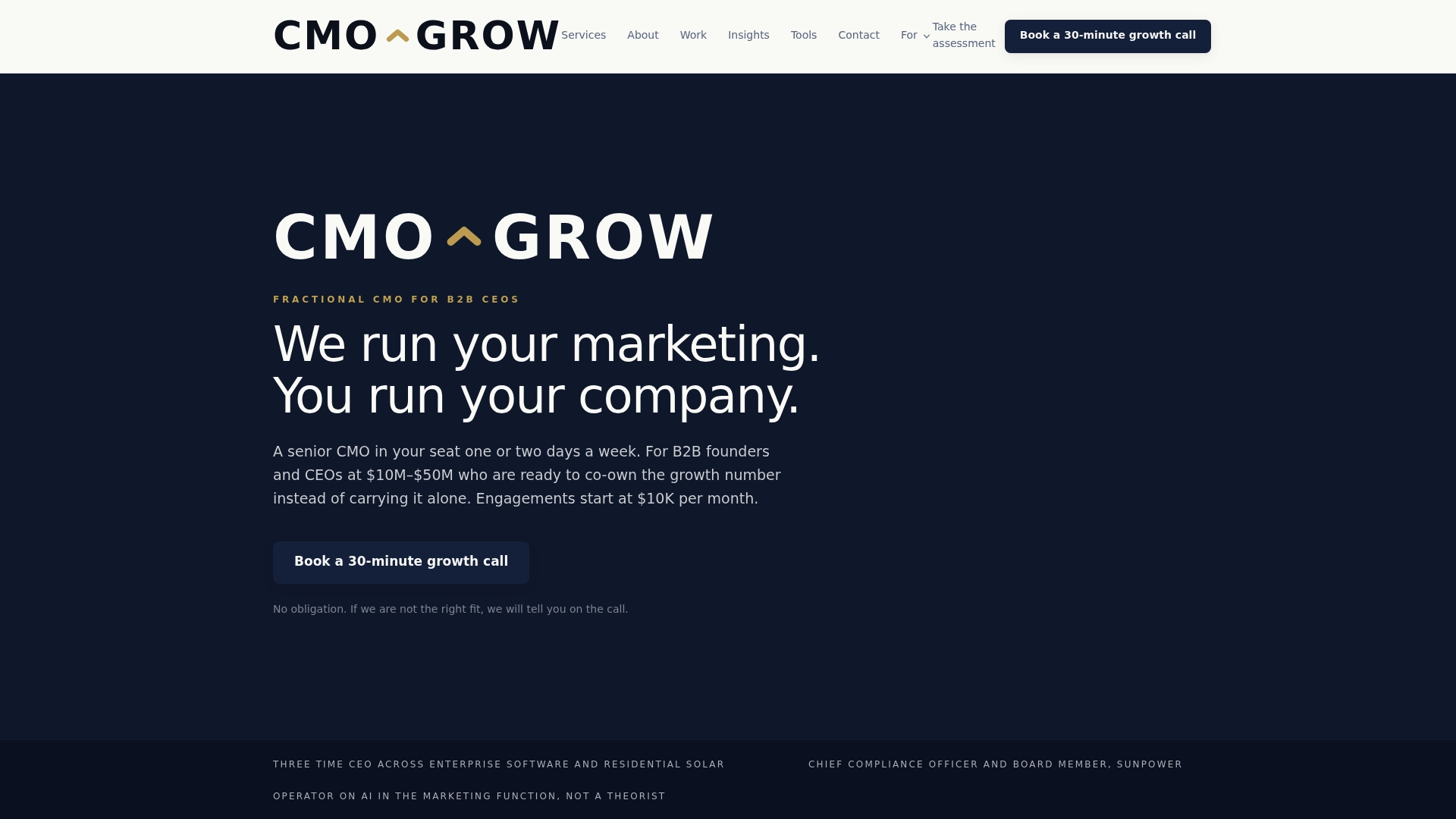
cmogrow.com reports engagements start at $10K per month. That pricing signal places the service in the senior leadership bracket for mid market B2B firms. The firm pairs a seasoned executive with a structured Growth Operating System to produce repeatable pipeline planning and accountability.
Core features
CMO Grow centers on senior marketing leadership delivered as a fractional Chief Marketing Officer. The firm uses a proprietary Growth Operating System to connect diagnosis, rebuild, and operating cycles.
- Provides a fractional CMO who takes ownership of marketing outcomes and metrics.
- Runs structured engagement phases: diagnosis, rebuilding, and operating cycles.
- Delivers growth plans, demand engine frameworks, and pipeline predictability focus.
- Offers advisory retainers, growth sprints, and board advisory roles.
Key differentiator
The firm emphasizes co ownership of growth by placing a senior leader in the seat rather than acting as a detached advisor. That model makes the advisor accountable for metrics and for translating strategy into leadership decisions. For CEOs who want a hands on partner, this is the main behavioral difference compared with pure advisory firms.
Pros
- High level guidance from an executive with CEO experience. This brings judgment about go to market tradeoffs and board conversations.
- Suited for companies aiming to move marketing from fragmented activity to measurable pipeline contribution. The process links work to predictable outcomes.
- Clear, repeatable engagement stages reduce ambiguity during the first 90 days. Teams get a defined diagnosis and a rebuild plan.
- Offers flexible engagement formats including short growth sprints and longer retainers. You can scale involvement to the problem set.
- Focus on co owning outcomes encourages joint accountability between the CEO and the marketing lead.
Cons
- Limited public customer reviews make independent satisfaction hard to verify. That absence raises due diligence needs for buyers.
- The offering does not include hands on campaign execution or building websites. You will still need in house or contractor resources for implementation.
- The service sits at senior price points, and may exceed budgets for smaller teams. Refer to the figure above when budgeting.
When it may not fit
If you need ongoing, day to day campaign management and execution, this firm is not a plug and play implementer. The model assumes your organization can execute tactics once a plan and leadership are in place. If you require a full service agency that runs creative, media buying, and engineering, look elsewhere.
Who it's for
The vendor positions the firm for CEOs and founders of B2B companies with $10M–$50M in revenue. This offering fits leaders who want a senior marketing partner without hiring a full time CMO. It works best when the CEO intends to co lead growth and hold the marketing leader accountable to pipeline metrics.
Real world use case
A software company at about $20M in revenue hires CMO Grow to realign its demand engine and clarify which channels will move pipeline. The fractional CMO conducts a diagnosis, produces a prioritized growth plan, and works with the COO to set weekly scorecards. The result is clearer ownership and a coordinated set of experiments focused on pipeline.
Pricing
Engagements start at the figure above. Final scope, time allocation, and pricing are discussed and agreed during the discovery call.
Website: https://cmogrow.com
Comparison of alternatives
In the competitive landscape of consumer goods strategy software, each platform offers unique value, yet CPG Agent sets itself apart by combining AI tools with direct senior advisory integration.
Comparative strengths in integration
Each platform excels in focusing on specific areas. CPG Agent combines proprietary AI systems such as PersonaForge and Launch Validator with expert advisory for insights, reducing traditional planning cycles. Conversely, Simporter specializes in predicting trends and demand through a spectrum of data sources, suitable for larger brand portfolios.
Accessibility of features
For small to mid-sized teams, Toodu presents an accessible entry with its organized features for retail operations, including AI-driven meeting summaries. In contrast, CMOgrow.com provides high-level expertise for established businesses seeking strategic marketing leadership.
Best fit
- Brands needing expert advice coupled with rapid AI-driven validation will find CPG Agent most suited.
- Teams looking to integrate multi-source data analysis will benefit from Simporter.
- Organizations prioritizing sampling and consumer feedback logistics can lean on Peekage.
Our pick
For businesses aiming to implement fast, data-backed consumer goods strategies while receiving seasoned advisory support, CPG Agent proves the superior option due to its unique offering. However, enterprises requiring data integration might select Simporter, while others focusing on sample distribution and direct feedback should consider Peekage.
Here is a comparison of leading consumer goods strategy platforms based on their primary strengths and use cases:
| Platform | Core Feature | Key Differentiator | Best For | Pricing | Limitation |
|---|---|---|---|---|---|
| Cpgagent | Rapid audience modeling and concept validation | Combines AI tools with senior leadership guidance | CPG brands seeking quick market insights | Not disclosed | Pricing model requires direct inquiry |
| Simporter | Multi-source trend and demand forecasting | Cross-analyzes diverse consumer data signals | Large CPG teams scaling concept validation | Starts at $15,000/year | Limited public review data |
| Peekage | Targeted in-home product testing campaigns | Integrated sampling, logistics, and analytics | Teams seeking scalable consumer feedback | Not disclosed | Reports of unfulfilled consumer reward promises |
| Toodu | Centralized CPG operations collaboration | Retail brand-centric interface for streamlined tasks | CPG brands with broker-retailer interactions | Free trial, Plans start at $90/month | Limited ERP and CRM integration information |
Discover a smarter alternative to traditional CMO growth partners
Brands searching for effective cmogrowthpartners.com alternatives often face challenges like slow decision-making, lengthy agency retainers, and generic marketing advice. Cpgagent addresses these pain points by combining AI-driven tools like PersonaForge and Launch Validator with fractional senior marketing advisory. This unique blend helps CPG and FMCG brands validate product-market fit quickly and build actionable growth plans without the overhead of traditional agencies.
With Cpgagent, you get rapid, data-backed strategies that integrate seamlessly into your existing workflows. Whether you are launching a new product or optimizing legacy portfolios, Cpgagent empowers you to cut long planning cycles and focus on measurable pipeline contribution and profit margins. Explore how Cpgagent's platform can put you in control of fast, effective market tests and marketing leadership.
Explore Cpgagent platform to access AI tools and senior advisory options designed just for ambitious consumer packaged goods brands. Ready to accelerate your growth with actionable next steps? Book a consultation and receive a tailored product validation and go-to-market plan in days.
FAQ
How does Cpgagent help with product validation?
Cpgagent provides rapid audience modeling and concept validation through its tools like PersonaForge and Launch Validator. These features allow teams to test product ideas quickly, reducing lengthy agency timelines. Brands looking to validate their product market fit can perform these tests effectively using Cpgagent.
What is the difference between simporter and Cpgagent in terms of forecasting accuracy?
Simporter claims an accuracy rate of up to 86% for pre-launch sales forecasting, utilizing multiple data sources for trend analysis. In contrast, Cpgagent focuses on providing not just insights but also senior advisory support, making it a better fit for brands that want executive involvement along with data-driven decision-making.
Can i use Cpgagent for legacy portfolio updates?
Cpgagent supports efforts from startup validation to updating legacy portfolios, enabling teams to apply the same methods for both new launches and re-positioning existing products. This versatility allows brands to adapt their strategies over time while leveraging experienced CPG advisors.
What are the limitations of Cpgagent regarding pricing transparency?
While Cpgagent offers valuable features, its pricing structure is not publicly available and requires potential users to engage in a sales conversation for specific costs. Brands interested in utilizing Cpgagent should be prepared for a bespoke pricing model based on their needs.
How does the user experience compare when managing campaigns on Cpgagent versus peekage?
Cpgagent emphasizes fast decision-making with integrated workflows, while Peekage has faced user feedback regarding fulfillment and support issues. Brands seeking a smooth experience with fewer operational headaches may find Cpgagent's platform aligns more closely with their needs, especially when quick execution is crucial.