

TL;DR:
- A brand perception audit measures the gap between a company's intended identity and market perception, revealing costly misalignments. It involves analyzing internal brand beliefs, external messaging, customer experience, competitor positioning, and reputation signals using various data sources. Regular, ongoing audits help prioritize impactful fixes, prevent perception drift, and improve brand loyalty and revenue.
A brand perception audit is a structured evaluation that measures the gap between your intended brand identity and how the market actually perceives you. That gap is not a minor communications problem. 89% of executives believe their customers are loyal, while only 39% of customers agree. That disconnect costs real revenue, stalls pipeline, and erodes the loyalty you assume you have. A well-executed audit uses tools like Net Promoter Score, social listening platforms, and online review analysis to surface the truth your internal meetings never will. This guide gives you the frameworks, methods, and step-by-step process to run one that actually changes something.
What does a brand perception audit actually measure?
A brand perception audit evaluates five distinct layers: internal brand identity, external messaging, customer experience, competitor positioning, and reputation signals. Most brand managers focus only on the external layer and miss the deeper structural problems.
Internal brand identity is where audits should start. Leadership interviews frequently reveal that senior team members hold widely divergent views on core brand values. When the CMO, VP of Sales, and Head of Product each describe the brand differently, no amount of external messaging will fix the resulting inconsistency.
External messaging and digital presence covers everything a prospect encounters before buying: website copy, social channels, packaging, and paid media. The question is whether these touchpoints tell a single coherent story or contradict each other across channels.
Customer experience touchpoints include post-purchase interactions, support quality, and the physical shelf experience. For FMCG brands specifically, packaging must communicate core value within 3 seconds from 30 centimeters. Digital perception data alone will not catch a shelf-impact failure.
| Audit Layer | What It Examines | Key Metric |
|---|---|---|
| Internal alignment | Leadership and team brand beliefs | Interview consistency score |
| External messaging | Website, ads, packaging, social copy | Message alignment rating |
| Customer experience | Touchpoints, support, post-purchase | NPS, CSAT |
| Competitor benchmarking | Positioning maps, differentiation | Relative sentiment score |
| Reputation and sentiment | Reviews, social mentions, press | Net sentiment, review rating |
Pro Tip: Record leadership interviews rather than just taking notes. Playing back conflicting statements from two executives in the same room is the fastest way to build internal consensus that change is needed.
How do you measure brand perception effectively?
Brand perception measurement combines quantitative signals with qualitative depth. Neither alone gives you the full picture.

Surveys are the foundation of any customer perception analysis. Target both current customers and non-customers who fit your ideal profile. Non-customer surveys reveal why your brand is not converting, which is often more valuable than knowing why existing customers stay. Ask respondents to describe your brand in three words, rate your credibility against named competitors, and score their likelihood to recommend.
Social listening provides real-time brand reputation evaluation without the lag of survey cycles. Tools like Brandwatch, Sprout Social, and Mention track sentiment shifts, emerging complaints, and competitor comparisons across platforms. The signal quality is highest when you filter for unprompted mentions rather than branded hashtag activity.
Review platform analysis is non-negotiable. 91% of consumers rely on online reviews to form trust before purchasing. That makes Amazon, Google, and category-specific review sites primary data sources, not secondary ones. Pull your 50 most recent reviews and your top three competitors' reviews. Code them by theme. The patterns will tell you exactly where your brand promise breaks down in practice.
Net Promoter Score functions as a loyalty and perception indicator simultaneously. Benchmark your NPS against 3–5 key competitors using sentiment benchmarking to understand whether your score reflects category norms or a genuine brand problem.
Best practices for data collection:
- Run surveys with a minimum of 200 respondents per segment for statistical reliability
- Pull at least 90 days of social listening data to smooth out event-driven spikes
- Analyze review themes quarterly, not annually
- Cross-reference NPS detractor comments with social sentiment to find recurring friction points
- Use behavioral data (repeat purchase rate, cart abandonment) to validate attitudinal survey findings
Pro Tip: The most revealing audit data comes from unprompted customer language in reviews and support tickets, not from polished survey responses. Search your support inbox for the exact words customers use to describe their frustration. That language is your perception gap in plain text.
What is the perception gap and why does it cost you?
The perception gap is the measurable distance between what your leadership believes the brand stands for and what the market actually experiences. Without measuring this gap, organizations make high-stakes brand decisions on assumptions rather than empirical data. The financial consequences are direct.
89% of B2B buyers reported stalled deals due to perception misalignment. In CPG and FMCG contexts, the equivalent is a shopper who picks up your product, reads the packaging, and puts it back because the value proposition did not land in three seconds. Both scenarios represent revenue that never materializes, and neither shows up clearly in a standard sales report.
A perception gap matrix helps you prioritize which gaps to fix first. The matrix ranks each identified gap on two axes: business impact (high to low) and fix effort (easy to hard). This prevents the common mistake of spending three months redesigning a logo when the real problem is a product claim that customers do not believe.
| Perception Gap | Business Impact | Fix Effort | Priority |
|---|---|---|---|
| Brand promise not reflected in product experience | High | Hard | Fix first, plan carefully |
| Inconsistent messaging across channels | High | Easy | Fix immediately |
| Outdated visual identity | Low | Hard | Deprioritize |
| Weak social proof and review volume | Medium | Easy | Quick win |
Ranking gaps by impact and effort prevents wasting resources on minor cosmetic fixes while structural value proposition problems go unaddressed. Most brands have two or three high-impact, easy-fix gaps that can be resolved within 60 days of completing the audit.
Pro Tip: Present the perception gap matrix to your leadership team before recommending any specific fixes. Letting executives see the prioritization logic builds buy-in faster than presenting a list of recommendations without context.
How to conduct a brand perception audit step by step
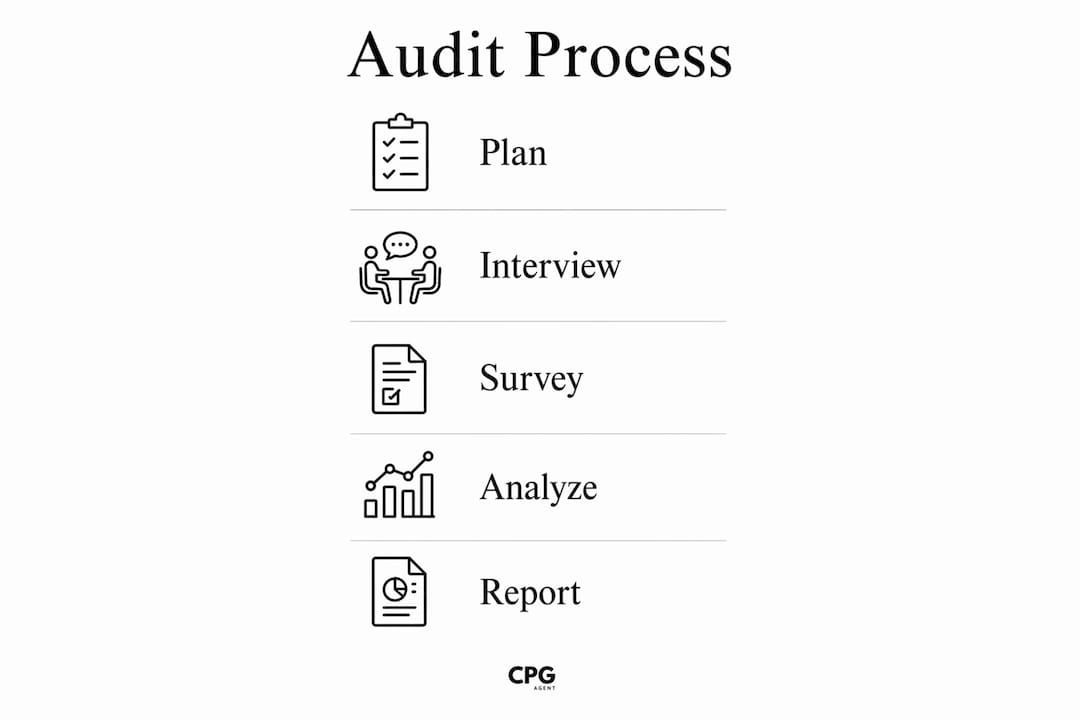
A comprehensive brand audit takes 4–6 weeks and requires active collaboration across marketing, sales, and product teams. Treating it as a marketing-only project is the single most common reason audits produce reports that sit unread.
-
Define scope and objectives (Week 1). Decide which audience segments, markets, and competitors the audit will cover. Set two or three specific questions the audit must answer, such as "Why is our NPS 12 points below the category average?" Vague scope produces vague findings.
-
Conduct internal alignment interviews (Week 1–2). Interview five to ten stakeholders across leadership, sales, and customer success. Ask each person to describe the brand's core promise, its primary differentiator, and the customer it serves best. Record the sessions. The divergence you find will shape every recommendation that follows.
-
Collect external perception data (Week 2–3). Launch customer and non-customer surveys. Pull social listening data and review platform exports. Run NPS if you do not have a current score. For FMCG brands, conduct shelf-impact testing in at least two retail environments to validate digital findings against physical reality.
-
Analyze and map perception gaps (Week 3–4). Code qualitative data by theme. Build your perception gap matrix. Cross-reference internal interview findings with external customer data to identify where leadership assumptions diverge most sharply from market reality. Use lean brand strategy frameworks to structure your analysis around positioning priorities.
-
Build the findings report and playback session (Week 4–5). Present findings to leadership using the recorded interview clips as evidence. Show the gap matrix. Recommend three to five specific changes ranked by impact and effort. Avoid presenting more than seven recommendations total. Decision fatigue kills implementation.
-
Implement, track, and repeat (Week 6 onward). Assign owners to each recommendation with 30, 60, and 90-day milestones. Set a calendar reminder to re-run the perception survey in six months. A one-time audit is a snapshot. An ongoing audit process is a competitive advantage.
The brands that extract the most value from perception audits treat them as a continuous monitoring practice, not a one-time project. Quarterly review of NPS trends, monthly social sentiment checks, and annual deep-dive surveys create a feedback loop that keeps brand strategy grounded in market reality rather than internal assumption.
Key takeaways
A brand perception audit closes the gap between what your leadership believes and what your market actually experiences, and that gap is the most expensive blind spot in brand strategy.
| Point | Details |
|---|---|
| Start with internal alignment | Leadership interviews reveal brand value disagreements that undermine all external messaging efforts. |
| Use multiple data sources | Combine surveys, social listening, NPS, and review analysis for a complete perception picture. |
| Prioritize with a gap matrix | Rank perception gaps by business impact and fix effort before committing resources to any solution. |
| Run audits cross-functionally | Marketing, sales, and product must all contribute data and own implementation outcomes. |
| Treat audits as ongoing | Quarterly monitoring catches perception drift before it becomes a loyalty or revenue problem. |
The uncomfortable truth about brand audits
Most brand audits I have seen fail not because of bad data collection but because of what happens after the report is delivered. The findings sit in a slide deck. Leadership acknowledges the gaps. Nothing changes. Six months later, the same perception problems show up in a customer churn report and everyone acts surprised.
The real value of a brand perception audit is not the report. It is the internal confrontation it forces. When you play back a recording of your CEO describing the brand one way and your VP of Sales describing it a completely different way, something shifts in the room. That moment of visible misalignment is worth more than any survey dataset.
I have also seen brands over-invest in the wrong fixes. A company will spend four months redesigning packaging while ignoring the fact that their product claims are not believable to first-time buyers. The perception gap matrix exists precisely to prevent that. Use it. It is not a sophisticated tool. It is a prioritization discipline that most teams skip because they would rather start executing than keep analyzing.
The other thing most articles will not tell you: your best audit data is already sitting in your customer support inbox. The exact words an angry customer uses to describe why your product disappointed them are the exact words your brand promise failed to deliver on. That language is free, it is unprompted, and it is more honest than any focus group you will ever run.
Brand perception work is diagnostic, not decorative. If your audit produces a new color palette and a refreshed tagline but does not change how your sales team positions the product or how your product team prioritizes features, you ran a cosmetic exercise. The brands that win on shelf and in market are the ones that let perception data change decisions, not just designs.
— Matthew
How Cpgagent supports your brand perception work
Running a thorough brand perception audit requires more than a survey tool and a spreadsheet. Cpgagent gives CPG and FMCG brand managers a purpose-built platform for brand monitoring, sentiment tracking, and competitor benchmarking without the overhead of a traditional agency engagement.
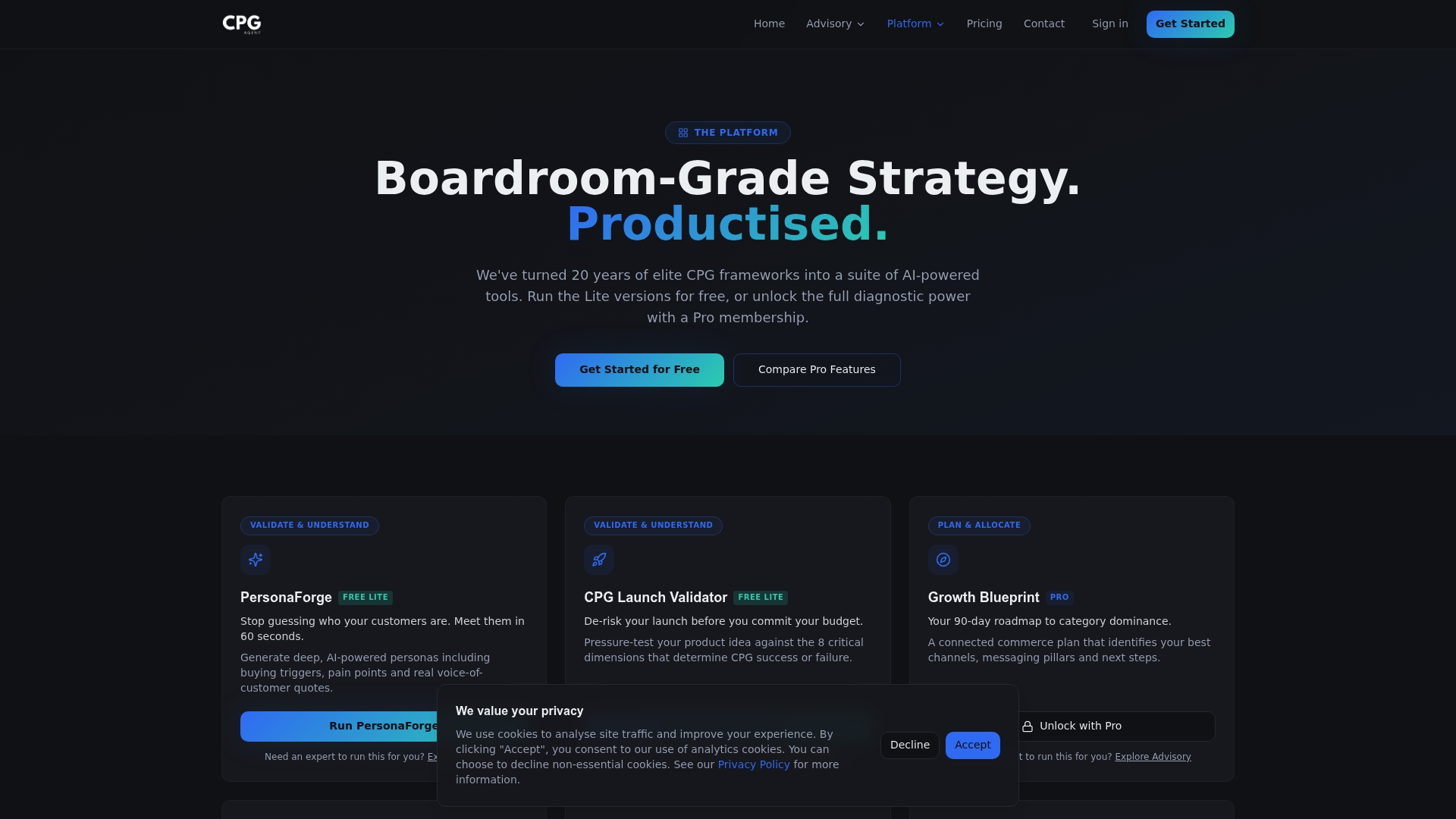
The platform integrates AI-driven analysis to surface perception gaps faster than manual review cycles allow. Tools like PersonaForge help you map customer language against your intended brand positioning, while automated workflows keep your audit data current between formal review cycles. If you are ready to move from a one-time snapshot to a continuous brand intelligence practice, the Cpgagent platform is built for exactly that. Explore how it fits into your current brand management stack at Cpgagent.
FAQ
What is a brand perception audit?
A brand perception audit is a structured evaluation that measures the gap between your intended brand identity and how customers, prospects, and the broader market actually perceive your brand. It uses surveys, social listening, NPS, and review analysis to produce a data-backed view of that gap.
How long does a brand perception audit take?
A comprehensive audit takes 4–6 weeks and requires input from marketing, sales, and product teams. Shorter versions focused on a single channel or audience segment can be completed in two to three weeks.
What tools are used in a brand perception audit?
Social listening platforms like Brandwatch and Sprout Social, NPS survey tools, review platform exports from Amazon and Google, and internal interview recordings are the core tools. YouGov BrandIndex provides competitive sentiment benchmarking for larger brands.
How do i identify a perception gap in my brand audit?
Compare internal leadership interview findings against external customer survey and review data. Where leadership beliefs and customer descriptions diverge most sharply, you have found your perception gap. Use a gap matrix to rank those gaps by business impact and fix effort.
How often should a brand perception audit be conducted?
Run a full audit annually and monitor key signals, including NPS, social sentiment, and review themes, on a quarterly basis. Continuous monitoring catches perception drift before it compounds into a loyalty or revenue problem.